.png-1300x700.png "手机&平板电脑2(无商标).png")
Greyboard Electronics Packaging: Protection and Brand Value Enhancement
Introduction
Electronics packaging teams often encounter these challenges: a newly designed smart speaker shipped to Europe arrives with visibly dented corners; a batch of high-end earphone samples sent to reviewers receives feedback that the box feels “soft and flimsy” upon unboxing.
These situations are not uncommon.
Packaging goes through stacking, compression, and vibration during transit. The unboxing experience is the user’s first physical touchpoint with the product. If the package is deformed or collapsed, the first impression is compromised—no matter how good the product inside is. At the same time, brands want to convey a “solid” and “premium” feel during unboxing, something ordinary paperboard often fails to deliver.
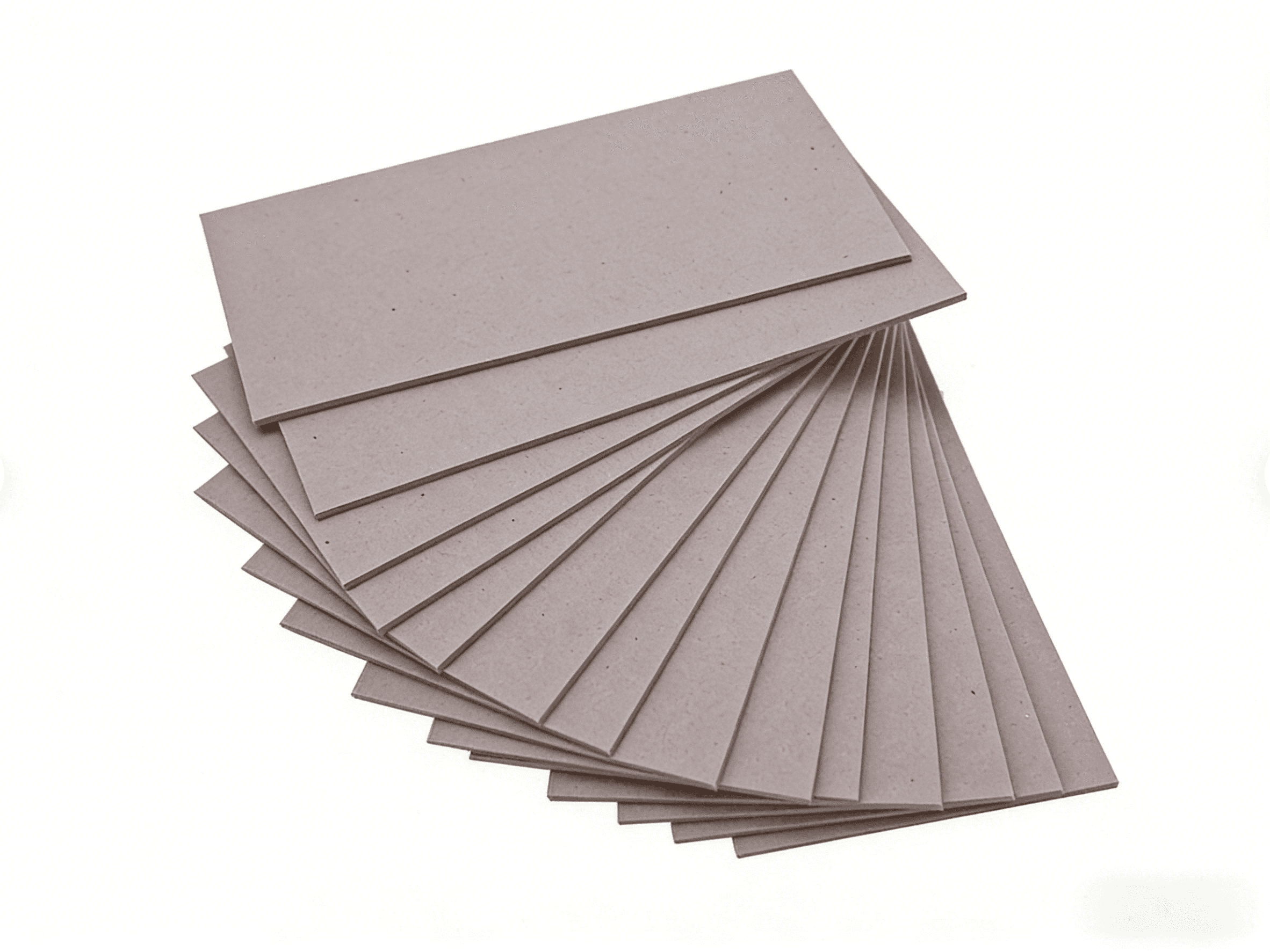
Greyboard addresses both issues: its density and thickness effectively resist stacking pressure during transport while providing a substantial, rigid feel that users associate with quality. This article outlines the practical applications of greyboard in electronics packaging, including material selection, structural design, and real-world cases—written for packaging engineers, product managers, and procurement professionals.
In this article:
- Why Electronics Packaging Needs Strength
- Greyboard Selection Guide
- Structural Design Cases
Why Electronics Packaging Needs Strength
The Real Pressure of Transport Stacking
Electronics shipped overseas typically travel in containers by sea or air freight. Inside those containers, cartons are stacked layer upon layer, and the packages at the bottom must bear the weight of meters-high stacks above. If the packaging material lacks sufficient strength, box deformation can directly squeeze and damage the products inside.
Logistics company data shows that in a standard 40-foot shipping container, bottom cartons can experience stacking pressures of 300–500 kilograms. Ordinary corrugated board tends to creep and collapse under prolonged static load and humid conditions, while rigid boxes made from greyboard maintain their shape and protect the contents. For shipments using bulk packaging for electronic components, the compression resistance of the packaging directly affects yield rates and return rates.
Drop Impact and Corner Protection
Drops during sorting and last-mile delivery are difficult to eliminate completely. The weakest points in any electronics package are typically the corners and edges. Greyboard’s thickness advantage becomes evident here: greyboard with thickness above 2.0 mm has significantly higher corner impact resistance than ordinary paperboard.
One cross-border e-commerce operator reported that Bluetooth earphones shipped in ordinary corrugated cartons had transit damage rates around 3–5%; after switching to greyboard rigid boxes under the same logistics conditions, damage rates dropped below 0.5%. This is not an isolated case—many brands have validated the protective value of rigid board for packaging electronics for shipping.
Common Questions in Material Selection
Many people struggle when choosing packaging materials: “Is packing paper or bubble wrap better?” or “Is foam better than bubble wrap?”
The answer depends on the scenario. According to Smithers Pira’s “Global Sustainable Packaging Market Report” [1], approximately 68% of transit damage in e-commerce stems from a combination of insufficient cushioning and lack of structural support. For individual express shipments, bubble wrap or foam provides adequate cushioning. But for bulk shipments that require stacking, the packaging itself must provide structural support. Greyboard functions like the load-bearing walls in a building: internal fill materials (foam, paper, air pillows) address vibration and shock, while the greyboard frame prevents compression and deformation. Together, they cover the main risks of shipping electronics.
Deformation typically starts at localized stress points. Greyboard’s high density distributes point forces across a wider area, slowing the fatigue process (this principle is discussed in more detail in our guide Prevent Packaging Deformation). Meanwhile, FSC certification standards [2] reflect the growing importance of sustainable materials in electronics packaging, and greyboard—with its high recycled content—is increasingly being adopted by brands as an alternative to single-use plastics.
Greyboard Selection Guide
Thickness and GSM Correspondence
Greyboard selection begins with two parameters: thickness (mm) and grammage (GSM). They do not have a fixed relationship—for the same thickness, higher density means greater load-bearing capacity.
Based on industry specifications, the following reference relationships apply:
| Application Scenario | Thickness Range | Approximate GSM | Typical Products |
|---|---|---|---|
| Lightweight Packaging | 1.0 – 1.5 mm | 700 – 1200 GSM | Phone cases, cables, small accessories |
| Standard Packaging | 1.6 – 2.0 mm | 1120 – 1600 GSM | Headphones, smart watches, digital gadgets |
| Heavy-Duty Packaging | 2.1 – 3.0 mm | 1470 – 2400 GSM | Tablets, laptops, industrial equipment |
Thickness and GSM testing methods can be referenced in our Cardboard GSM & Thickness Guide. Note that actual greyboard thickness has a tolerance of approximately ±0.1 mm, so for large-volume procurement, batch test data should be requested from suppliers.
Common Types of Greyboard
Greyboard on the market mainly falls into three categories, each with different properties and applications:
- Single Greyboard: Grey on one side, yellow on the other. Lower cost, suitable for internal partitions or padding, not recommended for outer boxes.
- Double Greyboard: Grey on both sides with a yellow core. The mainstream choice for electronic packaging boxes, balancing rigidity and flatness, with good texture after lamination.
- Full Greyboard: Uniform composition throughout, highest density. Ideal for high-end consumer electronics packaging design, such as flagship phone boxes or premium headphone cases.
Lamination and Surface Treatment
Greyboard itself has a rough surface and cannot be printed directly with high precision. The standard process is: first print on coated paper or specialty paper, then laminate the printed paper onto the greyboard surface. This achieves high-resolution graphics while leveraging greyboard’s structural strength.
A common issue in lamination is improper adhesive selection, which can cause paper bubbling or delamination. Greyboard is highly absorbent, so adhesives with high solids content and appropriate drying speed should be chosen. For export products, adhesive environmental certifications—such as EU REACH compliance—must also be verified.
For automated labeling applications, label adhesion requires special attention. Greyboard’s rough surface can cause ordinary labels to edge-lift. German adhesive specialist HERMA notes in its technical documentation: “For rough-surfaced cartons, labels with thickened adhesive layers or strong-adhesion formulas are recommended to ensure logistics information remains scannable after long-distance transport.”
Structural Design Cases
Case 1: Smartphone Packaging with Sustainable Alternative
Background: A smartphone brand planned to phase out plastic trays in its packaging and needed an eco-friendly alternative.
Original Solution: Clear PET blister tray to secure the phone, with a printed corrugated paper outer box.
Issues: The PET tray provided good fixation but was non-recyclable; the corrugated box showed slight sidewall deformation in stack testing.
Adjusted Solution:
- Outer box changed to 2.0 mm double greyboard rigid box (tray and lid) for enhanced compression resistance.
- Internal tray replaced with molded fiber material, custom-contoured to fit the phone snugly.
- Lid interior lined with 120 gsm specialty paper printed with brand logo.
Results: Stack test passing height increased by 30%; user feedback indicated a noticeably more solid unboxing feel; the entire package is fully recyclable, aligning with the brand’s sustainability commitments.
Case 2: Batch Packaging Optimization for PCBA Boards
Background: An EMS (Electronics Manufacturing Services) company needed packaging for PCBA semi-finished products destined for European assembly plants. The boards were sensitive to static and mechanical shock.
Original Solution: Corrugated cartons + anti-static bags, with bubble wrap between boards.
Issues: Some boards arrived with edge damage, and cartons deformed under stacking, preventing secondary reuse.
Adjusted Solution (referencing recommendations from Prevent Packaging Deformation):
- Outer box changed to 2.5 mm greyboard flip-top box with magnetic closures for easy reuse.
- Internal greyboard partitions designed with slots so each PCB is held independently, preventing contact.
- High-adhesion logistics labels applied to the outer boxes to ensure barcodes remain scannable after long transit.
Results: Transit damage rate reduced by approximately 70%; clients reported that the boxes could be reused for internal material handling, extending brand exposure and reducing waste.
Three Practical Suggestions for Structural Design
Based on multiple project implementations, here are three actionable recommendations:
- Sidewall thickness not below 2.0 mm: The sidewalls of rigid boxes are stress concentration points. When thickness falls below 2.0 mm, stacking or side pressure can easily cause deformation. If thickness must be reduced for cost reasons, consider adding internal reinforcement ribs.
- Match internal supports to product weight: For heavier products (500 g+), greyboard slots alone are insufficient. Combine with EVA foam or die-cut foam to prevent the product from shifting and hitting the box walls during transit.
- Prioritize unboxing convenience: Include finger holes in deep box sides, or add pull tapes/lifting straps to help users remove the product easily. Though minor, this detail directly impacts the perceived quality and user satisfaction.
FAQ Module
Common electronics packaging materials include: greyboard (for rigid boxes), corrugated board (for shipping cartons), foam/padding (cushioning), anti-static bags (for ESD-sensitive components), and molded fiber (sustainable inserts). Different combinations are used to meet protection, cost, and environmental requirements.
It depends on what you’re protecting. For preventing surface scratches, packing paper is sufficient. For filling voids and absorbing vibration, bubble wrap is more effective. However, for sensitive electronics, fillers alone are not enough—structural components (like a greyboard box) are needed to provide overall support and prevent compression damage.
A three-layer approach works best:
Inner layer: Wrap the product in an anti-static bag and place it in a custom insert (greyboard, foam, or molded fiber) so it is held securely without movement.
Middle layer: Use a greyboard rigid box as the primary package. This provides structural integrity and a premium unboxing experience.
Outer layer: Place multiple rigid boxes into a corrugated shipping carton, filling any voids with cushioning material to prevent internal shifting.
Yes. Greyboard is typically made from recycled paper pulp, and it is itself recyclable and biodegradable. Many suppliers offer FSC-certified greyboard, ensuring the raw materials come from responsibly managed forests. Compared to single-use plastic packaging, greyboard boxes are also more likely to be kept by consumers for storage, extending their useful life.
Greyboard is solid paperboard with high density and stiffness, giving it a substantial feel—ideal for premium rigid boxes. Corrugated board has a fluted structure between liners, making it lightweight and inexpensive—ideal for shipping cartons. They are complementary: a greyboard box often goes inside a corrugated shipper for final transport.
Conclusion
Electronics packaging essentially needs to solve two problems: withstand the stresses of transit and deliver perceived value when the user opens the box. Greyboard’s strength lies in its quantifiable physical properties (thickness, GSM, compression data) as well as its tactile qualities that users associate with quality.
For material selection, refer to our Greyboard Applications Guide for Export Packaging to calibrate specifications. For structural design, draw on the real-world cases above. And if you need assistance with greyboard grade selection or custom structural design, feel free to contact us for a consultation—we’re happy to discuss your requirements from material to finished solution.
External Link References:
[1] Smithers Pira “Global Sustainable Packaging Market Report” – https://www.smithers.com/services/market-reports/packaging/sustainable-packaging-market
[2] FSC Forest Management Certification – https://fsc.org/en/forest-management-certification
Author Profile

-
HONGTUSCENERY is a professional manufacturer of composite paperboard,
providing sustainable and customized packaging solutions for global brands.
With nearly 20 years of industry experience, we focus on material performance,
structural strength, and green supply chain development.
Latest entries
 Cosmetics Packaging2026-04-03Grey Board for Cream Gift Box: Benefits for Premium Packaging
 Cosmetics Packaging2026-04-01Skincare Packaging Box Material Comparison
 Cosmetics Packaging2026-03-31How to Choose Materials for Skincare Packaging Boxes: A Practical Guide for Brand Procurement
 Cosmetics Packaging2026-03-26Common Issues and Solutions for Skincare Secondary Packaging Boxes