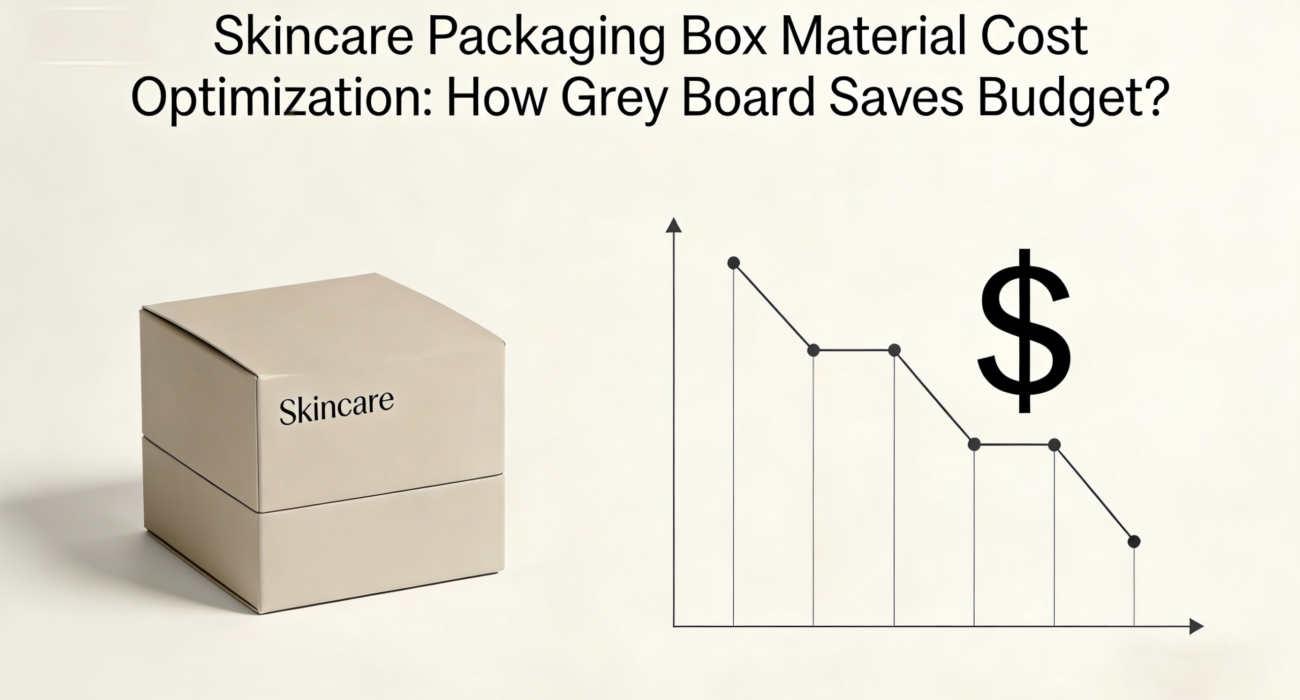
Skincare Packaging Box Material Cost Optimization: How Grey Board Saves Budget?
Skincare brands and packaging procurement decision-makers often face the same challenge: mid-to-high-end gift boxes need premium texture while staying within budget, making material selection critical.
Among various packaging materials, Grey Board (also known as gray board) is a well-proven “cost-effective powerhouse” in Western markets, yet frequently overlooked by emerging brands. From the perspective of a B2B supplier deeply rooted in the grey board industry, we break down how grey board helps reduce costs and improve efficiency for skincare packaging boxes.
Article Outline
- What is Grey Board and why is it ideal for skincare packaging?
- How does Grey Board lower packaging costs?
- Why choose us as your grey board supplier?
- Real Case: How a UK Skincare Brand Cut Packaging Costs by 18%
- Conclusion: Cost advantages come from smart material selection, not cutting corners
1. What is Grey Board and Why It Fits Skincare Packaging?
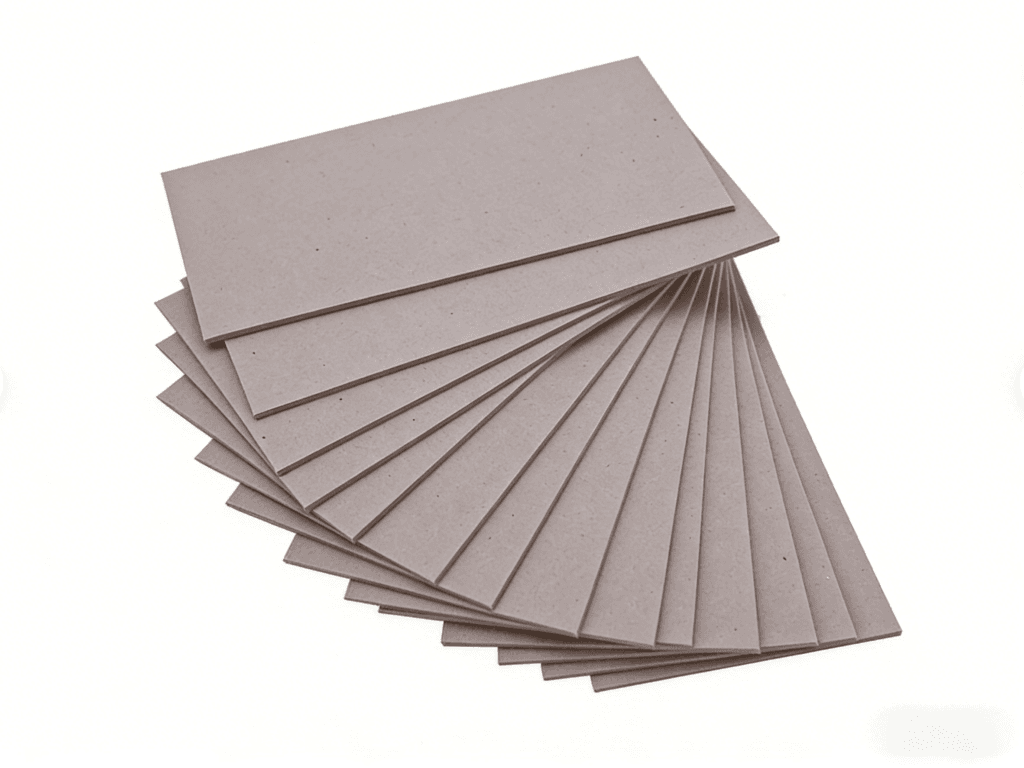
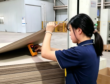
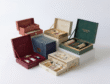
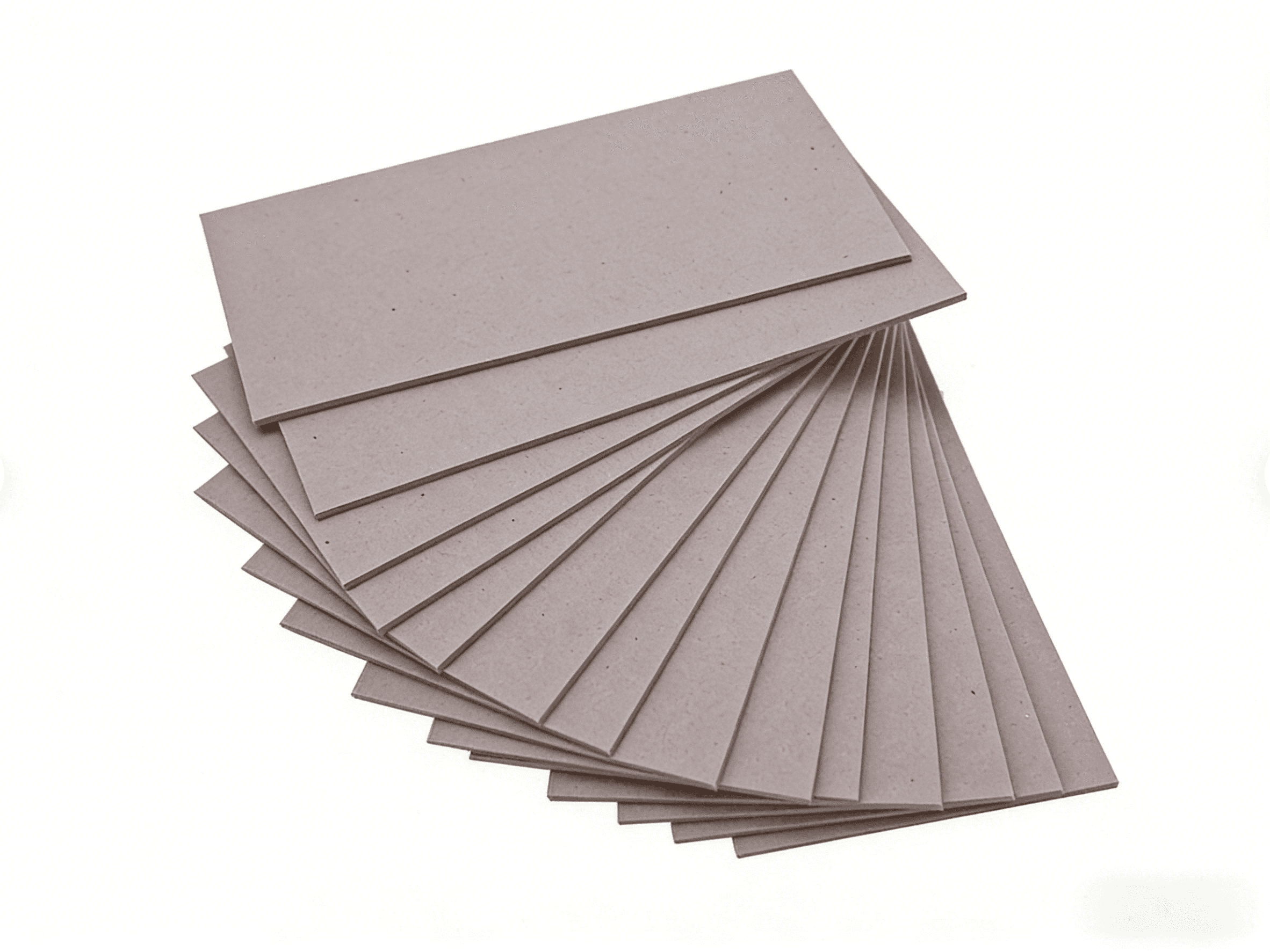
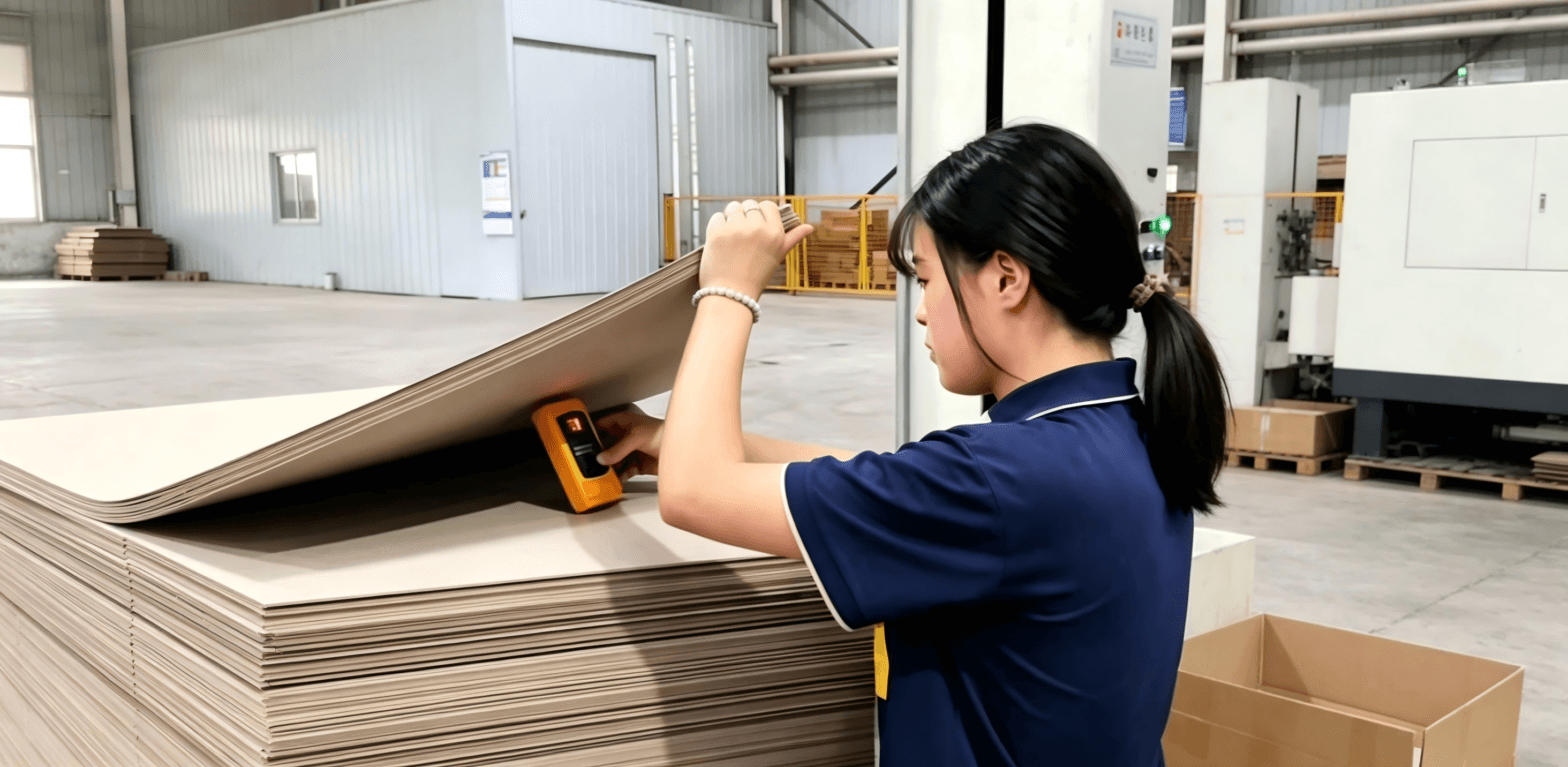
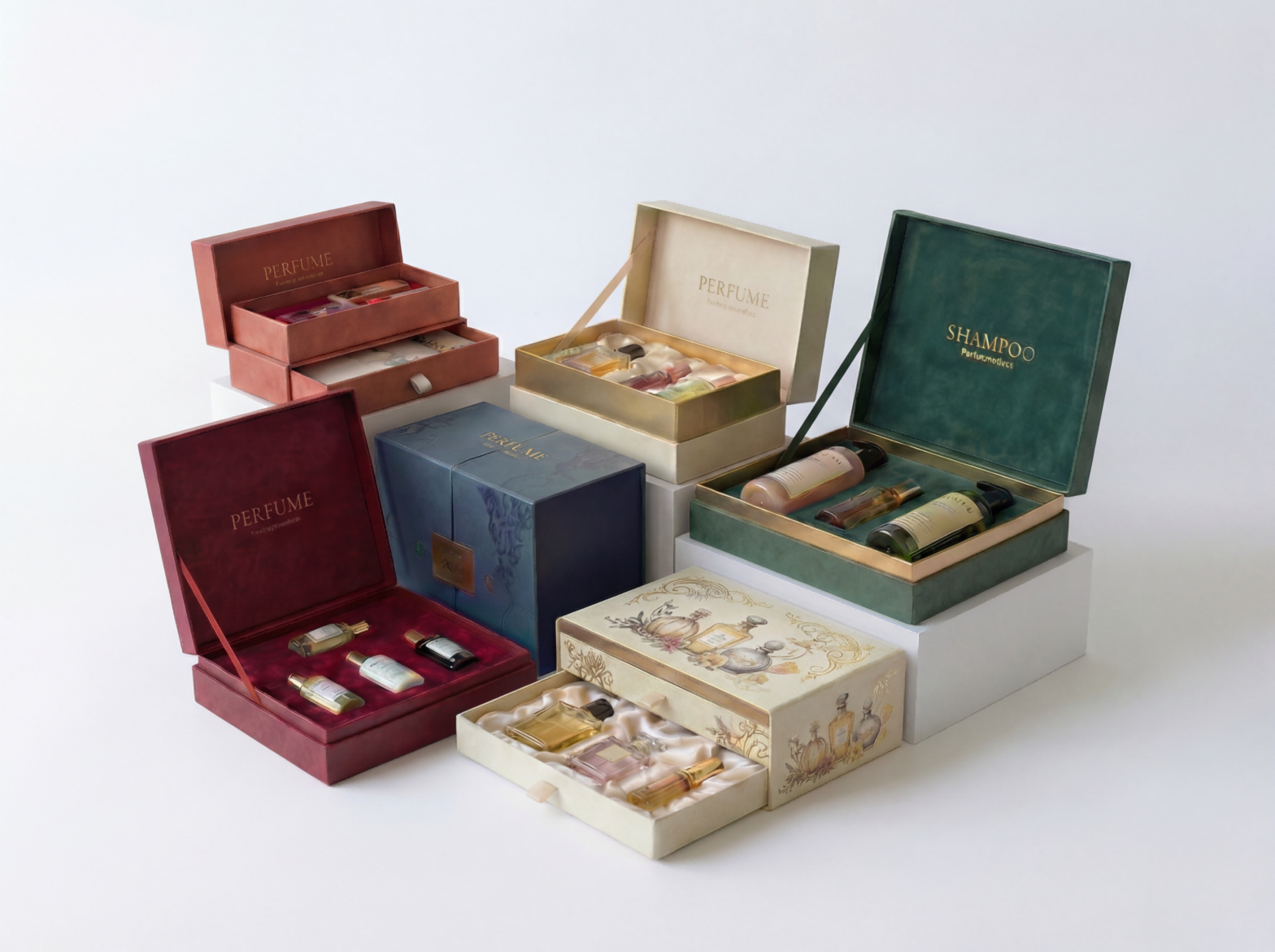
Grey Board is a thick paperboard made from recycled waste paper pulp, featuring high stiffness, excellent formability, and exceptional cost efficiency. For skincare packaging, it is commonly used as inner liners, base boards, or the structural core of rigid gift boxes, laminated with high-quality surface paper (such as specialty paper or art paper) to deliver a luxurious finished gift box.
In rigid skincare gift box applications, grey board is typically used in grammages ranging from 600–1850 g/m² — higher grammage means thicker, more compression-resistant board. It is the ideal choice for skincare products requiring structural support, including creams, serums, and gift sets.
Notably, grey board uses waste paper products as raw materials, giving packaging a “second life” through reprocessing, with outstanding sustainability credentials. In contrast, virgin wood pulp paperboards like white cardboard rely on forest resources for production. As sustainable packaging gains increasing importance worldwide, the eco-friendly advantages of grey board have become a key plus for brands.
2. How Does Grey Board Reduce Packaging Costs?
Grey Board impacts cost control across three key dimensions.
① Inherent Material Cost Advantage
Compared with white cardboard (SBS, made from virgin wood pulp), density board, or MDF, grey board has significantly lower raw material costs. Industry experience shows that replacing density board with grey board for gift box inner liners can cut material costs by approximately 30%, while maintaining full load-bearing performance. Against white cardboard, grey board usually costs over 40% less per ton.
For perspective: a brand producing 100,000 sets of skincare gift boxes annually can generate an extra **$30,000 in profit** by saving just $0.3 per box through material switching.
② Stable Market Supply for Predictable Budgeting
Raw material price volatility is a major variable in packaging costs. Since grey board uses recycled waste paper as its primary feedstock with abundant supply sources, its price fluctuation is generally milder than virgin wood pulp-based paperboards like white cardboard. Recent market data shows that the annual price fluctuation of white cardboard can reach hundreds of yuan per ton, while the grey board market operates relatively stably. Choosing grey board means more predictable and controllable packaging budgets.
Data source: FSC Global Packaging Material Market Report (FSC is a globally recognized authority on sustainable forestry and packaging material industry research, ensuring data authenticity and authority.)
③ Lower Structural & Processing Waste
Ignoring waste rates while only focusing on unit material prices is a common blind spot in cost control. For complex or irregularly shaped skincare gift boxes, grey board waste during die-cutting and lamination can reach 15–20%. However, an experienced supplier can optimize nesting and mold design to limit waste to under 5% — a core value we deliver as a B2B manufacturer.
3. Why Choose Us As Your Grey Board Supplier?
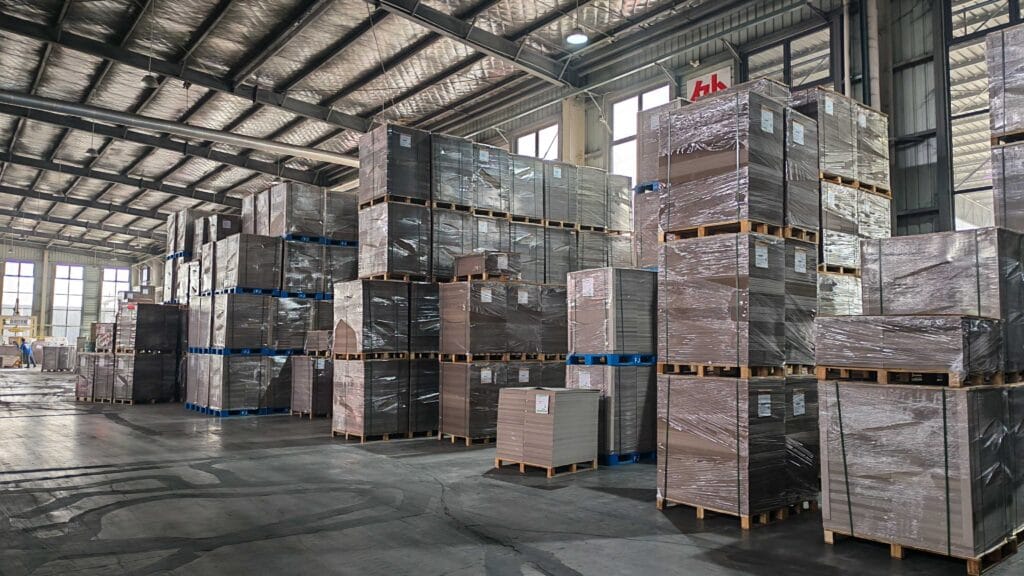
Sourcing a reliable overseas grey board supplier can be difficult. Language barriers, delivery schedules, quality standards, and certifications — any disruption can delay production and create hidden costs. Here’s how we help you save more:
- Consistent Quality → Lower reject rates: Made with high-purity recycled pulp, our grey board features uniform thickness, smooth surface, no delamination or deformation, fully compatible with high-speed lamination lines to avoid downtime or excessive scrap.
- Complete International Certifications → No customs delays: Factory certified to ISO 9001; products comply with FSC, REACH, and pass SGS testing, ensuring smooth customs clearance to Europe and America without extra storage or penalty costs.
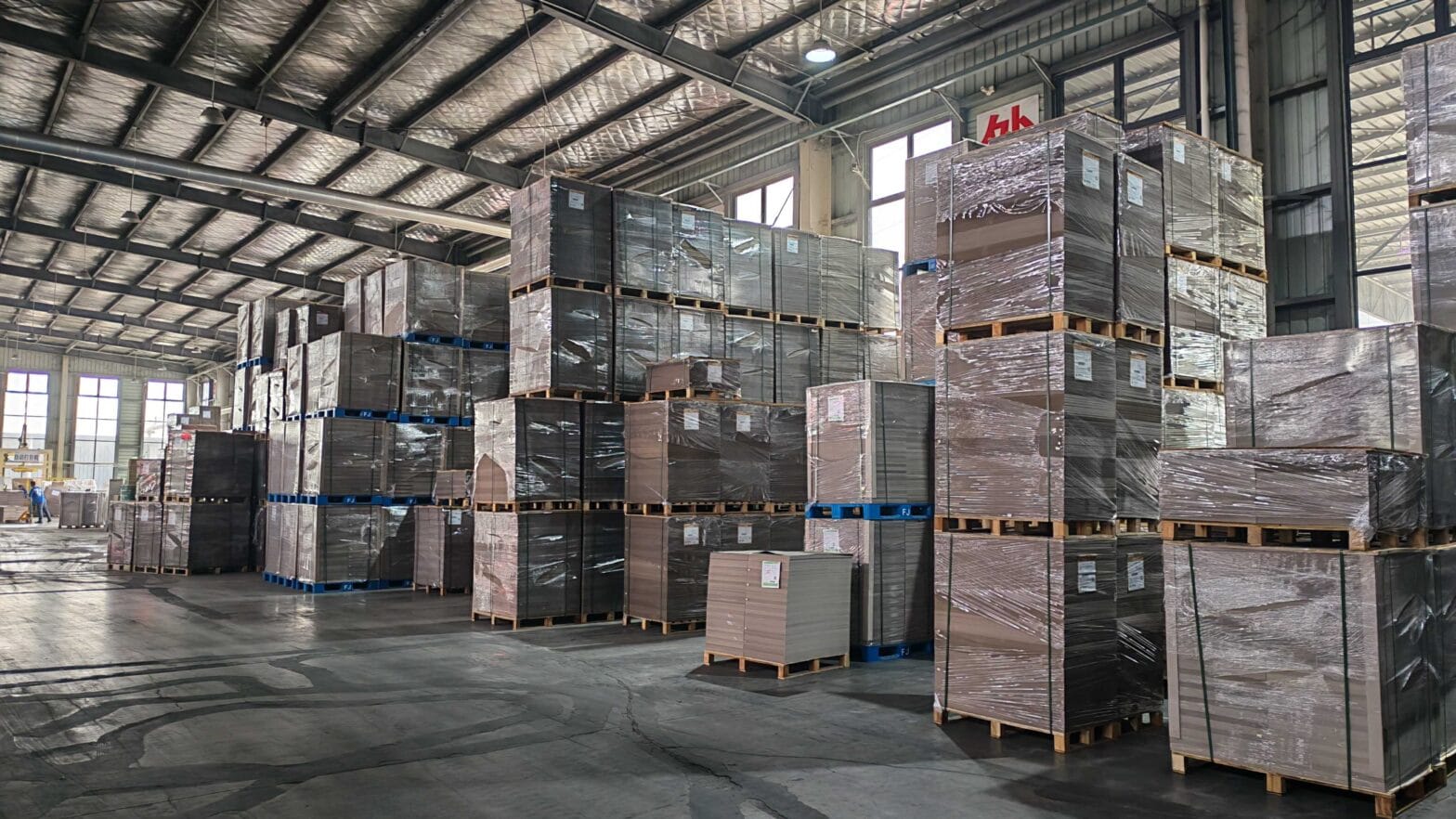
- Flexible MOQs → Reduced capital tie-up: Minimum order quantity of just 3 tons, preventing excessive inventory from occupying cash flow.
- Professional Technical Support → Maximize cost efficiency: Our engineering team optimizes material selection, structural design, and die-line layouts to minimize waste and maximize nesting efficiency.
4. Real Case: How a UK Skincare Brand Cut Packaging Costs by 18%
Last year, a mid-to-high-end UK skincare brand partnered with us. Their eye cream gift box originally used imported white cardboard for inner liners, with a unit material cost of $0.85. We recommended switching to high-grammage grey board and optimized the box structure, raising nesting efficiency from 72% to 89%.
As a result, unit material cost dropped to $0.69 — a reduction of 18.8% — while stiffness and opening experience fully met brand standards. For this single product alone, they saved over **$25,000 per year**.
5. Conclusion: Cost Advantages Come From Smart Material Selection, Not Cutting Corners
In the skincare packaging industry where “appearance is everything”, cost reduction does not require sacrificing quality. Grey Board is the underrated smart choice — it delivers robust structural support at a low cost, letting surface paper handle aesthetics while grey board ensures stability.
As a B2B manufacturer specializing in grey board exports, we believe true cost advantages stem from deep material expertise and precise supply chain management. If you are struggling with skincare packaging box costs, feel free to contact us. We offer free samples and a detailed cost-comparison analysis.
FAQs
Grey board is typically over 40% cheaper per ton than SBS (solid bleached sulfate). For a brand producing 100,000 skincare boxes, switching to grey board can save around $30,000 per year.
No. Grey board is used as the inner structure or skeleton, not the visible surface. It provides stiffness and strength, while the outer decorative paper delivers the premium look. Many high‑end brands use grey board for rigid boxes.
Yes. Grey board is made from recycled waste paper, giving waste materials a second life. In contrast, SBS paperboard relies on virgin wood pulp. Using grey board helps reduce forest resource consumption and supports circular packaging.
Yes. With proper die‑cut layout and design optimization, an experienced supplier can keep material waste below 5%. Poor design can cause 15–20% waste. Choosing the right grey board partner directly lowers your hidden waste costs.
For skincare rigid boxes, grey board grammage commonly ranges from 600 to 1850 g/m². Higher grammage means greater thickness and compression strength, suitable for creams, serums, and gift sets.
Author Profile

-
HONGTUSCENERY is a professional manufacturer of composite paperboard,
providing sustainable and customized packaging solutions for global brands.
With nearly 20 years of industry experience, we focus on material performance,
structural strength, and green supply chain development.
Latest entries
 Cosmetics Packaging2026-04-10How to Avoid Quality Issues in Cosmetic Rigid Box Production
 Cosmetics Packaging2026-04-08How Packaging Suppliers Win Skincare Brands with Grey Board
 Cosmetics Packaging2026-04-08Grey Board Bulk Purchasing Guide: A Must-Read for Skincare Packaging Suppliers
 Cosmetics Packaging2026-04-06Skincare Packaging Box Material Cost Optimization: How Grey Board Saves Budget?