Sustainable Alternatives to Plastic Packaging That Protect Products and Cut Costs
Introduction
In recent years, the packaging industry has faced a noticeable shift: discussions about environmental impact are becoming more frequent.
Whether it’s inquiries from downstream clients, hot topics at industry trade shows, or new requirements in export policies, the question of whether packaging is “eco-friendly” has gradually moved from being an option to a practical issue that more businesses need to address.
At the same time, the market has seen a proliferation of various plastic alternatives. Paperboard, recycled materials, bioplastics—new terms appear constantly. But for companies that actually use packaging, the core concerns remain the same few questions: If we switch to a new material, will our products still be adequately protected during transit? Will procurement costs increase significantly? If environmental responsibility comes at the expense of product safety or a major increase in spending, the transition becomes difficult to justify.
This article doesn’t aim to discuss abstract concepts. Instead, we take a practical, user-oriented approach to outline what mature sustainable packaging solutions actually look like today. We will focus on three key aspects: Can these solutions protect products effectively? What is the real impact on overall costs? And what are the key points to consider when making a choice?
Table of Contents
- Paperboard Packaging: More Than Just Boxes
- Choosing Materials: What’s the Difference Between FSC and Recycled Content?
- The Real Cost: Is Eco-Friendly Packaging More Expensive?
- Frequently Asked Questions (FAQ)
Paperboard Packaging: More Than Just Boxes
When considering alternatives to plastic, paperboard is the most common thought. But if your impression of paperboard is still limited to ordinary cardboard boxes that are “prone to moisture” or “not strong enough,” you might miss many mature solutions already available.
Tailored Paperboard Solutions for Different Products
Different products have vastly different packaging requirements. The value of sustainable packaging lies precisely in providing suitable solutions for these differences.
Consider fresh food. Many assume paperboard cannot handle moisture, so products like berries or cherry tomatoes must use plastic punnets. However, coated paperboard designed for cold chain applications now exists. It features a thin, eco-friendly coating that effectively blocks condensation, keeping the container rigid. Several European fresh produce chains have already made this switch without increasing product spoilage rates. This coated paperboard is a type of composite material. For more on this, you can read our analysis on how composite paperboard drives the green supply chain.
For fragile items needing long-distance shipping, foamed plastic was once the default choice for cushioning. Now, molded pulp is a well-established alternative. You might know it from egg cartons, but the technology is far more sophisticated. It uses recycled newspapers or cardboard, reduced to pulp and molded into shape, perfectly conforming to every curve of a product. High-end glassware, ceramics, and precision instruments for export are often packaged this way.
If you are selecting paperboard for a specific product and want to understand suitable weights and coatings, our detailed FSC paperboard buying guide provides specific parameters and comparisons.
Considering the Packaging’s “End of Life”
When choosing paperboard, one question is worth considering: Is this packaging easy to recycle after use?
Some paperboards are laminated with a plastic film to achieve oil or water resistance. These composites are difficult to separate during recycling and often end up being incinerated or landfilled. A more widely accepted approach now is to choose mono-material paperboard that achieves barrier properties through special treatments. Consumers can then place it directly into paper recycling bins, allowing the packaging to fulfill its environmental purpose.
A practical tip: When discussing options with suppliers, it’s worth asking: “Can this packaging be processed in standard recycling streams after use?” The answer often helps determine if it genuinely aligns with circular economy principles.
Choosing Materials: What’s the Difference Between FSC and Recycled Content?
As you explore plastic alternatives, you’ll encounter two frequent terms: FSC certification and recycled materials. What do they actually mean, and how do you choose?
FSC Certification: Ensuring Responsible Sourcing
FSC (Forest Stewardship Council) certification essentially ensures that the paper or paperboard you use comes from responsibly managed forests. Companies harvesting timber are required to replant and protect the ecosystem and rights of local communities. According to official FSC data, over 200 million hectares of forest worldwide are now FSC-certified, providing strong support for responsible forestry management. [Source: FSC Annual Review]
Choosing FSC-certified packaging provides tangible assurance for downstream clients. For export businesses or companies focused on brand image, this label signals that your supply chain is managed responsibly at every step. It’s not a material property, but a management commitment.
A common question is: Can you visually distinguish FSC-certified paperboard from ordinary board? The answer is no, but the packaging will bear the FSC logo, and suppliers can provide certificates. Methods for verifying authenticity are covered in our separate guides.
Recycled Materials: A Direct Way to Reduce Impact
Using post-consumer recycled (PCR) material is one of the most direct ways to lessen the environmental burden of packaging. This involves materials like old newspapers or cardboard boxes that are processed and become part of new packaging.
However, it’s useful to be aware of a practical reality: recycled paperboard is often slightly less strong than virgin fiber board and its color may be grayer; recycled plastic is typically less transparent than virgin plastic. Therefore, choices need to be made based on product requirements.
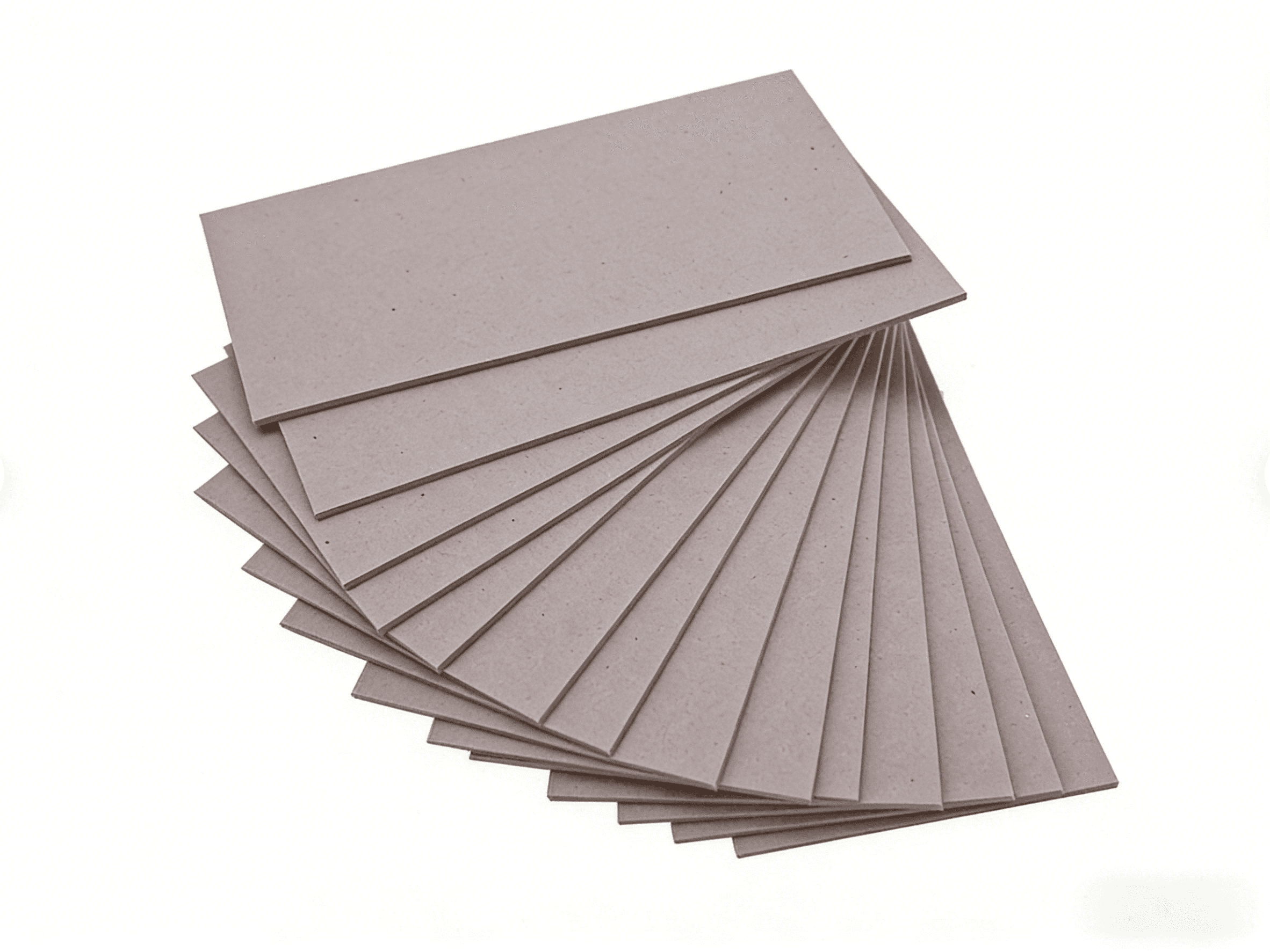
If your product is heavy and requires high stacking strength, you may need a certain percentage of virgin fiber to ensure performance. If the packaging’s appearance is less critical, a high percentage of recycled material can be an excellent choice. Take greyboard, for example. It’s a type of recycled board commonly used for inner supports and dividers in export packaging. We have detailed test data on greyboard load-bearing capacity available for reference.
Another valid concern is: Is recycled material safe for food contact? This is a critical question. Recycled materials intended for food contact must meet specific production standards and testing requirements. When sourcing, you should request appropriate food-grade certification from suppliers.
The Real Cost: Is Eco-Friendly Packaging More Expensive?
This is often the central question for businesses considering a transition: Will switching to eco-friendly packaging significantly increase procurement costs?
If you look only at the unit price of an individual package, some eco-friendly options might indeed be slightly higher. However, the picture can change when you consider the total cost.
Visible Savings: Transportation and Warehousing
A core principle of sustainable packaging is “source reduction”—using less material while maintaining protective function. Making packaging lighter and often thinner is a key part of this.
Lighter packaging means more units per pallet and more goods per truck. For companies with consistent, large-volume shipping needs, even saving a few grams per package can translate into substantial annual freight savings. A study on packaging optimization and cost savings shows that through thoughtful lightweighting, companies can significantly reduce logistics costs without compromising protection. [Source: MDPI Sustainability Journal]
Additionally, many eco-friendly packaging designs are collapsible or nestable, taking up less space when stored empty or returned. This can indirectly lower warehousing costs. One furniture exporter we worked with calculated that after optimizing their packaging structure, they could fit 12% more products per container, reducing annual freight costs by over 8%.
Less Visible Savings: Mitigating Future Risks
This benefit is less tangible than freight costs but increasingly important in practice. Markets like Europe are beginning to levy taxes on plastic packaging, particularly on types that are difficult to recycle. Using FSC-certified paperboard or packaging containing recycled content typically helps avoid such additional costs.
More importantly, when your main competitors are still using conventional plastic packaging, proactively switching to a more responsible solution gives you an advantage when dealing with clients who have environmental requirements or when bidding on certain projects. This reputational benefit and potential for new opportunities, while hard to quantify precisely, is a real factor.
So, evaluating the cost of eco-friendly packaging is best done from a “total cost of ownership” perspective. Considering procurement price, transport expenses, potential compliance costs, and brand value, a well-designed sustainable packaging solution often proves to be a sound investment over the long term.
Frequently Asked Questions (FAQ)
Sustainable packaging refers to packaging that minimizes its environmental footprint throughout its lifecycle—from raw material extraction to final disposal. It typically involves using renewable or recycled materials (like FSC-certified paper or recycled content), consuming less energy in production, and being designed for easy recycling or composting. Crucially, it must first fulfill its primary job of protecting the product.
Common examples of plastic alternatives include:
Paperboard and Molded Pulp: Widely used for outer boxes, protective cushioning, and trays.
Bioplastics: Made from plant sources like sugarcane or corn, rather than petroleum. Note that some require industrial composting facilities to break down.
Compostable Materials: Meet standards like EN13432, meaning they can fully decompose in an industrial composting facility.
Mono-material Barrier Paper: Paper treated to provide barrier properties while remaining part of a single material stream, making it recyclable.
Look for third-party certifications on the packaging:
FSC Certified: Indicates the paper fiber comes from responsibly managed forests.
Recycling Symbols (e.g., Green Dot): Suggest the packaging is designed for recycling, though local facility capabilities vary.
Compostable Certifications (e.g., OK Compost): Means the item can be composted in an industrial facility.
Also, consider if the packaging is made from a single material (like all paper). Mono-material constructions are much easier to recycle than multi-layer laminates (e.g., paper bonded to plastic).
The 5 R’s provide a useful framework for sustainable design:
Reduce: Minimize the amount of material used.
Reuse: Design packaging that can be used multiple times.
Recycle: Ensure materials can be processed and turned into new products.
Renew: Use materials from renewable sources, managed sustainably.
Rethink: Fundamentally challenge and improve the packaging design.
This is the most critical question. Any viable packaging solution must pass rigorous testing. A well-designed sustainable package is tested for transport simulations, including vibration and drop tests, just like conventional packaging. Many global brands already use molded pulp or specialized coated boards to package high-end food and beverage items safely. The key is selecting the right material and structure for your specific product’s weight, shape, and distribution environment, backed by proper testing.
Conclusion
Transitioning from conventional plastic packaging to more sustainable options might seem complex. Ultimately, it’s about re-evaluating your packaging needs and finding more effective solutions.
Whether it’s achieving logistics savings through lightweighting or reducing reliance on virgin resources by using recycled content, each step toward optimization makes your supply chain more efficient and resilient.
If you are exploring packaging options for your products or considering improvements to your current setup, understanding material possibilities is a good starting point. We have compiled more detailed material introductions and selection references to help guide your search.
[contact us to discuss your packaging requirements]
Sources
Forest Stewardship Council (FSC): FSC Facts & Figures – Data on global FSC-certified forest area and impact.
MDPI Sustainability Journal: Packaging Optimization and Cost Savings – A study on lightweighting and logistics cost reduction.
Author Profile

-
HONGTUSCENERY is a professional manufacturer of composite paperboard,
providing sustainable and customized packaging solutions for global brands.
With nearly 20 years of industry experience, we focus on material performance,
structural strength, and green supply chain development.
Latest entries
 Cosmetics Packaging2026-04-10How to Avoid Quality Issues in Cosmetic Rigid Box Production
 Cosmetics Packaging2026-04-08How Packaging Suppliers Win Skincare Brands with Grey Board
 Cosmetics Packaging2026-04-08Grey Board Bulk Purchasing Guide: A Must-Read for Skincare Packaging Suppliers
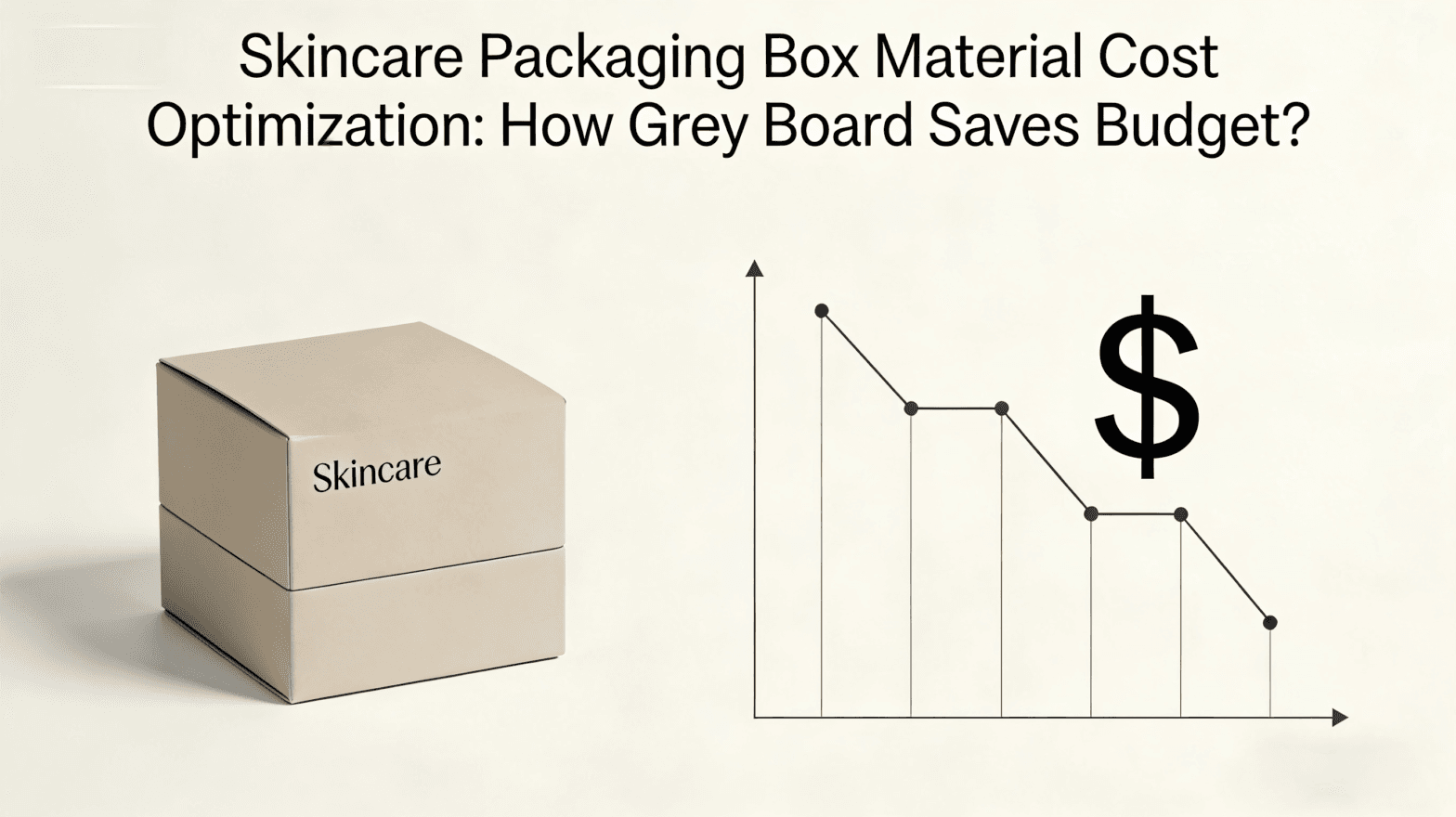 Cosmetics Packaging2026-04-06Skincare Packaging Box Material Cost Optimization: How Grey Board Saves Budget?