How to Choose the Best Composite Cardboard for Packaging Applications
Introduction: What’s Your Packaging Challenge?
If you’ve been in packaging procurement for a while, you’ve likely faced situations like these:
- You chose a thick paperboard, but the premium gift box still has soft, rounded corners.
- Cartons collapsed at the bottom of a pallet during transit, causing significant product damage.
- You want to switch to more sustainable materials, but you’re worried they won’t be strong enough.
Often, the root of these problems is simple: you didn’t choose the right composite cardboard.
Many buyers search for questions like: Is cardboard a composite material? The short answer is yes. But different composite structures offer vastly different performance. Choosing based only on thickness or price can lead to packaging failures, product damage, and higher logistics costs.
This guide cuts through the technical jargon. We’ll look at how to select the best composite cardboard based on your actual application needs.
Want to start with the basics? Read our guide: What Is Greyboard? A Guide to Its Use in Packaging
Table of Contents
- What Is Composite Cardboard?
- Types of Composite Cardboard Used in Packaging
- Material Properties That Determine Cardboard Strength
- Composite Cardboard Thickness and GSM Guide
- Common Packaging Applications for Composite Cardboard
- How to Choose the Right Composite Cardboard
- Frequently Asked Questions (FAQ)
- Final Thoughts
What Is Composite Cardboard?
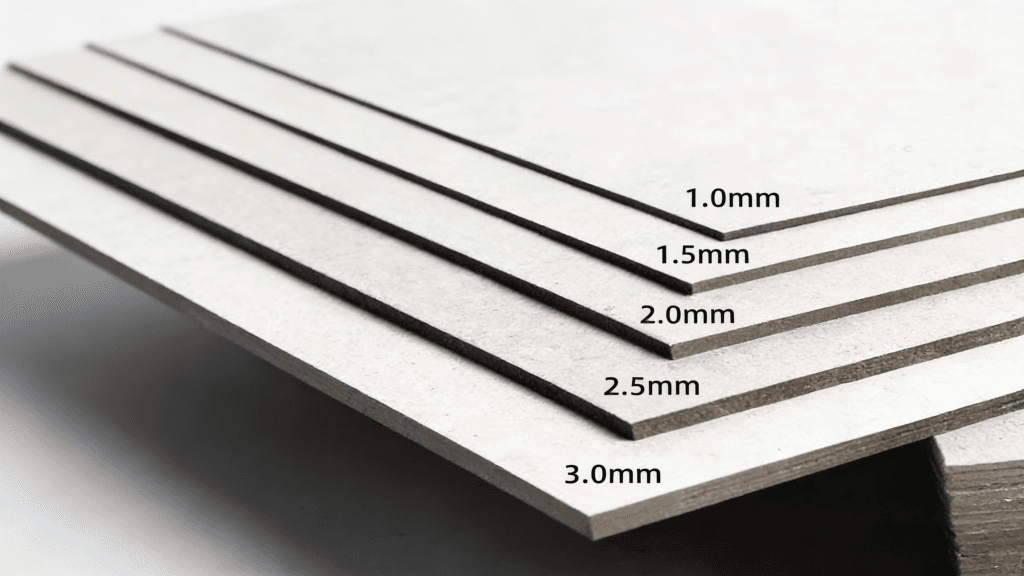
Composite cardboard is a paper-based material made by bonding multiple layers of paper fibers together using adhesives. This process transforms thin paper into a rigid, durable board.
Think of it like a sandwich: the top and bottom layers (liners) provide a smooth surface for printing and resist wear, while the thick middle layer (the fiber core) provides the structure and strength.
When someone says a board is “too soft,” it’s often because the fiber core lacks density or has too few layers. Composite cardboard sheets are engineered with specific layer counts and densities to meet different strength requirements.
A common question is: Is cardboard a composite material? Yes, nearly all industrial packaging boards—including greyboard and corrugated cardboard—are composites. Even a composite cardboard box is made by combining these layered materials.
For a deeper dive, here’s the Wikipedia definition of a composite material.
Types of Composite Cardboard Used in Packaging
1. Greyboard: The Standard for Gift and Rigid Boxes
If you’re making high-end gift boxes, book covers, or any packaging that needs a crisp, rigid structure, greyboard is usually the best choice.
- Characteristics: High density, excellent stiffness, cost-effective. It has a smooth surface, making it ideal for laminating, foil stamping, and embossing.
- Common Names: Often called rigid cardboard, or referred to by its surface finish (e.g., one-sided white, two-sided white).
- Key Consideration: Greyboard GSM can range from 300 to over 2000. Choose one that’s too thin, and your box will lose its shape. Choose one that’s too thick, and you’ll increase costs and may have difficulty with folding.
2. Corrugated Cardboard: The Workhorse for E-commerce and Transport
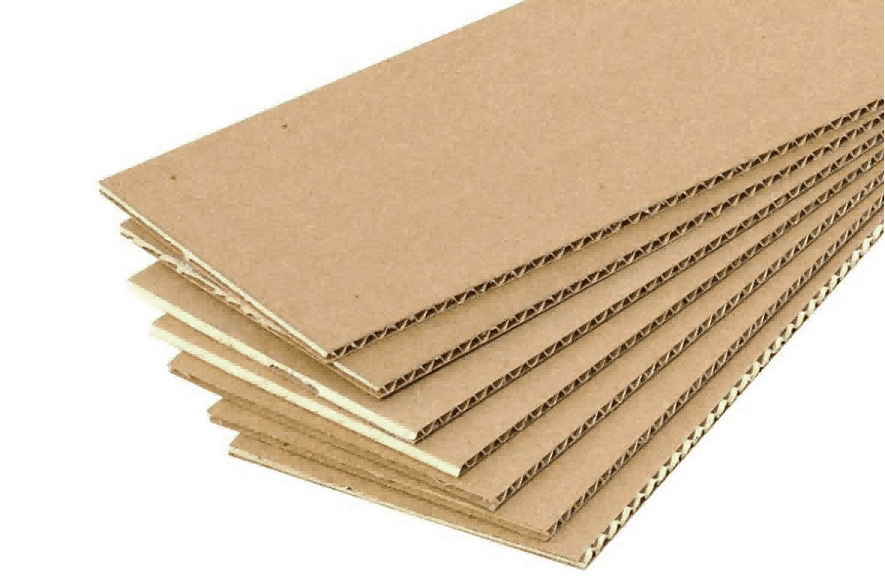
Corrugated cardboard is like a reinforced sandwich. The middle layer is a fluted (wavy) paper, which acts like a series of small arches, providing excellent compression strength.
- Common Flute Types: B-flute, C-flute, E-flute.
- C-flute has a larger arch, offering the best stacking strength, making it ideal for shipping boxes.
- B-flute has a smaller arch, providing a smoother surface for better printing.
- So, if you’re asking “Is B flute or C flute stronger? ” the answer is: choose C-flute for stacking strength and B-flute for print quality.
- Industry Data: According to the Fiber Box Association, corrugated packaging accounts for over 90% of global transport packaging.
3. Composite Cardboard Tubes: Ideal for Industrial and Canister Packaging
You might not see these every day, but they have a very specific and important role. They’re used as cores for films, tapes, and industrial rolls, or as the bodies for food canisters like those for potato chips or tea.
- Characteristics: Made by spiral-winding multiple layers of paper, they have exceptional resistance to radial crushing.
- Applications: Food canisters, industrial film rolls, protective mailing tubes.
4. Specialty Composite Boards
Beyond the standard types, there are boards for niche applications. For example, cardboard epoxy composite is made by infusing paperboard with epoxy resin, significantly improving its water and chemical resistance for specialized industrial uses. You might also wonder, “What is that plastic cardboard called? ” This often refers to polypropylene (PP) honeycomb boards, which look like cardboard but are plastic. However, paper-based honeycomb is a more eco-friendly alternative for many applications.
Material Properties That Determine Cardboard Strength
It’s a common myth that thicker cardboard is always stronger. In reality, four key properties matter more.
| Property | Simple Explanation | Why It Matters for Your Packaging |
| Compression Strength | The ability to withstand a constant, pushing force, like the weight of other boxes stacked on top. | Critical for warehousing and long-distance shipping. Prevents pallet collapse. |
| Stiffness | The resistance to bending. | Essential for gift boxes, folders, and any package that needs sharp, clean edges. |
| Bursting Strength | The resistance to being punctured or torn by a localized force. | Important if your product has sharp corners or edges that could push through the packaging. |
| Flatness / Smoothness | How even the board’s surface is. | Directly impacts print quality and how smoothly the board runs through automatic folding and gluing machines. |
If you’re dealing with frequent packaging deformation, this guide can help: How to Prevent Packaging Deformation
Composite Cardboard Thickness and GSM Guide
GSM stands for Grams per Square Meter and measures the weight of the board. Thickness is the physical caliper (depth) of the board. They are related but not the same.
For example, two boards can both be 1000 GSM. One might use loose, fluffy fibers (lower density) and be thicker. The other might use compact, dense fibers (higher density) and be thinner. Your choice depends on your needs.
Use this as a general reference for selection:
| GSM Range | Typical Thickness | Best Suited For |
|---|---|---|
| 250–350 GSM | 0.3 – 0.5 mm | Interior partitions, light dividers, low-cost packaging |
| 350–600 GSM | 0.5 – 0.8 mm | Standard consumer product boxes, file folders, mailers |
| 600–1200 GSM | 0.8 – 1.5 mm | Shoeboxes, gift boxes, cosmetic packaging, rigid setup boxes |
| 1200+ GSM | 1.5 mm+ | Premium liquor boxes, heavy-duty industrial packaging, book covers |
Pro Tip: For cost-effective performance, you don’t always need the thickest board. For a rigid box, a high-GSM greyboard with a moderate density can provide excellent stiffness without being excessively heavy.
For a more detailed breakdown, read our Cardboard GSM & Thickness Guide.
Common Packaging Applications for Composite Cardboard
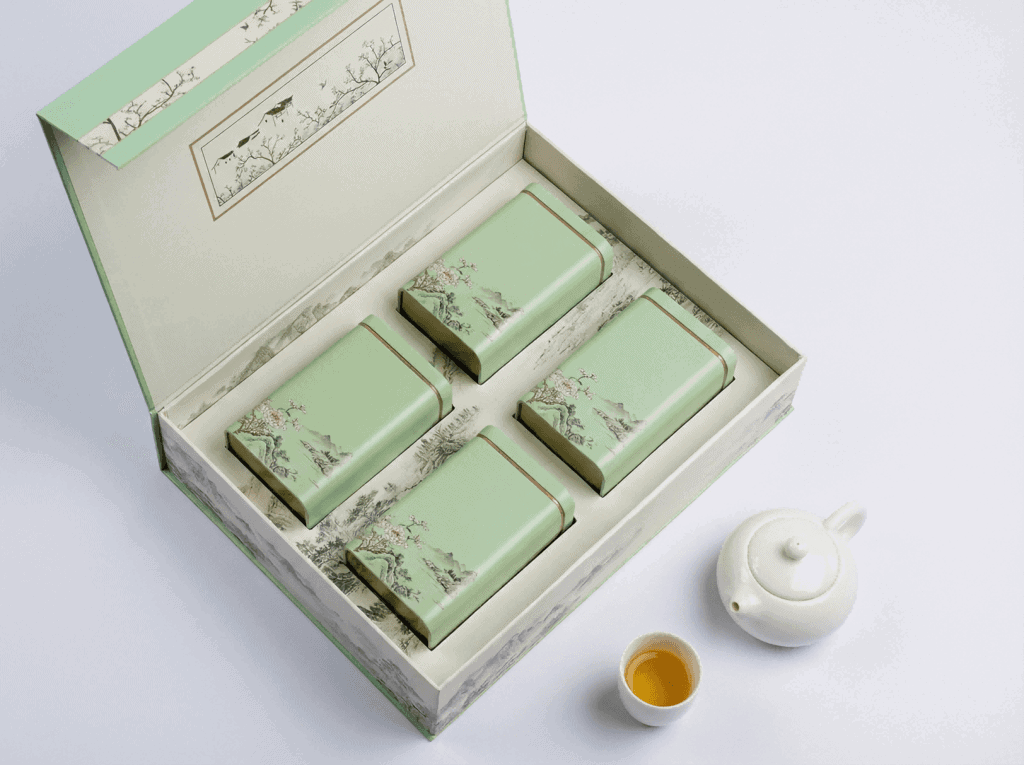
Case Study 1: Premium Tea Gift Box
- The Challenge: The box needed to feel substantial and luxurious, with perfect foil stamping on a smooth surface and razor-sharp edges.
- The Solution: A 1200 GSM two-side white coated greyboard was chosen.
- The Result: The foil stamping was flawless, the box structure was perfectly rigid, and the brand’s premium image was reinforced.
Case Study 2: E-commerce Packaging for Small Appliances
- The Challenge: Boxes needed to be stackable five pallets high in a warehouse without collapsing, all while keeping material costs low.
- The Solution: A high-strength, C-flute corrugated board.
- The Result: The product damage rate dropped from 5% to under 1%, and overall logistics costs decreased due to fewer returns.
Case Study 3: Industrial Packaging for Auto Parts
- The Challenge: Replacing heavy wooden crates for shipping metal molds with a lighter, more sustainable alternative.
- The Solution: High-density honeycomb cardboard panels were used to build the crates and internal supports.
- The Result: The new packaging was 70% lighter than wood, 100% recyclable, and saved the company an estimated $30,000 annually in freight costs.
According to the Smithers Packaging Industry Report, the global market for paper-based packaging continues to grow, driven largely by e-commerce and sustainability demands.
How to Choose the Right Composite Cardboard
Use this simple checklist the next time you’re selecting material:
- What is the primary function of your package?
- Is it for retail display (focus on appearance and rigidity) or transit (focus on strength and protection)?
- How heavy is your product? Does it have sharp edges?
- Weight helps determine the minimum GSM. Sharp edges mean you need good bursting strength.
- Will the packages be stacked? How high?
- This dictates whether you need C-flute corrugated or honeycomb structures for high compression strength.
- What are the printing requirements?
- Fancy finishes like foil stamping or UV coating require a very smooth surface, making two-side coated greyboard the best option.
- Are there any sustainability goals?
- Do you need FSC certification? Are you aiming for a specific percentage of recycled content?
Material Comparison at a Glance
| Material Type | Primary Strength | Best Applications | Less Suitable For |
|---|---|---|---|
| Greyboard | High stiffness, smooth surface | Gift boxes, cosmetic boxes, book covers | Applications needing cushioning/protection |
| Corrugated | High compression strength, light weight | Shipping cartons, e-commerce mailers | Applications demanding a high-end look |
| Honeycomb | Extremely high strength-to-weight ratio | Heavy-duty pallets, industrial dividers | Cost-sensitive, small consumer goods |
| Composite Tubes | Exceptional radial strength | Core tubes, canister packaging | Complex, non-cylindrical shapes |
Frequently Asked Questions (FAQ)
Yes. Industrial paperboards like greyboard and corrugated board are made by bonding multiple layers of material, which classifies them as composites.
For compression strength (stacking), honeycomb and thick corrugated boards are the strongest. For rigidity (resistance to bending), high-GSM greyboard is superior. The “strongest” material depends on your specific need.
Cardboard is made from renewable fibers and is highly recyclable. Paper fibers can typically be recycled 5-7 times before they become too short. These shorter fibers are then often used in the inner layers of new greyboard or other paper products.
ou’re likely thinking of polypropylene (PP) honeycomb board or corrugated plastic sheet. While they look similar, they are plastic-based. Paper-based honeycomb is a more sustainable, recyclable alternative that offers similar properties.
The fluted structure of corrugated cardboard can trap dust, germs, and other contaminants, making it very difficult to clean and sanitize effectively. Hospitals typically require smooth, non-porous surfaces (like plastic or metal) that can be easily wiped down.
Final Thoughts
Choosing the right composite cardboard is about finding the best balance between strength, cost, manufacturability, and sustainability for your specific product. There’s no single “best” material, but there is a best process: start by clearly defining your requirements, then match them to the material’s properties.
If you’re unsure where to start or need to test samples for your project, feel free to contact us. We can help recommend the right board specifications based on your product and even send samples for you to test.
For a deeper look at how GSM and thickness work together, read our detailed guide: Cardboard GSM & Thickness Guide
Author Profile

-
HONGTUSCENERY is a professional manufacturer of composite paperboard,
providing sustainable and customized packaging solutions for global brands.
With nearly 20 years of industry experience, we focus on material performance,
structural strength, and green supply chain development.
Latest entries
 Double-Sided Kraft Laminated Greyboard2026-10-13Hidden Costs in Kraft Board Procurement: Why the Lowest Price Is Not Always the Best Deal
 Industry Insights2026-10-10How to Reduce Profit Losses from Paperboard Procurement Amid RMB Exchange Rate Fluctuations
 Company News2026-10-03Kraft Paperboard: Applications, Performance Advantages & Sustainability
 Double-Sided Kraft Laminated Greyboard2026-09-305 Key Factors for Choosing a Reliable Kraft Board for Packaging Supplier