Why Greyboard Peeling Happens in Rigid Box Packaging
Greyboard is widely used in rigid box packaging, including luxury gift boxes, cosmetic packaging, electronics packaging, and hardcover book structures.
In real production, a common issue is greyboard peeling, which appears as surface fiber lifting, edge fuzzing, or localized fiber detachment during die-cutting, lamination, folding, or transportation.
It is important to clarify a key point:
Greyboard peeling is not the same as delamination.
Peeling refers to surface fiber damage, while delamination refers to internal layer separation.
Peeling mainly affects appearance quality and production yield, especially in premium packaging applications.
1. How Serious Is Greyboard Peeling? First Make a Judgment
Before choosing a solution, you must first evaluate the severity.
Minor condition
Slight edge fuzz after die-cutting that does not affect folding or final appearance.
Moderate issue
Visible surface lifting after lamination or partial damage during folding that affects appearance quality.
Severe issue
Repeated peeling during mass production, low yield in automatic production lines, and consistent batch failures.
If the issue is severe and repeated, it usually cannot be solved by process adjustment alone.
2. Why Does Greyboard Peeling Happen?
The core reason is:
The surface fiber structure is not strong enough to withstand tensile and shear stress during processing.
In real production, it is usually caused by multiple factors combined.
3. Main Causes of Greyboard Peeling
1. Material structure weakness (primary cause)
Short surface fibers
High proportion of low-quality recycled fibers
Uneven fiber distribution
Insufficient surface densification
This is the most common root cause in high-end packaging failures.
2. Insufficient board densification
Loose surface structure
Poor fiber bonding
Weak surface locking strength
This makes the board vulnerable to tearing during processing.
3. Lamination process instability
Excessive film tension
Unbalanced adhesive penetration
Improper drying speed
These create peeling force on the surface layer.
4. Excessive processing stress
Dull cutting tools
High die-cut pressure
Over-deep creasing
These factors generate tensile and shear stress that damages the surface fibers.
5. Moisture instability
High moisture weakens fiber strength
Low moisture makes fibers brittle
Both increase peeling risk during processing.
6. Storage and transportation impact
High humidity environments
Heavy stacking pressure
Long-distance sea freight exposure
These conditions further weaken surface stability.
4. When Is Greyboard Peeling Most Likely to Occur?

High-risk applications include:
High-end laminated rigid boxes
Cosmetic and perfume packaging
High GSM thick greyboard applications
Automatic die-cutting production lines
Export packaging with sea freight
High humidity storage environments
Complex folding and multi-creasing structures
The more premium and automated the production, the higher the risk of peeling.
5. What Should You Do When Peeling Happens?
Greyboard peeling should be treated as a decision-making problem, not just a technical issue.
Scenario 1: Peeling only occurs during processing
For example, it appears after die-cutting or lamination, but raw board is stable.
Conclusion
This is mainly a processing stress issue rather than a material problem.
Recommended actions
Reduce die-cut pressure
Optimize creasing depth
Adjust lamination tension
Replace cutting tools
Decision
You can continue using the current supplier in most cases.
Scenario 2: Peeling occurs across multiple stages and batches
For example, peeling appears in lamination, die-cutting, and folding, with unstable batch performance.
Conclusion
This is likely a material stability issue.
Recommended actions
Test surface fiber strength
Compare different supplier samples
Run batch consistency testing
Decision
Supplier replacement or material upgrade is strongly recommended.
Scenario 3: Peeling worsens in humidity or after shipping
For example, issues become significantly worse after sea freight or storage.
Conclusion
This is caused by combined material instability and environmental impact.
Recommended actions
Improve moisture-proof packaging
Control warehouse humidity
Test high-humidity performance
Decision
Both material and logistics conditions must be improved.
6. How to Select More Stable Greyboard
Stable greyboard typically has:
Dense and uniform surface fiber structure
Strong inter-fiber bonding
Stable moisture control
Consistent batch quality
Reliable die-cut and lamination performance
In premium packaging, stability is more important than cost.
7. How to Evaluate a Reliable Supplier
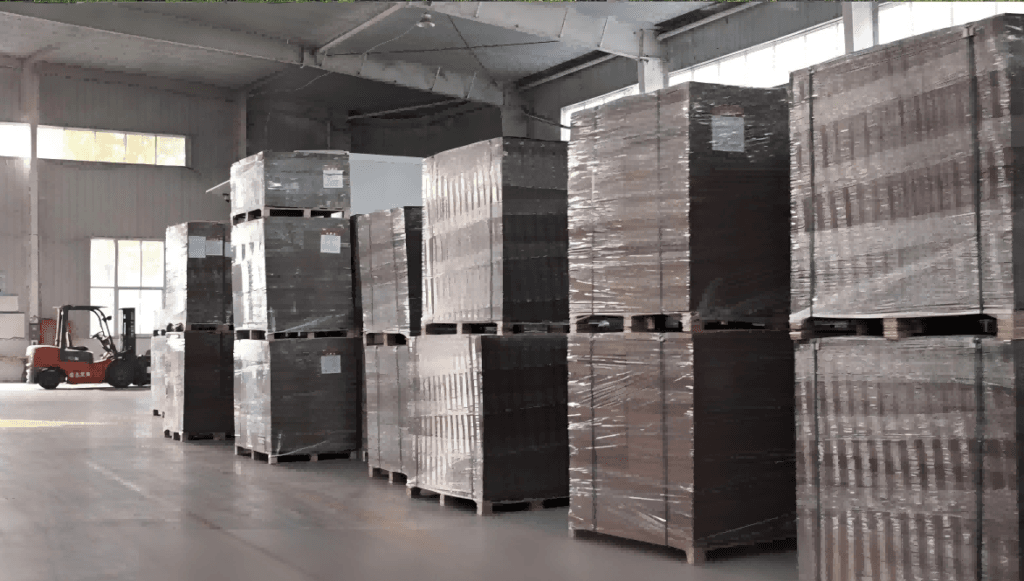
A reliable greyboard supplier should provide:
Stable batch-to-batch consistency
Standardized production process
Moisture control system
Experience with automatic production lines
Stable export supply capability
The key is not production ability, but production stability.
8. What to Check Before Purchasing
Before mass production, confirm:
Die-cutting test performance
Lamination compatibility
Surface fiber strength
Thickness consistency
Moisture stability range
High humidity performance
Batch repeatability
Small batch testing is essential for risk control.
9. Impact on Procurement and Production
If greyboard peeling is not controlled, it may lead to:
High rejection rates
Production line downtime
Increased rework costs
Packaging appearance failure
Shipping delays
Customer complaints
In B2B procurement, this is a hidden but significant supply chain risk.
Final Conclusion
The root cause of greyboard peeling is:
Weak surface fiber structure, excessive processing stress, and environmental instability.
However, the most important decision is not understanding the cause, but determining what action to take:
If the issue is process-related
Adjust production parameters and continue using current material.
If the issue is batch-related and multi-stage
It indicates material instability and requires supplier change.
If the issue worsens after humidity or shipping
Both material and logistics conditions must be optimized together.
Author Profile

-
HONGTUSCENERY is a professional manufacturer of composite paperboard,
providing sustainable and customized packaging solutions for global brands.
With nearly 20 years of industry experience, we focus on material performance,
structural strength, and green supply chain development.
Latest entries
 Double-Sided Kraft Laminated Greyboard2026-10-13Hidden Costs in Kraft Board Procurement: Why the Lowest Price Is Not Always the Best Deal
 Industry Insights2026-10-10How to Reduce Profit Losses from Paperboard Procurement Amid RMB Exchange Rate Fluctuations
 Company News2026-10-03Kraft Paperboard: Applications, Performance Advantages & Sustainability
 Double-Sided Kraft Laminated Greyboard2026-09-305 Key Factors for Choosing a Reliable Kraft Board for Packaging Supplier