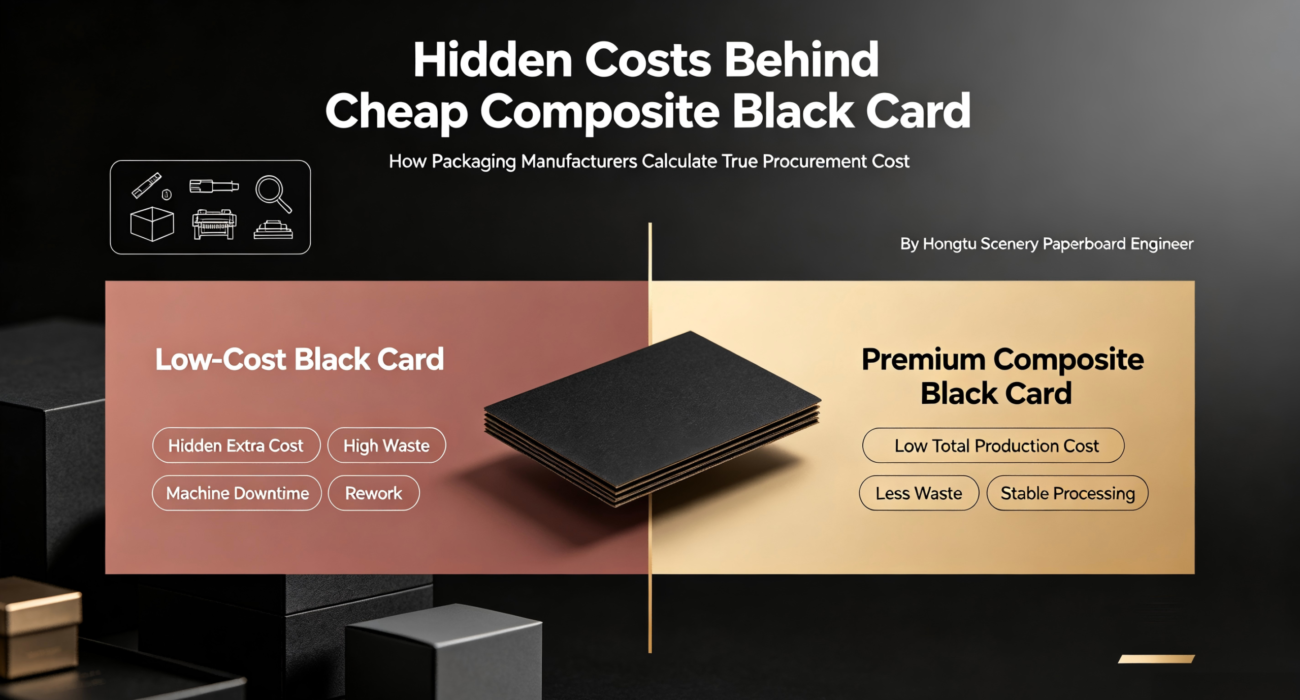
The Hidden Cost of Cheap Black Laminated Composite Board: How Packaging Manufacturers Should Calculate Real Purchasing Costs
Cost Analysis
By Hongtu Scenery Paperboard Engineer
When discussing black laminated composite board purchasing solutions with gift packaging, cosmetic packaging, and premium paper box manufacturers, we often hear the same sentence:
“We are comparing several suppliers and looking for a lower-cost option.”
From a purchasing perspective, this decision is understandable.
Reducing material purchase prices can directly lower product costs.
However, during actual production, we have found that:
Many companies save on purchase price, but increase their production costs.
After several months, they may start facing:
- Edge cracking during die cutting
- Delamination or bonding issues during lamination
- Color inconsistency between batches
- Frequent adjustments on automatic production lines
- Higher defective rates
- Delayed delivery schedules
At that point, the initial material savings are no longer the most important factor.
What truly affects profitability is:
The total cost throughout the entire process — from paperboard purchasing to final packaging delivery.
After years of working with packaging manufacturers, we have learned one important lesson:
The lowest purchase price is rarely the lowest production cost.
Professional packaging manufacturers do not only ask:
“How much does the paperboard cost per ton?”
They ask:
“How will this material affect my total production cost?”
Why Purchase Price Is Only One Part of the Real Cost
When many buyers compare black laminated composite boards, they only calculate:
Material Purchase Price
However, the real production cost should include:
Real Material Cost =
Purchase Price
- Material Waste Cost
- Production Adjustment Cost
- Rework Cost
- Quality Risk Cost
- Delivery Risk Cost
For example:
Supplier A:
- 5% lower material price
Supplier B:
- 5% higher material price
At first glance:
Supplier A appears cheaper.
But if Supplier A’s material causes:
- Higher waste
- Lower production efficiency
- More rework
The final total cost may become higher.
A Realistic Black Laminated Composite Board Cost Calculation Example
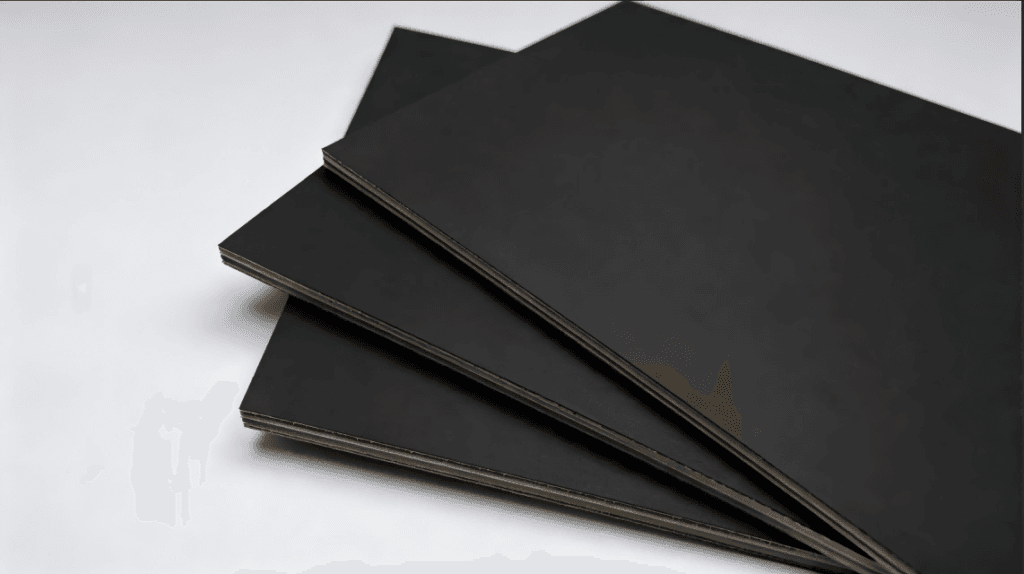
Assume a packaging factory:
- Uses 20 tons of black laminated composite board per month
- Produces premium gift boxes and cosmetic packaging
Purchasing teams can calculate the real cost using the following method:
1. Material Waste Cost
Calculation formula:
Additional Waste Cost =
Purchase Volume × Increased Waste Rate × Material Price
Example:
Assume:
- Monthly consumption: 20 tons
- Normal waste rate: 2%
- Waste rate caused by unstable material: 5%
Additional waste:
20 tons × (5%-2%)
= 0.6 tons
This means:
The factory wastes an additional 0.6 tons of material every month.
One year:
0.6 × 12 = 7.2 tons
For long-term production, this hidden cost can exceed the difference in material purchase price.
Hidden Cost 1: Material Waste
This is one of the most overlooked costs by buyers.
Low-quality black laminated composite board may cause problems due to:
- Weak core structure
- Poor flatness
- Unstable surface bonding
Leading to:
During Die Cutting:
- Edge cracking
- Rough edges
- Dimension inconsistency
During Box Making:
- Poor adhesion
- Surface bubbling
- Lamination failure
During Final Production:
- Appearance defects
- Rejected finished products
The result is:
- Higher material waste
- Additional labor costs
- More rework
For large-scale packaging production, even a small difference in waste rate can create significant additional costs.
Hidden Cost 2: Production Efficiency Loss
For automated packaging production lines:
Material stability directly affects production efficiency.
For example:
If paperboard thickness varies significantly, it may cause:
- Feeding adjustments
- Die-cutting pressure adjustments
- Machine downtime for inspection
These costs do not appear on the material quotation.
However, in daily production:
Every minute of downtime creates direct costs.
Therefore, when purchasing black laminated composite board, manufacturers should evaluate:
- Thickness consistency
- Flatness
- Batch stability
Not just the purchase price.
Hidden Cost 3: Rework Cost and Customer Risk
One of the biggest costs in premium packaging production:
is not the material itself.
It is:
Discovering quality problems after production is completed.
For example:
A customer order has already entered the delivery stage, but manufacturers discover:
- Inconsistent black color appearance
- Surface defects
- Unstable packaging structure
This may result in:
- Full batch rework
- Delivery delays
- Customer complaints
These costs are usually much higher than the original material price difference.
Why Are Some Black Laminated Composite Boards Cheaper?
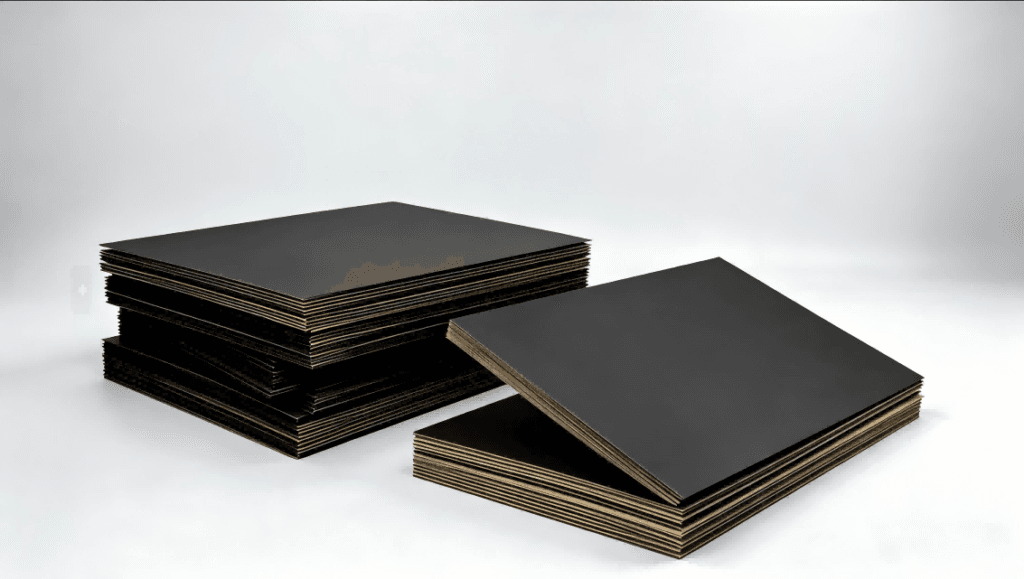
Price differences in the market usually come from differences in materials and production processes.
Some low-cost products may reduce costs through:
1. Lower-Cost Core Materials
For example:
- Using lower-grade core board
- Reducing board strength
This may result in:
- Lower stiffness
- Reduced processing stability
- Poor packaging structural performance
2. Lower-Cost Lamination Processes
If lamination control is insufficient:
It may lead to:
- Delamination
- Bubbling
- Reduced long-term stability
These problems may not appear during purchasing but can occur during later processing.
3. Reduced Quality Control
For example:
- Fewer inspection procedures
- Less strict batch control
This may reduce short-term pricing.
However, the risk is transferred to the customer’s production process.
How to Explain Higher Material Costs to Management?
Many purchasing managers face the same question:
“Why should we choose a more expensive paperboard?”
The correct explanation is not:
“Because the quality is better.”
A better explanation is:
“Although the purchase price is higher, the material can reduce production waste, minimize downtime, improve yield rates, and lower overall production costs.”
Management teams care about:
- Total cost
- Production efficiency
- Delivery reliability
Not only the material quotation.
What Makes Hongtu Scenery Black Laminated Composite Board Different?
At Hongtu Scenery, we do not simply provide paperboard.
We help packaging manufacturers reduce production risks.
Our black laminated composite board focuses on:
Stable Material Structure
Ensuring:
- Uniform black surface appearance
- Stable core structure
- Strong lamination bonding
Consistent Production Quality
Through production process control:
- Thickness inspection
- Surface quality inspection
- Batch quality management
We help customers maintain stable production.
Customized Paperboard Solutions
According to different application requirements, we provide:
- Different thickness options
- Different GSM options
- Different size specifications
Suitable for:
- Gift boxes
- Cosmetic packaging
- Wine packaging
- Premium packaging applications
Questions Buyers Should Ask Before Choosing a Supplier
Do not only ask:
❌ “What is your price?”
Also ask:
✅ How do you control thickness consistency?
✅ How do you maintain batch-to-batch quality?
✅ Can you provide samples for production testing?
✅ How do you ensure lamination quality?
✅ Do you have experience supplying similar applications?
Final Conclusion
Purchasing black laminated composite board is not simply about comparing prices.
A professional purchasing decision should consider:
- Material cost
- Production efficiency
- Waste control
- Quality risks
A lower price may reduce purchasing costs.
But a more stable black laminated composite board can reduce the total cost throughout the entire production process.
For premium packaging manufacturers:
Choosing the right material is not just buying paperboard — it is optimizing the entire packaging production process.
Author Profile

-
HONGTUSCENERY is a professional manufacturer of composite paperboard,
providing sustainable and customized packaging solutions for global brands.
With nearly 20 years of industry experience, we focus on material performance,
structural strength, and green supply chain development.
Latest entries
 Double-Sided Kraft Laminated Greyboard2026-10-13Hidden Costs in Kraft Board Procurement: Why the Lowest Price Is Not Always the Best Deal
 Industry Insights2026-10-10How to Reduce Profit Losses from Paperboard Procurement Amid RMB Exchange Rate Fluctuations
 Company News2026-10-03Kraft Paperboard: Applications, Performance Advantages & Sustainability
 Double-Sided Kraft Laminated Greyboard2026-09-305 Key Factors for Choosing a Reliable Kraft Board for Packaging Supplier