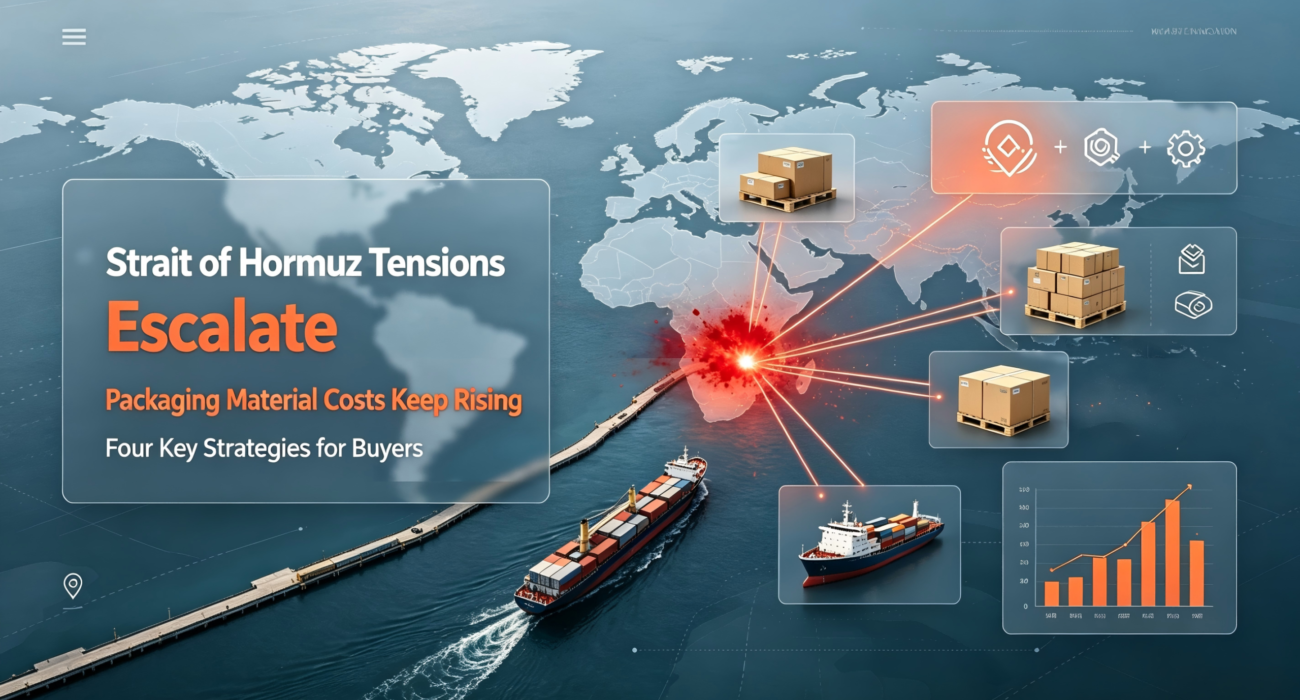
Strait of Hormuz Tensions Increase Packaging Material Cost Pressure: Four Key Strategies for Paperboard Buyers
Introduction
Recent tensions in the Middle East have created uncertainty around transportation through the Strait of Hormuz, one of the world’s most important energy shipping routes. The situation has raised concerns about energy prices, international logistics, and global supply chain stability.
For the packaging industry, changes in energy, transportation, and raw material costs are gradually affecting the global packaging material supply chain. Although paperboard products are not directly dependent on petroleum, every stage from raw material sourcing and paperboard manufacturing to international transportation is closely connected with energy costs and logistics conditions.
To better manage supply chain uncertainty, paperboard and packaging material buyers should focus on four key strategies:
1. Plan procurement cycles in advance to reduce unexpected supply risks.
2. Evaluate suppliers based on overall capabilities rather than price alone.
3. Build a more flexible supply network to improve supply chain resilience.
4. Select suppliers with stable production capacity and export experience.
This article analyzes how global supply chain changes may affect the paperboard industry and explains how buyers can improve procurement stability.
Table of Contents
- Why Does the Strait of Hormuz Affect the Global Packaging Supply Chain?
- How Do Energy and Logistics Costs Impact the Paperboard Industry?
- Four Key Strategies for Packaging Buyers to Reduce Supply Chain Risks
- How Can Chinese Paperboard Manufacturers Improve Supply Chain Resilience?
- Conclusion: Supply Chain Resilience Becomes a Key Factor in Packaging Procurement
01. Why Does the Strait of Hormuz Affect the Global Packaging Supply Chain?
The Strait of Hormuz is one of the world’s most important energy transportation routes, with large volumes of energy resources and industrial materials passing through this region.
When transportation conditions become uncertain, the impact can gradually spread across different industries through the global supply chain.
The typical impact process can be summarized as:
Energy prices increase
↓
Manufacturing and transportation costs rise
↓
Packaging material production costs increase
↓
Downstream industries face greater cost pressure
For industries such as food, cosmetics, electronics, consumer goods, and industrial manufacturing, packaging materials are an important part of the overall supply chain.
Although paperboard does not rely directly on petroleum-based materials like plastic packaging, its production and distribution still involve:
- Raw material sourcing
- Pulp and paper manufacturing
- Factory energy consumption
- International transportation
Therefore, changes in global energy and logistics conditions may still influence paperboard production costs and supply stability.
02. How Do Energy and Logistics Costs Impact the Paperboard Industry?
Paperboard Manufacturing Costs Face Increasing Pressure
Paperboard production involves multiple cost factors, including raw materials, energy consumption, manufacturing operations, and transportation.
The major cost components include:
- Fiber and paper raw material procurement
- Energy consumption during pulping and papermaking
- Production equipment operation
- Finished product transportation
Higher energy costs may increase manufacturing expenses and gradually affect paperboard purchasing prices.
For companies purchasing grey board, laminated paperboard, and other packaging materials, supplier production stability and cost control capability are becoming increasingly important.
A supplier’s ability to maintain stable production, control manufacturing costs, and ensure consistent quality directly affects long-term cooperation.
International Logistics Changes Influence Procurement Planning
Global packaging supply chains rely heavily on international shipping.
When major transportation routes experience uncertainty, companies may face:
- Longer shipping cycles
- Vessel schedule changes
- Additional freight charges
- Uncertain delivery timelines
For overseas packaging manufacturers, supplier location, export experience, and logistics coordination ability are becoming important purchasing considerations.
Compared with simply comparing quotations, buyers are paying more attention to whether suppliers can provide reliable delivery and respond effectively when market conditions change.
Supply Chain Stability Becomes a Key Procurement Factor
In the past, packaging procurement decisions often focused mainly on price.
However, recent events including energy fluctuations, logistics disruptions, and geopolitical uncertainty have shown that supply reliability is equally important.
Packaging buyers are increasingly evaluating suppliers based on:
- Stable production capability
- Flexible customization ability
- Quality management systems
- Reliable delivery performance
Supply chain resilience is becoming an important factor for reducing operational risks.
03. Four Key Strategies for Packaging Buyers to Reduce Supply Chain Risks
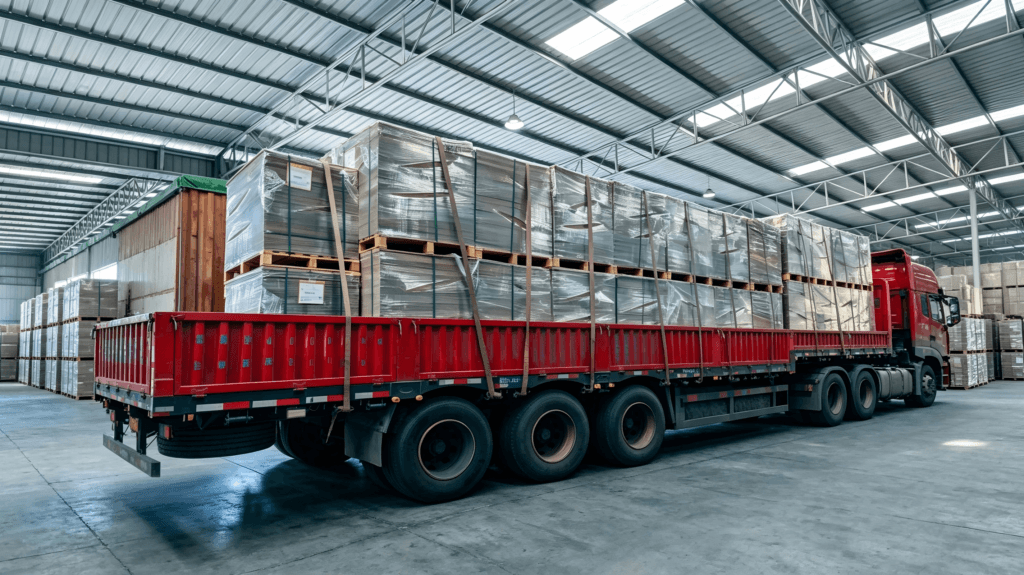
Strategy 1: Plan Procurement Cycles in Advance
Unexpected supply disruptions can create significant challenges for companies with urgent material requirements.
By confirming demand earlier, maintaining reasonable inventory levels, and communicating production schedules with suppliers, buyers can reduce uncertainty.
For packaging manufacturers with continuous paperboard demand, advance planning helps maintain stable production schedules and avoid unnecessary delays.
Strategy 2: Evaluate Suppliers Based on Overall Capabilities, Not Price Alone
A lower purchase price does not always represent lower total procurement costs.
If a supplier cannot maintain product consistency, delivery reliability, or quality stability, buyers may face additional production risks.
When selecting paperboard suppliers, companies should consider:
- Manufacturing capability
- Quality control systems
- Delivery reliability
- Export experience
Long-term cooperation depends not only on competitive pricing but also on supplier reliability.
Strategy 3: Build a More Flexible Supply Network
A single supply source may increase business risks when market conditions change.
Developing multiple qualified suppliers and maintaining strong supplier relationships can improve flexibility.
A more diversified supply structure allows companies to respond better to changes in raw material availability, transportation conditions, and market demand.
Strategy 4: Select Suppliers with Stable Production Capacity and Export Experience
As global supply chains become more complex, supplier selection standards are changing.
International buyers are paying closer attention to manufacturers that can provide:
- Stable production capacity
- Quality certification support
- Customized product solutions
- Fast communication and response
- Reliable bulk order delivery
Choosing suppliers with long-term manufacturing experience and export capability can provide stronger supply security.
04. How Can Chinese Paperboard Manufacturers Improve Supply Chain Resilience?
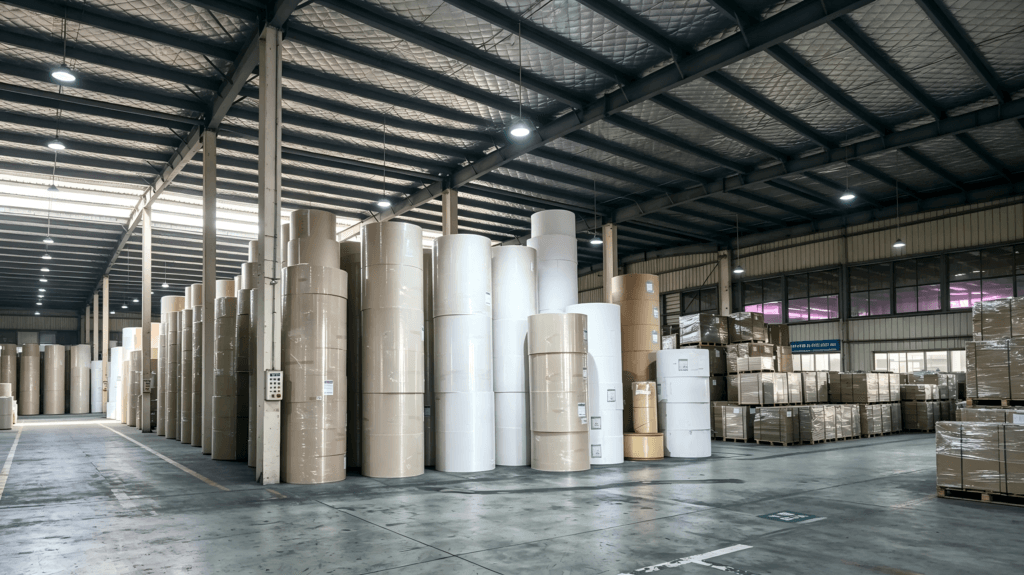
China has developed a mature paper manufacturing industry with strong production capabilities in packaging materials, including grey board, laminated paperboard, and specialty paperboard products.
Reliable Chinese paperboard manufacturers can support overseas buyers through:
- Stable production capacity
- FSC certification support
- Customized thickness and specifications
- Fast sample preparation
- Consistent bulk order delivery
For international packaging companies, working with experienced manufacturers can provide more predictable supply arrangements and reduce risks caused by global market changes.
Beyond production capability, supplier communication, production planning, and export coordination also play important roles in maintaining supply chain stability.
05. Conclusion: Supply Chain Resilience Becomes a Key Factor in Packaging Procurement
The uncertainty surrounding the Strait of Hormuz highlights the importance of supply chain stability in global packaging procurement.
Future paperboard purchasing decisions will not only depend on price, but also on:
- Production reliability
- Delivery capability
- Quality consistency
- Long-term cooperation
For packaging companies, planning procurement cycles, improving supplier evaluation processes, and cooperating with experienced paperboard manufacturers can help reduce the impact of market fluctuations.
In an increasingly uncertain global environment, supply chain resilience is becoming an important competitive advantage for packaging businesses.
Sources & Industry References
This article combines publicly available global supply chain information with practical analysis from the perspective of paperboard procurement and packaging material sourcing.
Key references include:
- Global Times — International news coverage related to Strait of Hormuz developments and global economic impacts.
https://www.globaltimes.cn/ - Xinhua News Agency — Official reports on global energy transportation, logistics conditions, and economic trends.
https://english.news.cn/
Author Profile

-
HONGTUSCENERY is a professional manufacturer of composite paperboard,
providing sustainable and customized packaging solutions for global brands.
With nearly 20 years of industry experience, we focus on material performance,
structural strength, and green supply chain development.
Latest entries
 Double-Sided Kraft Laminated Greyboard2026-10-13Hidden Costs in Kraft Board Procurement: Why the Lowest Price Is Not Always the Best Deal
 Industry Insights2026-10-10How to Reduce Profit Losses from Paperboard Procurement Amid RMB Exchange Rate Fluctuations
 Company News2026-10-03Kraft Paperboard: Applications, Performance Advantages & Sustainability
 Double-Sided Kraft Laminated Greyboard2026-09-305 Key Factors for Choosing a Reliable Kraft Board for Packaging Supplier