Greyboard Thickness Problem in Gift Boxes: Causes and How to Control It
In gift box manufacturing, one of the most common but often overlooked issues is the greyboard thickness problem.
Many packaging factories and brand owners notice that even when they use the same design and production process, the final rigid boxes still look or feel different. Some boxes feel stronger, while others seem slightly soft or uneven.
In most cases, the root cause is not the printing or lamination process—it is the greyboard itself.
1. Why Greyboard Thickness Matters in Gift Box Production
Greyboard is the structural core material used in rigid boxes. It directly affects:
- Box strength and rigidity
- Shape consistency
- Die-cutting accuracy
- Folding and edge alignment
Even a small variation in thickness can lead to visible differences in finished packaging.
For high-end packaging such as luxury gift boxes, cosmetic boxes, or electronics packaging, this becomes even more critical because brand presentation depends heavily on structural precision.
2. What Causes Greyboard Thickness Problems?
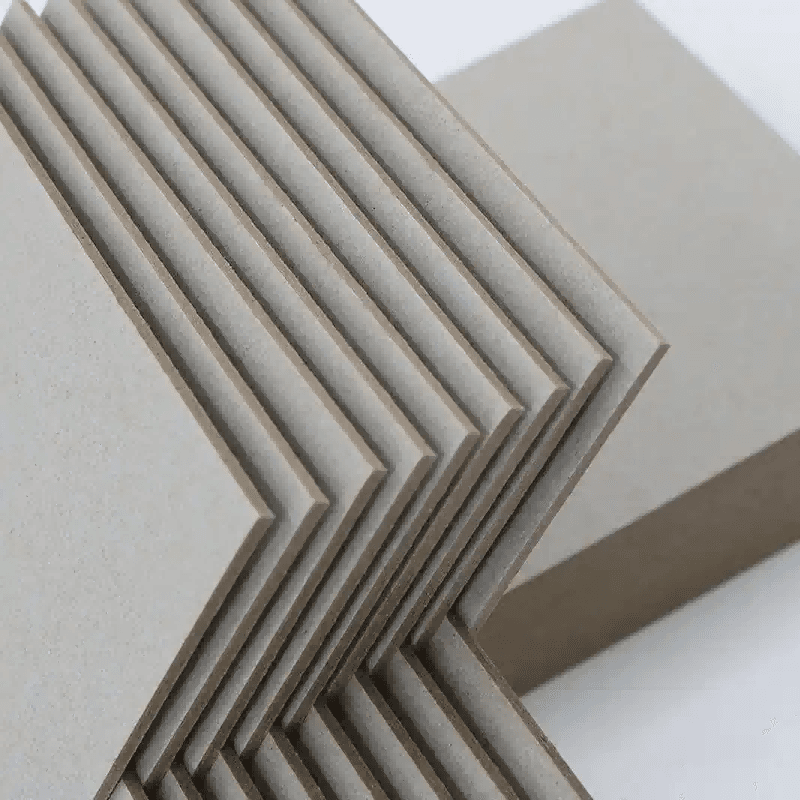
The greyboard thickness problem usually comes from a combination of material and production factors.
2.1 Recycled fiber inconsistency
Greyboard is mainly produced from recycled paper fibers. Different sources of waste paper result in:
- Uneven fiber length
- Different density levels
- Variable moisture absorption
This leads to greyboard density inconsistency, which directly affects thickness stability.
2.2 Production pressure fluctuation
During board formation, uneven pressing or drying can cause:
- Slightly compressed areas
- Looser fiber zones
- Internal structural variation
These differences may not be visible immediately but become obvious during box production.
2.3 Lack of strict grading control
Some suppliers mix different quality batches of greyboard without strict classification. This creates:
- Thickness variation between batches
- Inconsistent board stiffness
- Unstable performance in mass production
This is a common packaging board quality issue in low-control supply chains.
3. How Thickness Variation Affects Gift Boxes
For a rigid box board thickness variation, the impact is more serious than many buyers expect.
3.1 Structural instability
Boxes may appear:
- Slightly warped
- Not fully square
- Weak at corners
This reduces the premium perception of the packaging.
3.2 Die-cutting and assembly issues
When thickness is inconsistent:
- Cutting pressure becomes unstable
- Folding lines may crack or misalign
- Automated box-making machines may jam or misfeed
This directly affects production efficiency.
3.3 Visual inconsistency after lamination
After wrapping with printed paper:
- Uneven surfaces may still show
- Shadows or bumps can appear
- High-end visual quality is reduced
This is especially critical for luxury packaging markets.
4. How to Control Greyboard Thickness Problems
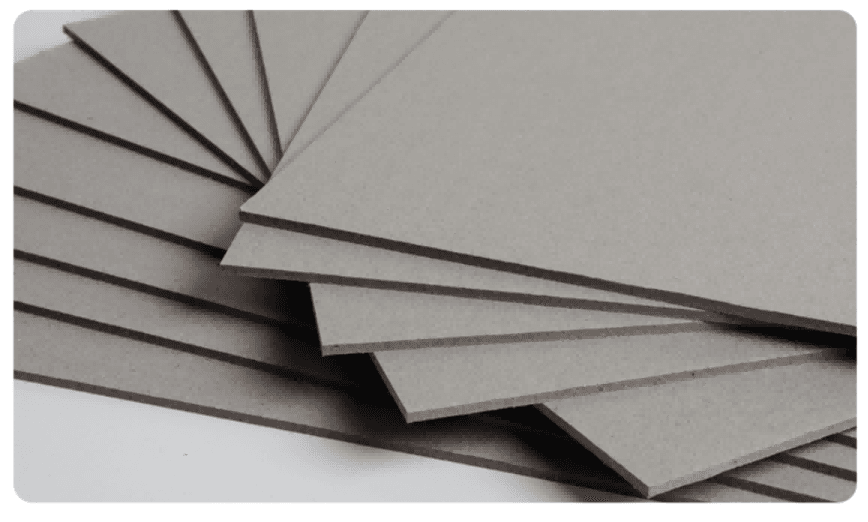
A reliable greyboard supplier China or any professional manufacturer should focus on controlling consistency rather than just producing volume.
4.1 Stable raw material sourcing
Using controlled recycled fiber sources helps reduce variation at the beginning of production.
4.2 Strict production monitoring
Advanced production systems control:
- Pressing pressure consistency
- Drying balance
- Layer formation accuracy
This ensures more stable board structure.
4.3 Batch consistency management
Professional factories separate production batches clearly, ensuring:
- No mixing of different grades
- Traceable production records
- Stable re-order performance
4.4 Thickness tolerance control
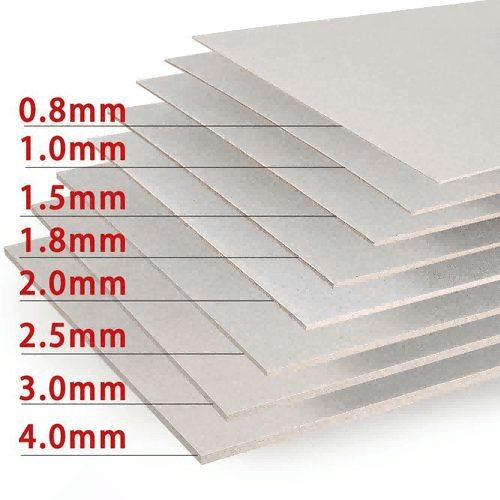
For high-quality greyboard for gift boxes, thickness variation should be minimized within a strict tolerance range to ensure repeatability in production.
5. How Buyers Can Evaluate Greyboard Quality
For packaging manufacturers and brand owners, choosing the right supplier is more important than fixing problems later.
Here are key evaluation points:
✔ Consistency across batches
The most important factor is whether the material remains stable over long-term supply.
✔ Structural stability under production
Good greyboard should perform consistently in:
- Cutting
- Folding
- Lamination
✔ Export experience
Suppliers with export experience usually understand stricter requirements for rigid packaging markets such as Europe, the US, and the Middle East.
✔ Application matching
Different gift box types require different material performance. A reliable supplier should provide guidance based on application, not just thickness.
6. Why Thickness Stability Defines Packaging Quality
In modern packaging, greyboard is no longer just a “basic material”.
It directly determines:
- Whether the box looks premium
- Whether production is stable
- Whether brands receive consistent quality
Even small variations in thickness can lead to noticeable differences in final packaging appearance.
Conclusion
The greyboard thickness problem is one of the most critical issues in rigid gift box production.
It is not just a material defect—it is a supply chain consistency issue.
For packaging manufacturers, the key is not only choosing low-cost materials, but ensuring stable and controlled greyboard quality that can support long-term production.
A stable material means:
- Fewer production issues
- Higher packaging consistency
- Stronger brand perception
In high-end gift packaging, stability is not an option—it is a requirement.
FAQ
Greyboard thickness problems are usually caused by uneven raw material fibers, unstable pressing during production, or inconsistent batch control. These variations affect rigidity and final box quality.
Thickness variation can lead to weak box structure, poor folding accuracy, and uneven appearance after lamination, which directly reduces the premium look of rigid gift boxes.
Buyers can request thickness tolerance reports, test multiple samples from different batches, and check whether the supplier maintains stable GSM and density control across production runs.
Yes. Low-cost suppliers often have less strict control over raw materials and production processes, which leads to higher thickness variation between batches.
High-density laminated greyboard with stable thickness and strict batch control is most suitable for luxury rigid gift boxes, especially for export packaging markets.
Author Profile

-
HONGTUSCENERY is a professional manufacturer of composite paperboard,
providing sustainable and customized packaging solutions for global brands.
With nearly 20 years of industry experience, we focus on material performance,
structural strength, and green supply chain development.
Latest entries
 Double-Sided Kraft Laminated Greyboard2026-10-13Hidden Costs in Kraft Board Procurement: Why the Lowest Price Is Not Always the Best Deal
 Industry Insights2026-10-10How to Reduce Profit Losses from Paperboard Procurement Amid RMB Exchange Rate Fluctuations
 Company News2026-10-03Kraft Paperboard: Applications, Performance Advantages & Sustainability
 Double-Sided Kraft Laminated Greyboard2026-09-305 Key Factors for Choosing a Reliable Kraft Board for Packaging Supplier