Prevent Packaging Box Deformation: Material Matters
Introduction: A Problem That Deserves Attention
If you work with packaging, you’ve probably faced moments like this—
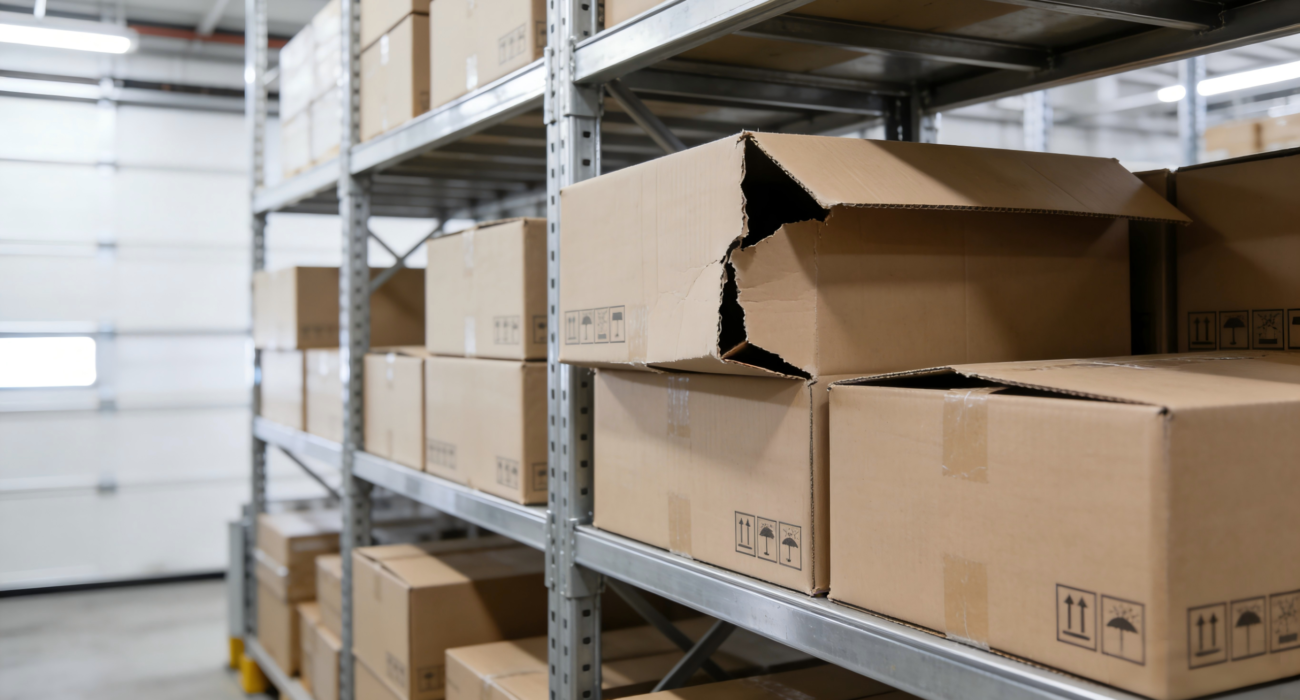
A batch of carefully made gift boxes reaches the customer. The photos come back: corners are rounded, lids are sagging. You used what looked like thick enough board, so why couldn’t it hold up?
Or worse: a full container of goods arrives overseas. When opened, the boxes at the bottom are crushed. Damaged products, claims, complaints—everyone’s asking the same question: What’s really causing packaging deformation?
The truth is, deformation isn’t random “bad luck.” It follows patterns. It might be hiding in material selection, in structural design, or in some corner of the warehouse environment.
Research suggests that when packaging fails, the environmental impact of disposing the discarded contents far exceeds that of the packaging itself. This means that if we can identify deformation risks early, we’re not just avoiding product damage—we’re also supporting sustainability.
This article walks through three questions:
- What causes deformation?
- How to prevent packaging deformation?
- What can we improve next time?
Want to start with the basics of greyboard? Read this: What Is Greyboard? A Guide to Its Use in Packaging
Table of Contents
- Where Packaging Deformation Usually Starts
- Material Selection: Thickness ≠ Strength
- Structural Optimization: What Else Can You Do Besides Changing Materials?
- Environment and Handling: The Factors Often Overlooked
- How to Test and Verify Packaging Deformation Resistance
- Frequently Asked Questions (FAQ)
- Final Thoughts and Actionable Advice
Where Packaging Deformation Usually Starts
Before jumping to solutions, let’s look at the most common types of deformation. Understanding these helps pinpoint the problem faster.
1. Rounded Corners, Collapsed Lids
This is most common with gift boxes, cosmetic packaging, and electronics boxes. They look crisp when new, but after storage or shipping, they go “soft.”
Possible cause: Insufficient material stiffness, or internal damage from creasing and folding. Studies show that when multi-layer paperboard is creased and folded, microscopic delamination occurs between fiber layers. These separations, though not visible to the naked eye, directly affect the board’s load-bearing capacity.
2. Bulging Sides, Convex Panels
A common issue in shipping boxes. The sides bulge outward like they’re inflated, sometimes splitting open. This is often called box bulging.
Possible cause: Insufficient compression strength. When stacking pressure exceeds the box’s limit, side panels deform outward. Another possibility: the box height is too large, allowing contents to repeatedly impact the panels during transit.
3. Collapsed Bottom, Crushed Box
This is typical when stacking time is too long or stacking layers are too many.
Possible cause: Mismatch between compression strength and stacking duration. Industry experience suggests that long-term stacking requires a safety margin beyond instantaneous compression strength: for one week of stacking, a safety factor of 1.2-1.5 is recommended; for one month or more, an even larger margin is needed. Designing for long-term stacking using only instantaneous strength often leads to deformation.
4. Warping, Twisting
This type of deformation is usually linked to humidity. Paperboard expands when it absorbs moisture and contracts when it dries. If different layers absorb unevenly, warping occurs.
Possible cause: Insufficient dimensional stability of the material, or poor humidity control in storage.
⚙️ The Root Solution: Stopping deformation isn’t just about stacking correctly—it starts with the raw material choice. If you are debating whether to use virgin fibers for stiffness or 100% recycled fibers for sustainability, check our [FSC sustainable paperboard buying guide] to choose the right SBS/FBB/CRB grade for European PPWR compliance.
Material Selection: Thickness ≠ Strength
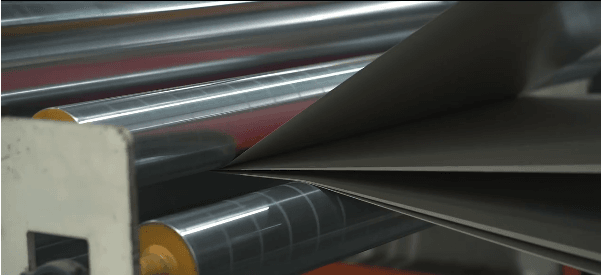
Many people fall into the trap of thinking thicker board means stronger board. But strength is determined by multiple factors. This explains why some seemingly thick boards crush easily.
Key Strength Indicators
| Property | Simple Explanation | Impact on Deformation | Common Unit |
|---|---|---|---|
| Stiffness | Resistance to bending | Determines whether box corners hold shape | mN·m |
| Compression Strength | Resistance to stacking pressure | Determines whether boxes get crushed | N |
| Bursting Strength | Resistance to localized puncture | Prevents product corners from piercing packaging | kPa |
| Internal Bond Strength | How well layers adhere | Prevents delamination and bubbling | J/m² |
If you focus only on thickness and ignore these indicators, you might end up with a “soft heavyweight”—looks thick, but crushes easily.
Why Greyboard Is a Common Choice for Deformation Resistance
For applications requiring crisp appearance, greyboard is indeed a frequent solution. Its characteristics:
- Multi-layer composite structure: Multiple fiber layers compressed together, high-density core
- Good stiffness: Effectively resists bending, maintains box corners
- Good flatness: Smooth, uniform surface, resists warping
- Wide GSM range: From 250 GSM to over 2000 GSM, plenty of options
Selection Reference:
| GSM Range | Typical Thickness | Suitable Applications | Deformation Resistance |
|---|---|---|---|
| 250–350 GSM | 0.3-0.5 mm | Liners, dividers, lightweight small boxes | Basic |
| 350–600 GSM | 0.5-0.8 mm | General consumer packaging, file folders | Everyday |
| 600–1200 GSM | 0.8-1.5 mm | Shoeboxes, gift boxes, cosmetic packaging | Good |
| 1200+ GSM | 1.5 mm+ | Premium liquor boxes, industrial supports | Enhanced |
For more details on GSM and thickness, read: Cardboard GSM & Thickness Guide
Structural Optimization: What Else Can You Do Besides Changing Materials?
Even with the right material, if the structural design has flaws, packaging deformation can still happen. These details are worth attention.
1. Box Dimensions
With the same perimeter, a taller box has lower compression strength. Data suggests that doubling the height can reduce compression strength by about 20%. So, where conditions allow, keeping box height moderate is beneficial.
2. Ventilation Hole Placement
If packaging needs ventilation (e.g., for produce), hole placement matters. A study on transport packaging found that optimal ventilation rates range from 14% to 20%, depending on load. Holes should avoid high-stress areas—don’t weaken the box just for airflow.
3. Creasing and Printing
- Crease lines: The creasing process creates microscopic damage along the crease. If printing falls exactly on these lines, it can further affect forming quality.
- Heavy/solid printing: Solid printing can reduce box compression strength by around 40%, as the printing process damages fibers. If the box needs to be stacked, consider discussing with the design team to leave some areas unprinted.
4. Internal Supports
For long-term storage or long-distance shipping, adding internal supports (like dividers or corner braces) is effective. It adds some cost, but compared to losses from damaged goods, it’s usually worthwhile.
5. The 5 P’s of Packaging
In packaging design, the classic 5P principle can serve as a reference framework:
- Product: Protecting the product is the primary goal
- Protection: Providing adequate mechanical protection
- Presentation: Maintaining good appearance
- Portability: Ease of handling and stacking
- Profitability: Cost control
📦 Worried About Cargo Collapse? Protect Your Shipment Now.
A deformed box leads to rejected shipments, costly returns, and damaged brand reputation. Don’t wait for a shipping disaster to discover your packaging is too weak.
Share your current packaging challenges and product weight with our factory today. Our experienced production team will evaluate your needs and recommend the Exact High-Stiffness Board Grades to ensure your heavy loads stay safe at sea without overpaying.
[ Get Free Factory Stiffness Recommendation ]
Environment and Handling: The Factors Often Overlooked
Sometimes the material is right, the design is right, but deformation still happens. It’s time to look at environment and handling.
Humidity’s Impact
Paperboard is sensitive to humidity. Testing shows that when relative humidity stays below 70%, box strength changes little; but when humidity exceeds 80%, strength drops noticeably. In extremely humid conditions (98% RH), the bursting strength of single-wall corrugated boxes can drop by over 50% compared to 50% RH.
*Note: These figures come from a 2025 study published in China Port Science and Technology. The study tested corrugated box performance under different humidity conditions and found that at 98% RH, the bursting strength of single-wall, double-wall, and triple-wall corrugated boxes decreased by 52.8%, 63.2%, and 66.8% respectively, compared to 50% RH.*
Other research confirms this pattern: the effect of humidity on edge crush strength is relatively stable within the 40%-70% RH range. This means humidity control is key to preventing deformation—aim to keep warehouse humidity below 70% where possible.
Temperature’s Impact
In comparison, temperature has less effect on paperboard strength. Studies indicate that within 10-80°C and with proper humidity control, temperature changes have negligible impact on box performance.
Stacking Duration
As mentioned earlier, paperboard undergoes “creep” under sustained pressure—deformation gradually increases even if pressure remains constant. Research observing box performance within 16 hours of stacking found strength changes follow certain patterns. For longer stacking, industry practice includes safety margins in design—for example, a safety factor of 1.2-1.5 is often recommended for one week of stacking.
Stacking Method
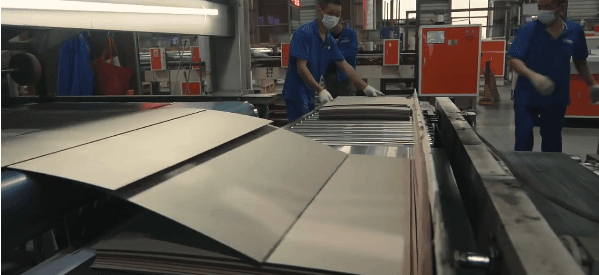
If forklift legs press directly onto the middle of a box, that’s a classic “concentrated load” scenario most likely to cause deformation. Adjusting stacking so that pressure lands on corners or edges helps. Research shows that box corners bear most compression loads, so protecting corners is crucial.
The 3-3-3 Rule in Transport
In logistics, the 3-3-3 rule is often mentioned: packaging should withstand 3 transfers, 3 handlings, and 3 days of transit. While not a strict standard, it’s a useful reference for assessing packaging durability.
How to Test and Verify Packaging Deformation Resistance
To ensure your packaging can withstand real-world conditions, testing is essential. Here are common methods to evaluate deformation resistance, from formal standards to practical in-house checks.
1. Laboratory Testing Standards
Several international standards are used to measure key strength properties:
| Test | What It Measures | Common Standard |
|---|---|---|
| Edge Crush Test (ECT) | Compression strength of corrugated board edge | ISO 3037, TAPPI T811 |
| Box Compression Test (BCT) | Compression strength of assembled box | ASTM D642, ISO 12048 |
| Bursting Strength Test | Resistance to puncture | ISO 2759, TAPPI T810 |
| Taber Stiffness Test | Bending resistance of paperboard | ASTM D747, TAPPI T489 |
| Flat Crush Test | Resistance of corrugated flutes to flattening | ISO 3035, TAPPI T808 |
These tests provide objective data to compare materials and validate designs.
2. Simple In-House Checks
If you don’t have access to a lab, you can still perform basic assessments:
- Hand feel and bend test: Compare samples side by side. A board with higher stiffness will resist bending more. This is subjective but useful for quick screening.
- Stacking test: Stack several filled boxes (using representative products) and observe deformation over time. Start with 24 hours, then extend to a week if possible.
- Humidity exposure: Place samples in a high-humidity environment (like a bathroom or near a humidifier) for 24-48 hours and check for warping or softening.
3. Interpreting Test Results
When reviewing test reports, focus on the values relative to your needs:
- For stacking strength, look at BCT or ECT values. Higher numbers mean better stacking performance.
- For corner integrity, pay attention to stiffness and internal bond strength.
- For moisture-prone environments, check if the material retains strength after humidity conditioning.
Remember that real-world performance depends on multiple factors, so testing should be part of a broader evaluation that includes design and handling considerations.
4. When to Test
- During material selection: Compare different boards to choose the right one.
- After design changes: Verify that modifications haven’t weakened the structure.
- Periodic quality checks: Ensure suppliers consistently meet specifications.
Testing doesn’t have to be complicated. Even simple observations can reveal potential problems before they become costly failures.
Frequently Asked Questions (FAQ)
Packaging deformation refers to permanent or temporary shape changes in packaging containers due to force or environmental factors. Common signs include rounded corners, bulging, collapse, and warping.
Main causes include: insufficient material stiffness, inadequate compression strength, structural design flaws (e.g., poorly placed ventilation holes), humidity effects (strength drops noticeably above 80% RH), excessive stacking duration (requires safety margins in design), and improper handling.
Four approaches: 1) Choose appropriate materials (e.g., high-density greyboard for rigidity needs); 2) Optimize structural design (proper dimensions, ventilation hole placement); 3) Control storage environment (aim to keep humidity below 70%); 4) Standardize handling procedures.
The 5P principle includes: Product protection, Protection performance, Presentation quality, Portability, and Profitability.
Box bulging refers to convex deformation of box side panels, typically caused by insufficient compression strength, excessive box height, concentrated loads, or a combination of these factors.
The 3-3-3 rule suggests packaging should withstand 3 transfers, 3 handlings, and 3 days of transit. It’s commonly used as a reference for evaluating transport packaging durability.
Yes. Testing shows strength changes little below 70% RH, but drops noticeably above 80% RH. In extreme humidity (98% RH), bursting strength can decrease by over 50%.
Yes. High-density greyboard in particular, with its tightly compressed fibers and multi-layer structure, offers excellent bending resistance and dimensional stability, effectively resisting deformation.
Common tests include Edge Crush Test (ECT), Box Compression Test (BCT), Bursting Strength Test, Taber Stiffness Test, and Flat Crush Test. These follow standards like ISO and ASTM.
Final Thoughts and Actionable Advice
Packaging deformation results from multiple factors working together. Material, structure, environment, handling—each can be a starting point for deformation, and each can be an opportunity for solution.
From research and industry experience, humidity control below 70% is key to preventing strength loss. Stacking design needs safety margins, especially for longer storage durations. Even microscopic damage from creasing and folding deserves attention. And testing—whether through formal standards or simple in-house checks—helps catch issues early.
If you’re dealing with packaging deformation and looking for solutions—or if you’d like to test material specifications for your products—feel free to reach out to us. We can discuss your specific scenario and provide selection advice or sample testing.
For more on greyboard applications, read: Greyboard Applications Guide for Export Packaging
Author Profile

-
HONGTUSCENERY is a professional manufacturer of composite paperboard,
providing sustainable and customized packaging solutions for global brands.
With nearly 20 years of industry experience, we focus on material performance,
structural strength, and green supply chain development.
Latest entries
 Double-Sided Kraft Laminated Greyboard2026-10-13Hidden Costs in Kraft Board Procurement: Why the Lowest Price Is Not Always the Best Deal
 Industry Insights2026-10-10How to Reduce Profit Losses from Paperboard Procurement Amid RMB Exchange Rate Fluctuations
 Company News2026-10-03Kraft Paperboard: Applications, Performance Advantages & Sustainability
 Double-Sided Kraft Laminated Greyboard2026-09-305 Key Factors for Choosing a Reliable Kraft Board for Packaging Supplier