Solid Bleached Board (SBS): What Packaging Buyers Must Know
If you work in packaging procurement, product export, or deal with overseas packaging manufacturers, you have probably heard the term “white kraft paper” or “ivory board” many times. It appears on cosmetic boxes, pharmaceutical packaging, food cartons, paper cups, children’s book covers – almost everywhere. But what exactly is solid bleached board? How is it different from greyboard or white lined chipboard? And what do “uncoated”, “C1S” and “C2S” mean?
This article uses plain language and verifiable facts to explain it all.
1. What Is Solid Bleached Board?

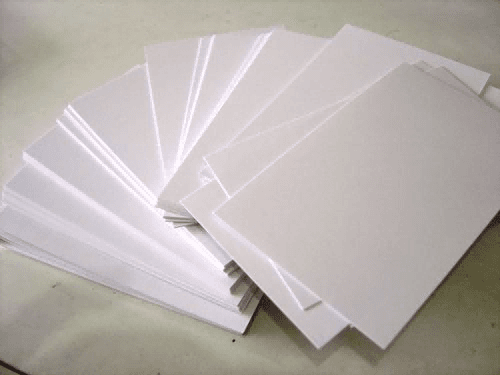
Solid bleached board (often abbreviated as SBS, also called ivory board) is a paperboard that is white on both sides, thick, and stiff.
It is made from bleached chemical wood pulp. The entire board is white from surface to core. The surface is coated and calendered to be smooth and uniform, giving excellent colour reproduction in printing. Typical basis weights range from 200 g/m² to 400 g/m², with common options like 250, 300, 350, and 400 g/m².
SBS is fully sized, meaning its surface resists dusting and picking. It works well with post‑press processes such as foil stamping, lamination, embossing, and die‑cutting.
2. Where Does SBS Come From?
The history of solid bleached board goes back to late‑19th‑century Europe. As papermaking shifted from handcraft to mechanisation, manufacturers began making thicker, stiffer boards for packaging and bookbinding.
In the early 20th century, with the maturity of bleached chemical pulp technology, true SBS appeared. It was first used for high‑end product packaging and printing. After World War II, the global consumer goods boom made SBS a popular premium packaging material.
China’s SBS industry started later but has grown rapidly. In the 21st century, driven by integrated forestry‑pulp‑paper projects, China has become one of the world’s largest producers of solid bleached board, exporting large volumes to Europe, the Americas, Southeast Asia, and the Middle East.
3. Coating: Uncoated, C1S and C2S
Before we look at SBS grades, we need to understand coating.
Coating means applying a thin layer of minerals (clay, calcium carbonate, etc.) and binders onto the paper surface. Why coat? Uncoated paper has fibre texture and pores. Ink sinks in, making prints look dull and fuzzy. Coating seals the surface, making it smoother and denser. Ink stays on top, so prints are brighter, sharper, and more vivid. The coated sheet is then calendered for a glossy or matte finish.
Based on coating coverage, paperboards fall into three types:
- Uncoated – No coating layer. The surface retains natural fibre texture, feels slightly rough, absorbs ink quickly, and produces softer, more muted colours. Uncoated board is easier to recycle and cheaper. It suits eco‑friendly or rustic packaging, e.g., organic food boxes, handmade product packaging, or plain inner liners where high‑quality printing is not required.
- C1S (Coated One Side) – Coating is applied on only one side. The coated side is smooth and ideal for high‑quality colour printing; the reverse side stays as raw paper (or only lightly sized). This design saves cost while keeping the outside attractive. It is the most common type for packaging like shopping bags, food cartons, cosmetic boxes, and pharmaceutical packs – the outside looks premium, the inside does not need to.
- C2S (Coated Two Sides) – Both sides are coated. Both surfaces are smooth and can carry high‑grade colour printing. C2S is more expensive and used for luxury packaging that shows both inside and outside, e.g., high‑end gift boxes, jewellery boxes, cosmetic sets – open the lid and the inside bottom is just as smooth and elegant.
Most solid bleached board on the market is C2S because SBS is positioned for premium printing and refined packaging. That said, there are also smaller quantities of C1S or even uncoated SBS, depending on the application and the mill’s product range.
4. Key Properties of Solid Bleached Board
- High stiffness – Much better bending resistance than ordinary paper. Cartons keep their shape without sagging.
- White on both sides – Both surfaces can be printed, perfect for packages that need interior decoration (e.g., cosmetic boxes, gift boxes).
- Smooth surface – The coated layer gives sharp dot reproduction, suitable for high‑definition printing, foil stamping, UV coating, etc.
- Good folding endurance – Does not crack easily after creasing and folding – important for gluing and box making.
- Food‑grade option – Food‑grade SBS meets FDA, EU, and other standards. It contains no optical brighteners and can directly contact food.
- Recyclable & eco‑friendly – 100% paper, biodegradable or recyclable, aligned with the global “paper instead of plastic” trend.
5. Classification of Solid Bleached Board
By end use and quality level, SBS is generally divided into three categories:
- Food‑grade SBS – Used for direct food contact packaging: hamburger boxes, cake trays, paper cups, takeaway meal boxes, etc. It has the strictest safety standards and has been the fastest‑growing export segment in recent years.
- Social SBS – The most common type. Used for alcohol boxes, pharmaceutical cartons, cosmetic boxes, electronic product liners, cards, tags, etc. No food‑safety certification required, but print quality and stiffness are important.
- Tobacco SBS – A high‑end grade dedicated to cigarette packaging. It demands even higher stiffness, smoothness, and whiteness. Ordinary packaging plants seldom use this grade.
In international trade, buyers must specify the correct grade according to the final application to avoid material mismatch.
6. SBS vs. Greyboard vs. White Lined Chipboard
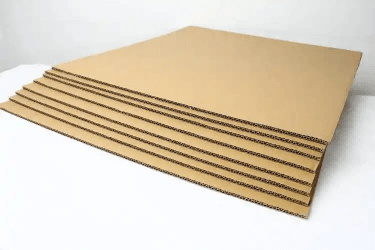
Beginners often confuse these three materials. Here is a simple comparison:
| Material | Characteristics | Raw Material | Typical Uses |
|---|---|---|---|
| Solid bleached board (SBS) | White both sides, high stiffness, excellent printability | Bleached chemical wood pulp (virgin) | Cosmetic boxes, pharma boxes, food cartons, paper cups |
| Greyboard | One or both sides grey, rough surface, not for direct printing | Waste paper pulp or mixed pulp | Inner supports, book covers, backing boards |
| White lined chipboard (WLC) | White coated top, grey/brown back, single‑side printing | Mostly waste paper, some virgin on top | General commodity packaging, shipping cartons, low‑end colour boxes |
Simply put: SBS is the highest quality and most expensive among the three. For premium export orders to Europe or North America, buyers usually insist on solid bleached board.
7. Main Applications of Solid Bleached Board
- Cosmetic packaging – Lipstick boxes, powder compacts, perfume cartons – require fine printing and a crisp, rigid feel.
- Pharmaceutical packaging – Medicine cartons, leaflet inserts – need non‑toxic material, clean appearance, and easy folding.
- Food packaging – Burger boxes, fried chicken buckets, cake trays, chocolate boxes, paper cups, paper bowls.
- Electronics packaging – Mobile phone boxes, earphone trays, tablet packaging.
- Cards & tags – Clothing hang tags, membership cards, postcards, children’s book covers.
- Household & personal care – Toothpaste cartons, detergent boxes, soap packaging.
8. Why Is SBS Getting More Attention in Global Trade?
Two main drivers:
- Global “paper instead of plastic” – Europe, North America and many other regions are tightening restrictions on single‑use plastic packaging. Demand for paper‑based packaging is rising. SBS, with its excellent printability and stiffness, is a strong alternative in high‑end plastic replacement scenarios. For example, chocolates that used plastic trays, cosmetics in plastic boxes, and supplements wrapped in shrink film are switching to SBS cartons or SBS inner trays.
- Upgrading of consumer packaging – Brands want to stand out on shelves and are willing to pay for better packaging quality. SBS is white on both sides, prints beautifully, stays rigid – exactly what premium brands need. Alcoholic drinks, pharmaceuticals, cosmetics, and electronics packaging are the most stable application fields for SBS.
China, as a major global SBS producer, offers stable supply and competitive pricing. In 2025, China’s SBS exports reached 1.57 million tonnes, up more than 17% year on year. For overseas packaging manufacturers and trading companies, understanding SBS specifications and grades is essential for sourcing mid‑to‑high end packaging materials.
Final Words
Solid bleached board may seem simple, but behind that white sheet lie coating technology, grade classifications, and global supply‑demand dynamics – all details that matter. Understanding these helps you avoid costly mistakes in international procurement.
As a China‑based supplier focused on paperboard materials, we deal with these “details” every day. Whether it’s choosing the right grammage of SBS, deciding on the coating type, or designing a laminated paperboard structure, we can offer practical suggestions based on your actual order needs. If you are selecting materials for a packaging project or need to confirm whether your specification works for export, feel free to reach out. We may not solve every problem, but when it comes to SBS and laminated paperboard, we can at least give you honest experience and reliable samples.
We hope this guide has been helpful to you.
FAQ
SBS stands for solid bleached sulfate (or solid bleached board). It is a premium paperboard made from bleached chemical wood pulp, white on both sides, with high stiffness and excellent printability. It is widely used for cosmetic boxes, pharmaceutical cartons, food packaging, and paper cups.
SBS paperboard specifications include basis weight (usually 200–400 g/m², e.g., 250g, 300g, 350g, 400g), thickness (which varies with basis weight, typically from about 0.3 mm to 0.8 mm), brightness, smoothness, and moisture content. SBS can be uncoated, C1S (coated one side), or C2S (coated two sides). Thickness is not fixed per grammage because different mills use different bulk densities, but as a rough guide, 300 g/m² SBS is often around 0.45–0.50 mm thick.
WLC stands for White Lined Chipboard (also called grey back board). WLC has a white coated top layer but a grey or brownish back. It is made mostly from recycled waste paper and is cheaper, but only suitable for single‑side printing. SBS is made from virgin bleached pulp, is white on both sides, offers much higher stiffness and print quality, and is used for premium packaging.
Folding Box Board (FBB) is a multi‑ply paperboard with a mechanical pulp middle layer and chemical pulp outer layers. It is lighter than SBS at the same caliper (higher bulk) and has good folding properties. However, FBB is not fully white inside – the middle layer is off‑white or yellowish. SBS is solid bleached all the way through, which gives it a brighter, cleaner edge and better surface for the most demanding high‑end printing. SBS is generally more expensive than FBB.
Major global SBS producers include companies in North America (e.g., WestRock, Graphic Packaging International), Europe (e.g., Stora Enso, Metsä Board), and Asia. China has become a leading production hub with large‑scale integrated pulp‑paper mills. Many Chinese manufacturers export SBS paperboard to Europe, the Americas, Southeast Asia, and the Middle East, offering competitive pricing and stable supply.
Yes. “Solid bleached sulfate” refers to the kraft (sulfate) pulping process used to make the virgin wood pulp. “SBS” is simply an abbreviation for Solid Bleached Sulfate or Solid Bleached Board. The terms are used interchangeably. Both mean a premium, fully white paperboard made from bleached chemical pulp.
Author Profile

-
HONGTUSCENERY is a professional manufacturer of composite paperboard,
providing sustainable and customized packaging solutions for global brands.
With nearly 20 years of industry experience, we focus on material performance,
structural strength, and green supply chain development.
Latest entries
 Double-Sided Kraft Laminated Greyboard2026-10-13Hidden Costs in Kraft Board Procurement: Why the Lowest Price Is Not Always the Best Deal
 Industry Insights2026-10-10How to Reduce Profit Losses from Paperboard Procurement Amid RMB Exchange Rate Fluctuations
 Company News2026-10-03Kraft Paperboard: Applications, Performance Advantages & Sustainability
 Double-Sided Kraft Laminated Greyboard2026-09-305 Key Factors for Choosing a Reliable Kraft Board for Packaging Supplier