How to Choose the Right Grey Board? 6 Key Factors to Consider
Grey board is widely used in food packaging, gift boxes, cosmetic packaging, bookbinding, puzzles, and other packaging applications. For manufacturers and buyers, choosing the right grey board affects not only the appearance and quality of the final product but also processing efficiency, material waste, and overall production costs.
When purchasing grey board, GSM (grammage) and thickness are usually the first two specifications buyers consider. However, these measurements alone cannot fully reflect the board’s actual performance. Even two boards with the same GSM and thickness may differ in stiffness, internal structure, and processing performance.
So, what factors should you consider when choosing grey board?
1. Stiffness
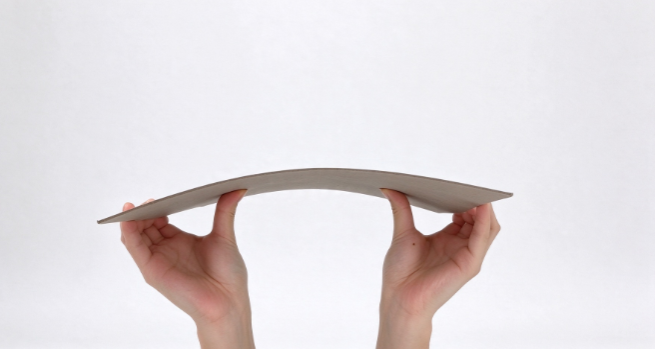
Stiffness is an important performance characteristic of grey board. It directly affects the board’s ability to provide support and maintain its shape during processing and in the final application.
For example, grey board used in rigid box packaging needs sufficient stiffness to maintain the box shape and prevent the walls from bending or deforming. In bookbinding, it provides support for book covers. In puzzle manufacturing, appropriate stiffness helps maintain the shape and structural integrity of puzzle pieces.
When purchasing grey board, consider the following:
- Do not judge stiffness by thickness alone. Boards with the same thickness may have different stiffness due to variations in density and fiber structure.
- Choose stiffness according to the end application. Higher stiffness is not always better. The board should meet the actual requirements of the finished product.
- Consider the processing method. If the board needs bending, grooving, or die-cutting, its stiffness must also be suitable for the relevant converting process.
Practical tip: Before confirming the specifications, request samples from your supplier and conduct actual bending, forming, or processing tests to determine whether the board meets your requirements.
2. Internal Structure
Grey board is generally made by laminating multiple layers of paper fibers. Its internal structure affects thickness uniformity, bonding strength, stiffness, and overall processing performance.
Even when two boards have the same GSM, differences in fiber distribution, interlayer bonding, and compression can result in different performance during use.
When evaluating grey board, pay attention to:
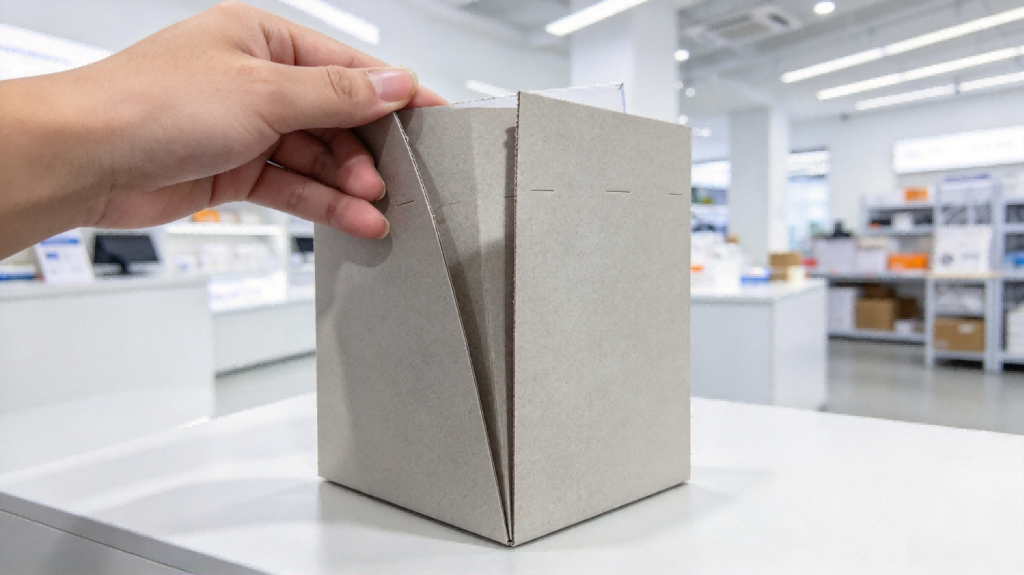
- Interlayer bonding: The layers should be firmly bonded together to prevent delamination during die-cutting, grooving, or other converting processes.
- Thickness uniformity: Thickness should remain consistent across different areas of the sheet to avoid problems during laminating, pressing, and forming.
Practical tip: Examine the board’s cross-section and edges, and conduct actual die-cutting and grooving tests to assess its internal structure. For bulk purchases, also ask the supplier about its quality control procedures to ensure consistent product quality.
3. Cutting Quality
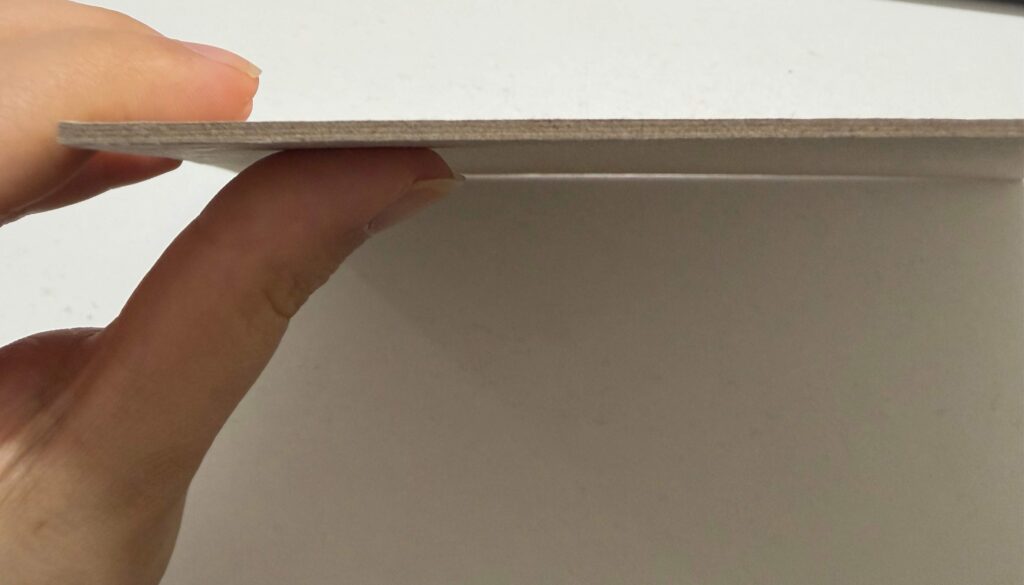
For puzzles, packaging boxes, and other products requiring die-cutting, cutting quality is an important factor when selecting grey board.
The board must not only be cut through by the die-cutting equipment but should also produce clean, even edges without excessive burrs, delamination, or paper dust.
Cutting performance can be affected by the board’s interlayer bonding strength, density uniformity, thickness consistency, as well as the specific die-cutting equipment and tooling conditions.
When evaluating cutting quality, check the following:
- Are the cut edges clean and even, without excessive burrs?
- Is there any delamination or fiber tearing along the cut edges?
- Is the cutting result consistent across different areas of the sheet?
- Does the board generate excessive paper dust or production waste during continuous processing?
Practical tip: Do not rely solely on hand tearing or simple manual cutting to evaluate board quality. If your finished product requires high-speed die-cutting, test the board using your actual production equipment and cutting dies. Record the cutting results and defect rate to assess its suitability for mass production.
4. Surface Quality
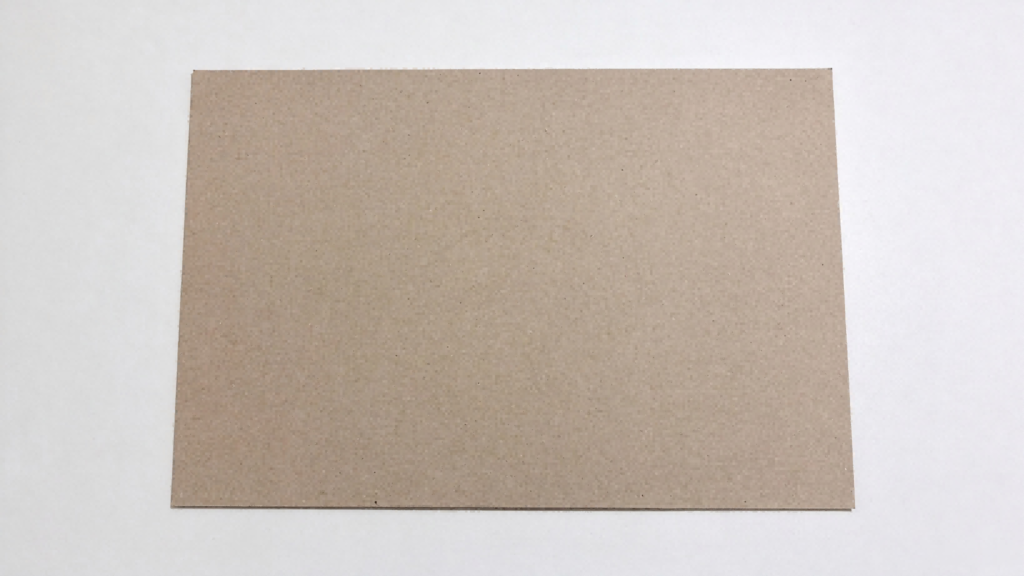
Surface quality is another important consideration, especially when the grey board will undergo paper lamination, printing, coating, or dyeing.
An uneven surface, local irregularities, or visible impurities may affect subsequent processing and the appearance of the finished product.
Surface requirements should be determined according to the end application:
- Gift boxes and cosmetic packaging: Pay attention to surface smoothness to ensure a good appearance after paper lamination.
- Bookbinding: Consider surface uniformity and how well the board bonds with the cover material.
- General industrial packaging: Surface requirements can be adjusted according to the actual application to help control material costs.
Practical tip: If the grey board will be covered with decorative paper or another facing material, test it using your actual laminating process rather than judging the final result solely by the appearance of the uncoated board.
5. GSM and Thickness
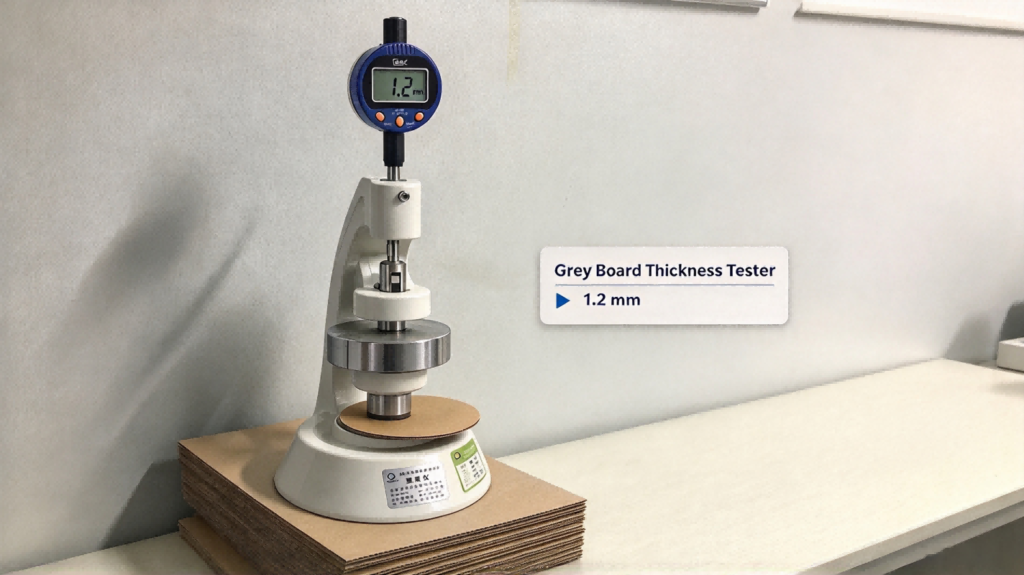
GSM and thickness are the two most basic specifications when purchasing grey board, but they are not interchangeable.
GSM refers to the weight per unit area, while thickness measures the physical thickness of the board. Two boards with the same GSM may have different thicknesses, while boards with the same thickness may have different GSM values.
Therefore, buyers should clearly specify:
- Target GSM (grammage).
- Target thickness (mm or μm).
- Acceptable thickness tolerance.
- Acceptable GSM tolerance.
If the finished product has specific requirements for stiffness, forming, or die-cutting, the final specifications should also be verified through actual processing tests. Understanding why grey board with the same thickness can have different GSM can also help buyers make more informed decisions when comparing board specifications.
6. Consistency Between Production Batches
For packaging manufacturers and paper product converters with ongoing production requirements, batch-to-batch consistency is directly related to production efficiency.
Even if the initial sample meets all requirements, noticeable variations in thickness, stiffness, moisture content, or cutting performance in subsequent batches may require machine adjustments, reduce processing efficiency, and increase material waste.
When purchasing grey board, consider the following:
- Ask the supplier to clearly define product specifications and quality control standards.
- Compare key performance indicators between approved samples and bulk production.
- Check whether GSM, thickness, and appearance remain consistent across different batches.
- For long-term supply arrangements, establish mutually agreed quality inspection and acceptance criteria.
Conclusion: Choosing Grey Board Requires More Than Checking GSM and Thickness
Selecting the right grey board requires a comprehensive evaluation of the end application, converting processes, and quality requirements.
For rigid box manufacturers, stiffness, internal structure, and surface quality may be particularly important. For puzzle manufacturers, interlayer bonding strength, die-cutting quality, and thickness consistency deserve greater attention.
Before placing a bulk order, clearly define your application and key performance requirements. Then evaluate the board through sample testing and actual production trials to ensure it is suitable for your manufacturing process.
The right grey board is not necessarily the one with the highest GSM or the lowest price. It is the material that meets your product quality and processing requirements while helping you achieve consistent production and reasonable costs.
Author Profile

-
HONGTUSCENERY is a professional manufacturer of composite paperboard,
providing sustainable and customized packaging solutions for global brands.
With nearly 20 years of industry experience, we focus on material performance,
structural strength, and green supply chain development.
Latest entries
 Paperboard Fabrication Service2026-11-27How Packaging Companies Improve Competitiveness Through Optimized Material Sourcing & Processing Supply Chains
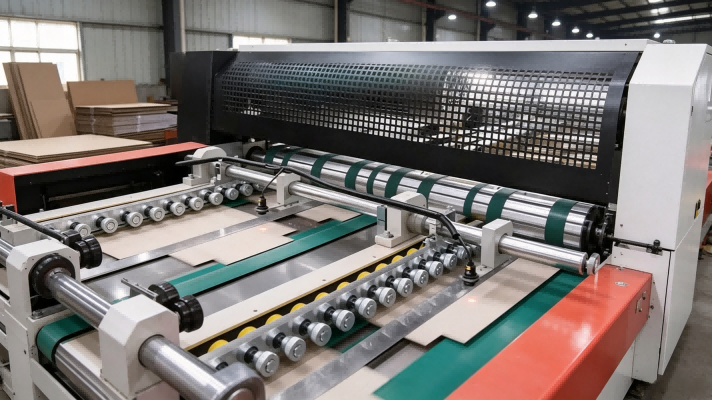 Paperboard Fabrication Service2026-11-26Grey Board Converting Services: Die Cutting, Grooving and Corner Rounding to Reduce Packaging Production Steps
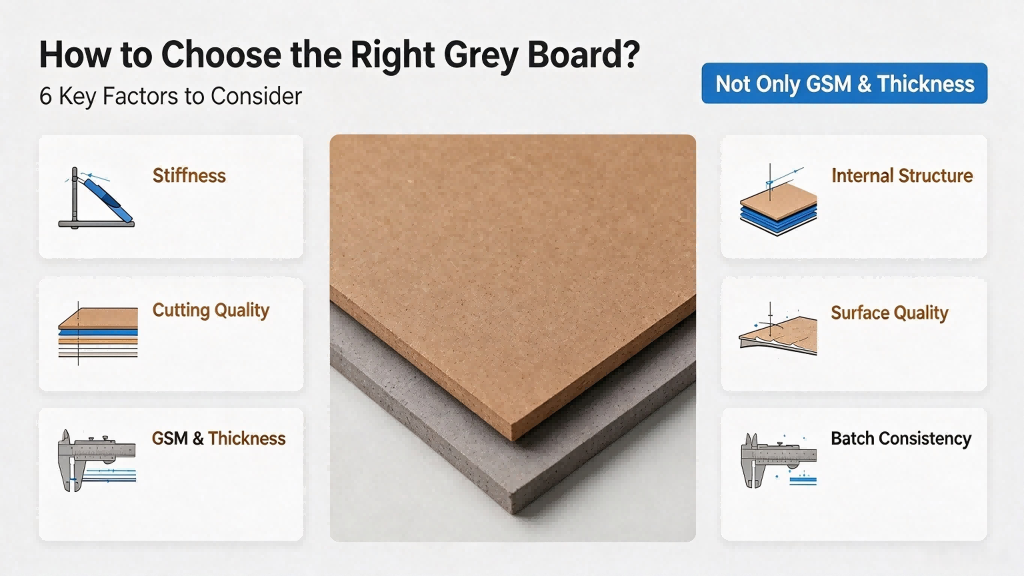 Packaging Knowledge2026-11-18How to Choose the Right Grey Board? 6 Key Factors to Consider
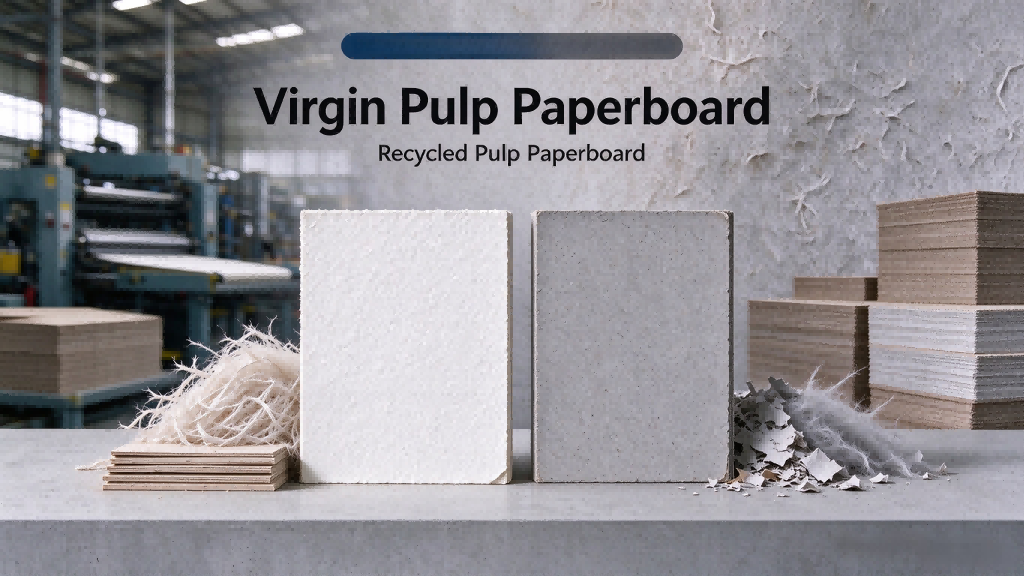 Packaging Knowledge2026-11-11Virgin Pulp Paperboard vs. Recycled Pulp Paperboard: How Do Different Raw Materials Affect Paperboard Performance?