Which Paperboard Is Best for Jigsaw Puzzles? How to Choose the Right Puzzle Board
Paperboard is an important base material in jigsaw puzzle manufacturing. Its properties directly affect puzzle piece stiffness, edge quality, processing efficiency, and product durability.
When choosing paperboard for puzzles, manufacturers should look beyond grammage and thickness. Other important factors include piece count, product positioning, die-cutting requirements, and the internal structure of the board.
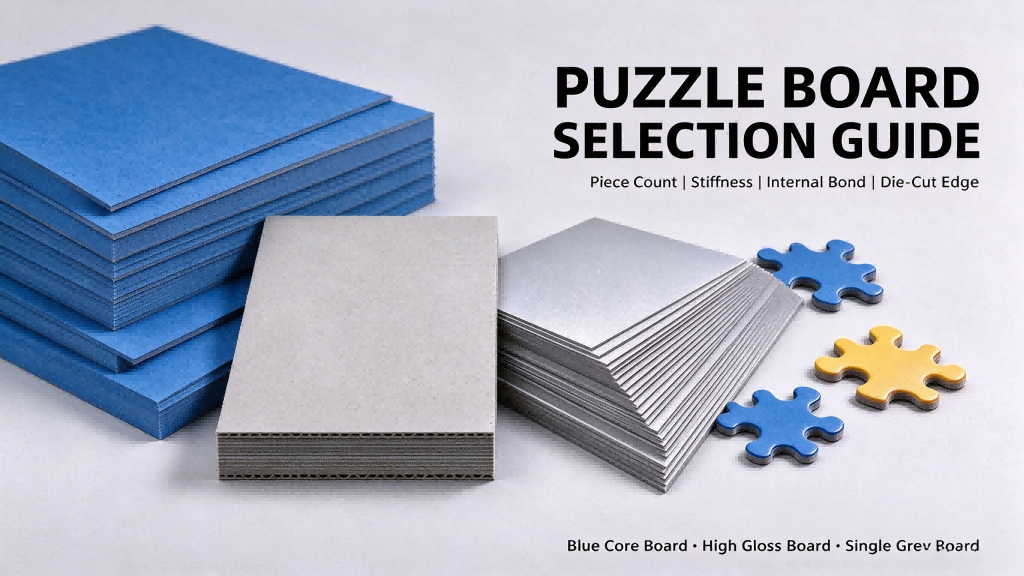
So, what properties should puzzle manufacturers pay attention to? And what types of puzzles are best suited to Blue Core Board, High Gloss Paperboard, and Single Grey Board?
1. What Factors Should You Consider When Choosing Puzzle Board?
1. Piece Count and Piece Size

The number of pieces is an important factor when selecting puzzle board.
In general, puzzles with more pieces have smaller individual pieces and potentially more complex die-cutting patterns. This places greater demands on the board’s edge integrity and structural stability.
For example:
- Around 100 pieces: Individual pieces are usually larger, and the die-cutting pattern is relatively simple. If the basic quality requirements can be met, more cost-effective options such as High Gloss Paperboard or Single Grey Board may be suitable. Higher-performance, more expensive materials are not always necessary.
- 500 to 1,000 pieces or more: Individual pieces are generally smaller. Greater attention should be paid to internal bond strength, stiffness, and die-cutting performance to prevent delamination, rough edges, or fiber shedding during processing.
However, piece count is not the only consideration. The puzzle’s positioning and actual cutting die design should also be taken into account.
2. Stiffness
Stiffness determines how rigid and resistant to bending the puzzle pieces are.
If the board lacks sufficient stiffness, the pieces may bend or deform, affecting the assembly experience and product durability.
The appropriate stiffness should be selected according to puzzle size, board thickness, and end-use requirements.
3. Internal Bond Strength
For multi-layer laminated paperboard, internal bond strength is particularly important.
If the layers are not firmly bonded, the board may delaminate, separate, or peel at the edges during die-cutting or subsequent use.
This is especially important for puzzles with a high piece count. Since the individual pieces are smaller, the board must maintain its structural integrity after die-cutting.
When sourcing puzzle board, manufacturers should evaluate its internal bonding performance and verify the results through actual die-cutting tests.
4. Thickness and Thickness Consistency
Thickness affects the feel and overall consistency of puzzle pieces.
Even when two boards have the same nominal thickness, variations in thickness or unevenness across the sheet may affect die-cutting pressure, cutting quality, and finished product consistency.
Therefore, in addition to specifying the target thickness, manufacturers should pay attention to thickness tolerance and uniformity across the entire sheet.
5. Flatness
Warped or uneven paperboard can affect subsequent lamination and die-cutting processes, as well as the final appearance and assembly of the puzzle.
Factors such as the moisture content of the base paper, lamination processes, and storage conditions can all influence flatness.
Manufacturers should therefore consider both sheet flatness and dimensional stability when selecting puzzle board.
2. Differences Between Three Common Types of Puzzle Board
After understanding the key performance requirements, you can choose a suitable board based on your product positioning and manufacturing needs.
1. Blue Core Board
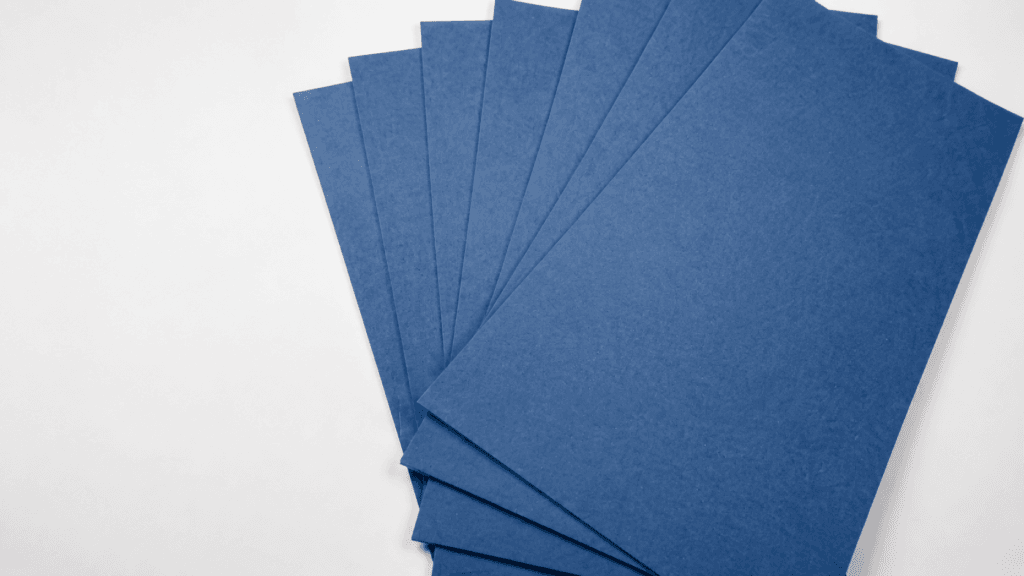
Blue Core Board is a multi-layer laminated paperboard with a blue core. Depending on the raw materials used, it can be manufactured with virgin wood pulp-based paper or recycled fiber-based paper. Its structure can also be adjusted according to the required thickness, grammage, and performance.
Key Features:
- Virgin Fiber Blue Core Board: Generally offers good fiber bonding and structural strength.
- Recycled Fiber Blue Core Board: Uses adjusted fiber compositions and production processes to help control costs while meeting the required performance specifications.
Suitable Applications:
Virgin fiber Blue Core Board is suitable for high-quality jigsaw puzzles, high-piece-count puzzles, and products requiring greater stiffness, internal bond strength, and clean die-cut edges.
Recycled fiber Blue Core Board is a cost-effective option for puzzles that require good edge integrity while keeping material costs under control. It offers a balance between processing performance and cost efficiency.
When sourcing Blue Core Puzzle Board, consider the required thickness, grammage, and actual die-cutting requirements rather than judging the board grade by its core color alone.
2. High Gloss Paperboard
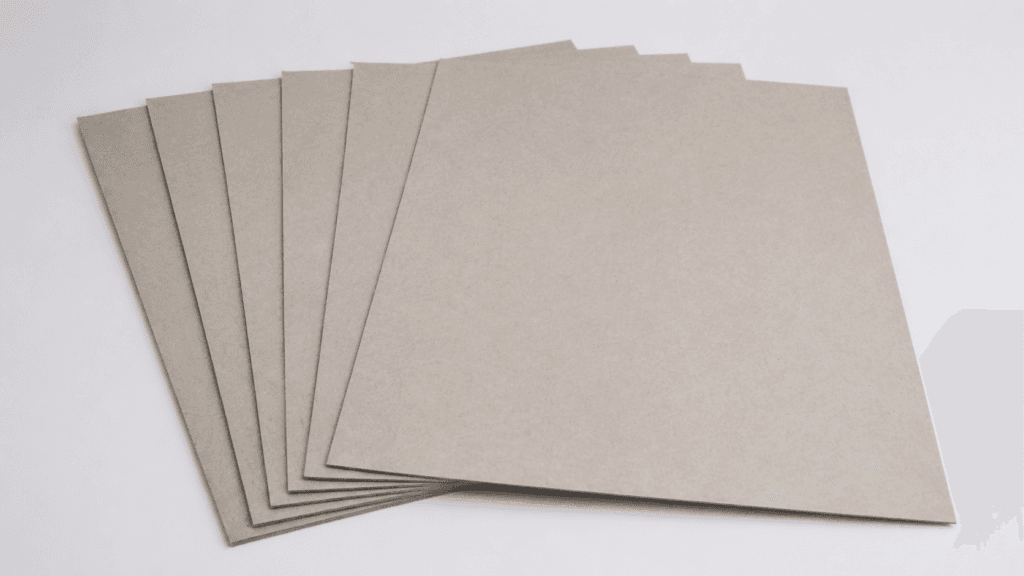
High-gloss paperboard is mainly made of 100% recycled waste pulp. Its key feature is high surface smoothness, which enhances the visual effect of puzzle prints.
Key Features:
- High surface gloss for attractive artwork presentation.
- Recycled fiber core offers a cost advantage.
- Surface quality, liner bonding strength, and die-cut edge performance should be evaluated.
Suitable Applications:
Suitable for puzzles where artwork presentation, color appearance, and surface finish are important.
3. Single Grey Board
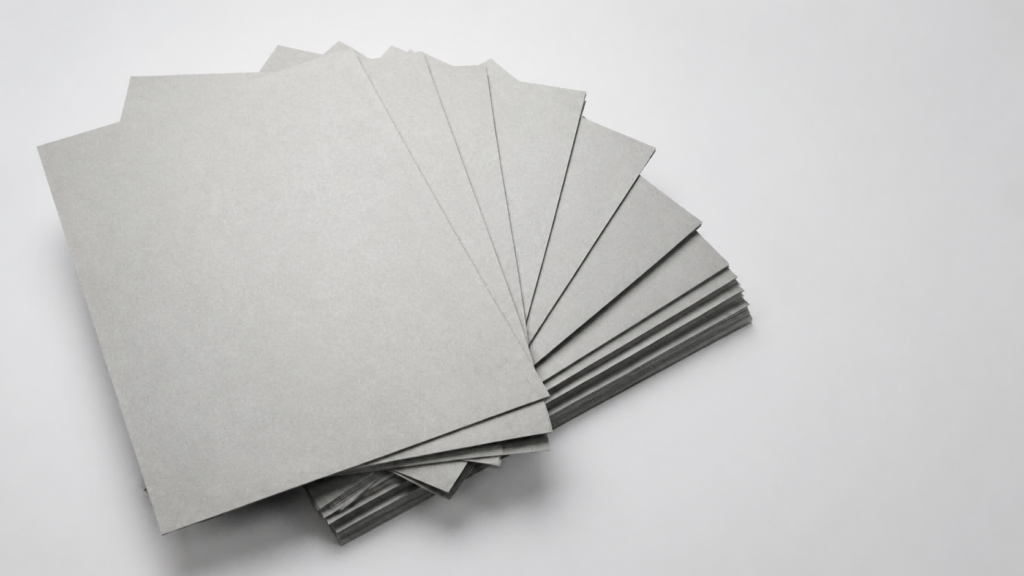
Single grey board is mainly based on recycled waste pulp. Its grey surface is formed by treated newspaper pulp. It features a relatively simple structure and controllable cost.
Key Features:
- offering a cost advantage.
- Wide range of available grammages and widths, flexible sheet matching options.
- Suitable for subsequent lamination with printed paper and other finishing materials.
Suitable Applications:
Suitable for standard puzzles and mass-market products with basic structural requirements and a strong focus on cost efficiency.
Comparison of the Three Paperboard Types
| Comparison | Blue Core Board | High Gloss Paperboard | Single Grey Board |
|---|---|---|---|
| Main Structure | Made from wood pulp or 100% recycled fiber | Mainly made from 100% recycled waste paper pulp | Recycled fiber base with a grey surface |
| Main Advantages | Adjustable raw materials and structure to meet different performance requirements | High surface gloss and attractive artwork presentation | Relatively simple structure and economical cost |
| Main Applications | High-quality, high-piece-count puzzles and puzzles requiring good edge quality | Puzzles with a focus on visual appearance | Standard and cost-sensitive puzzles |
3. How to Choose the Right Puzzle Board for Your Requirements
Different puzzles have different quality requirements and cost targets. No single type of paperboard is suitable for every application.
You can initially identify the right material based on piece count, surface appearance, and structural performance requirements, then verify your choice through actual processing tests.
As a paperboard manufacturer, we can adjust raw material compositions, grammage, and board thickness according to your specific application requirements.
For example, more economical material options can be considered for standard puzzles. For products requiring higher stiffness, internal bond strength, and edge quality, we can evaluate suitable base papers and board structures with improved performance.
Our goal is to help customers optimize material selection and purchasing costs while meeting the required product performance standards.
If you can provide your puzzle piece count, target thickness, quality requirements, and expected purchasing budget, we can evaluate a suitable paperboard structure and material solution for your production needs.
Conclusion
For puzzle manufacturers, the key is not simply to choose higher grammage, thicker board, or more expensive raw materials. It is to configure the right materials and board structure according to actual production requirements.
Choosing the right material combination helps maintain puzzle quality and processing stability while keeping material costs under control.
If you are looking for suitable paperboard for jigsaw puzzle manufacturing, feel free to contact us with your product specifications and performance requirements. We can evaluate your application and recommend a suitable paperboard material and customized solution.
Author Profile

-
HONGTUSCENERY is a professional manufacturer of composite paperboard,
providing sustainable and customized packaging solutions for global brands.
With nearly 20 years of industry experience, we focus on material performance,
structural strength, and green supply chain development.
Latest entries
 Paperboard Fabrication Service2026-11-27How Packaging Companies Improve Competitiveness Through Optimized Material Sourcing & Processing Supply Chains
 Paperboard Fabrication Service2026-11-26Grey Board Converting Services: Die Cutting, Grooving and Corner Rounding to Reduce Packaging Production Steps
 Packaging Knowledge2026-11-18How to Choose the Right Grey Board? 6 Key Factors to Consider
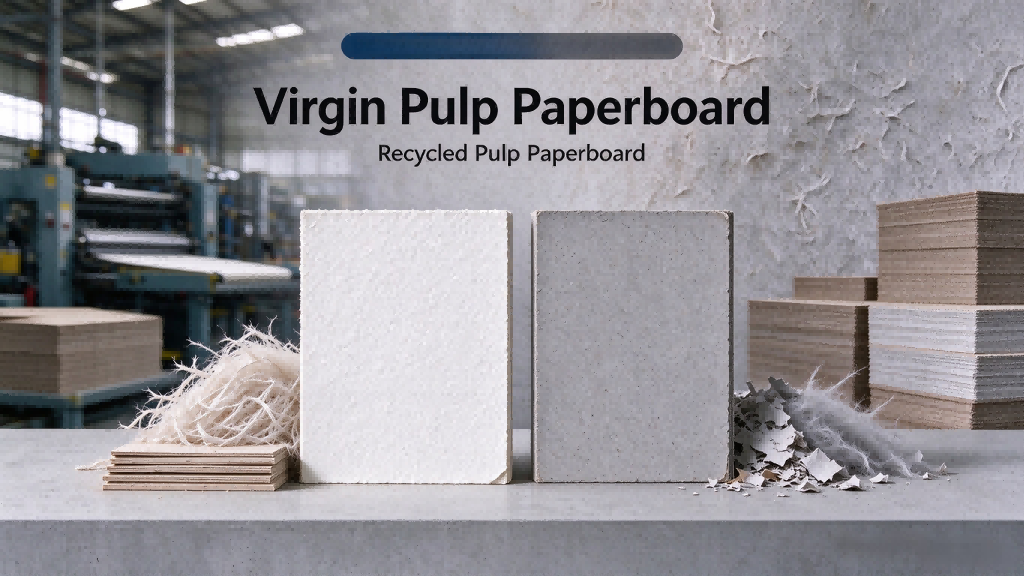 Packaging Knowledge2026-11-11Virgin Pulp Paperboard vs. Recycled Pulp Paperboard: How Do Different Raw Materials Affect Paperboard Performance?