5 Key Factors for Choosing a Reliable Kraft Board for Packaging Supplier
For packaging manufacturers and purchasing teams, choosing a Kraft Board supplier should not be based on price alone. Even when different suppliers offer products under the same name, their boards may differ in raw materials, cleanliness, stiffness, surface quality, and batch-to-batch consistency.
When choosing a supplier for packaging applications, the following five factors are worth considering.
1. Don’t Look at Price Alone — Check the Raw Materials

Price is an important consideration, but choosing a supplier based only on price can easily overlook differences in raw materials.
Take kraft paper as an example. Different suppliers may use different raw materials. Some kraft paper is made mainly from virgin wood pulp, while other kraft paper may use a mixture of wood pulp and recycled paper pulp.
Although both products may be called kraft paper, their raw materials can affect properties such as:
- Cleanliness
- Fiber quality
- Stiffness
- Surface uniformity
- Color and texture
For packaging applications, these differences can affect the appearance, processing, and performance of the finished product.
Therefore, when comparing suppliers, don’t only ask:
“How much per ton?”
You should also ask:
“What raw materials are used for the kraft paper?”
You can also request samples for further evaluation before making a purchasing decision.
2. Check Whether the Supplier Has a Stable Quality Control System
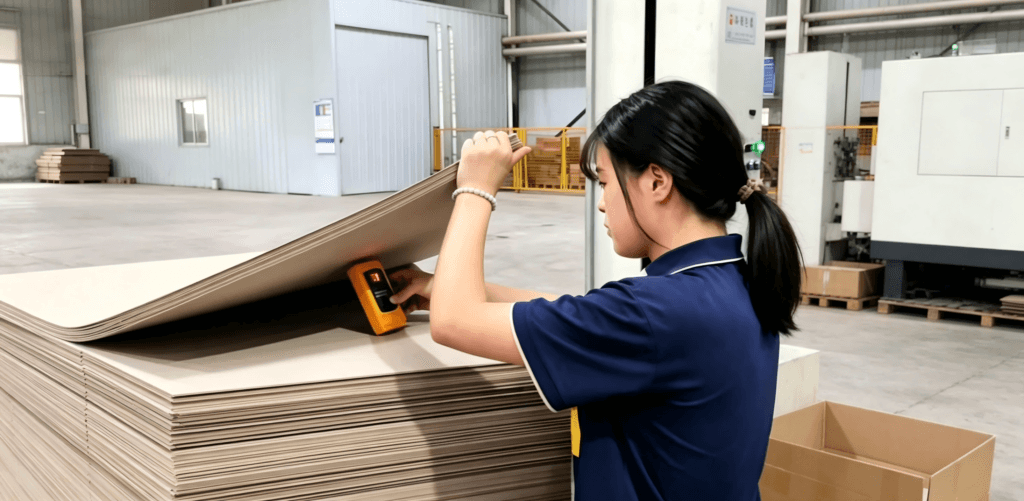
A supplier providing a sample that meets your requirements does not necessarily mean that the same quality will be maintained during mass production.
For Kraft Board, the supplier should be able to consistently control thickness, GSM, stiffness, color, and surface quality during production.
This is particularly important for packaging applications. Significant differences between batches can affect subsequent processing and the quality of the finished products.
When evaluating a supplier, you can check:
- Whether the supplier has a quality management system, such as ISO certification
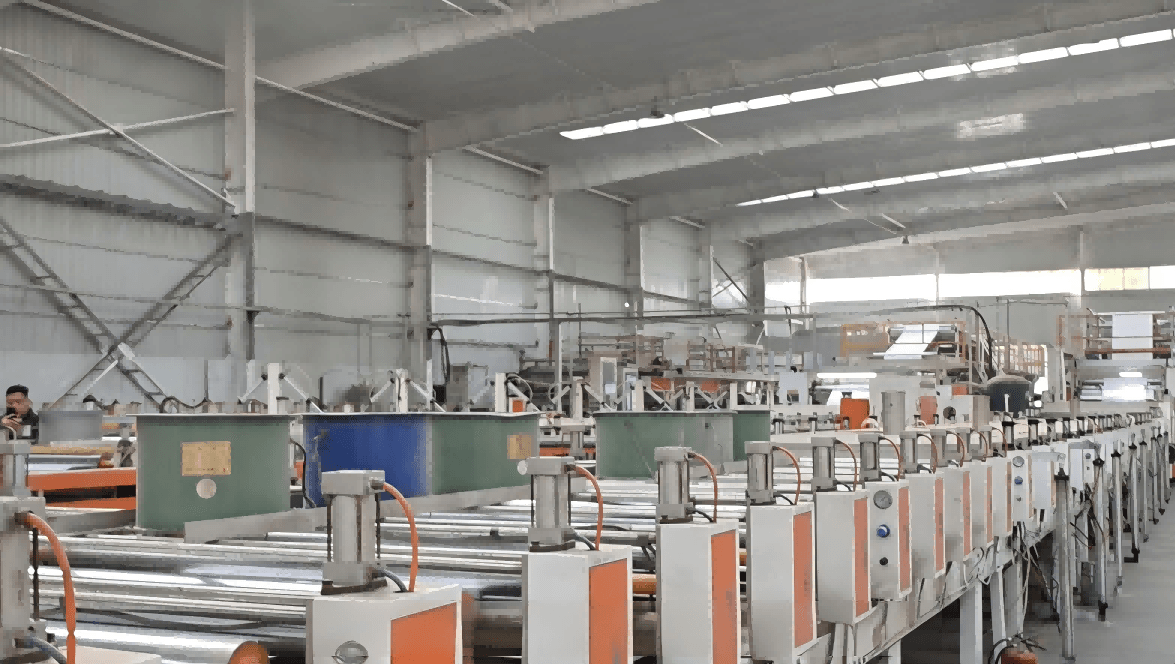
- Whether the factory has adequate production and quality-control facilities
- Whether quality records are maintained between different production batches
- Whether the supplier can provide a TDS or relevant test data
The key question is not simply whether a supplier can provide one good sample, but:
Can the supplier consistently produce the same quality over time?
3. Check Whether the Supplier Has Real Manufacturing Capability
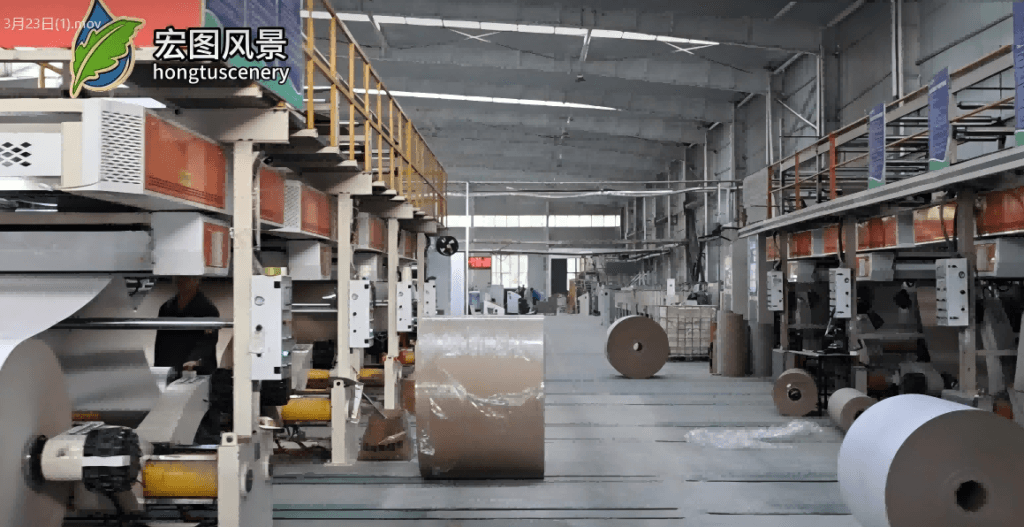
For long-term packaging procurement, a supplier’s manufacturing capability directly affects supply stability.
You can check whether the supplier:
- Owns and operates its own production facilities
- Has stable production output
- Maintains sufficient raw material inventory
Having production lines does not necessarily mean that a supplier can provide stable supply. Some factories may have their own equipment but operate their production lines irregularly.
A supplier with its own manufacturing capability can also respond more directly to product requirements and may have greater flexibility when specifications or order quantities change.
Once a packaging project moves from sampling to mass production, insufficient production capacity can lead to longer lead times, inconsistent specifications, or difficulties maintaining continuous supply.
Therefore, don’t only look at product photos on a supplier’s website. Also ask:
Who actually manufactures the board?
4. Check Whether the Supplier Can Provide Samples and Support Production Testing
The product name and description alone cannot fully demonstrate how Kraft Board will perform in actual applications.
If the material will be used for boxes, paper hangers, folders, or other packaging products, it is better to request physical samples from the supplier.
During sample evaluation, you can check:
- Actual board thickness
- Surface cleanliness
- Color and texture
- Stiffness
- Surface flatness
- Performance during processing
For long-term procurement, testing only one sample may not be enough.
A practical approach is to gradually verify the material through:
Sample → Small Batch → Production Test → Bulk Order
This helps confirm that the material not only meets requirements at the sample stage, but can also perform consistently during actual production.
5. Check the Supplier’s Communication and Delivery Capability
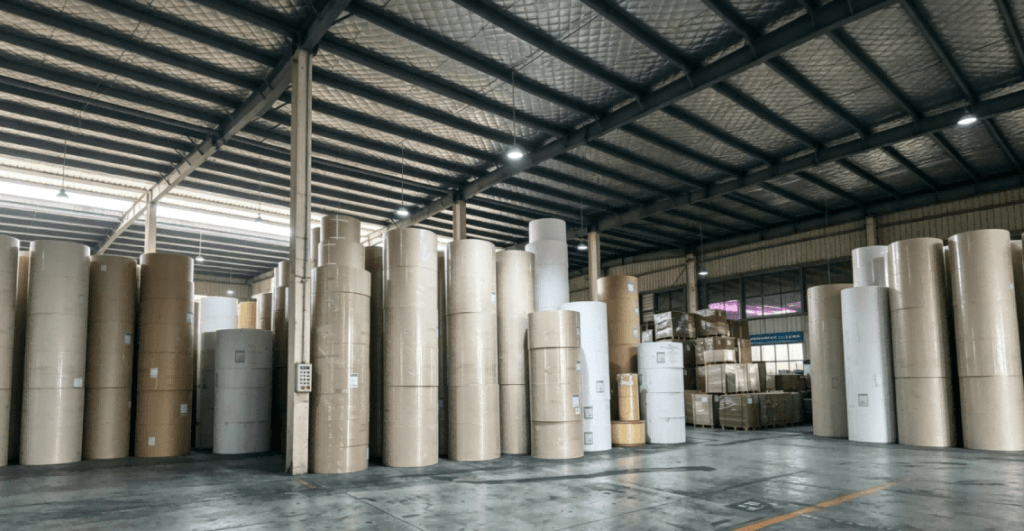
Even if a supplier provides good-quality products, poor communication or unstable delivery can create problems for long-term procurement.
Before starting a formal cooperation, pay attention to whether the supplier can:
- Understand your product requirements accurately
- Clearly answer questions about raw materials and production
- Provide samples as requested
- Deliver according to the agreed schedule
- Provide complete product documentation
- Respond effectively to quality or delivery issues
For B2B packaging procurement, a supplier is part of the long-term supply chain rather than simply a source of quotations.
Therefore, it is also important to consider whether the supplier can provide stable communication and support throughout the cooperation. Problems after delivery can also create significant costs and production challenges.
How to Compare Different Kraft Board Suppliers
When contacting several suppliers, don’t create a comparison table based only on price.
Instead, compare them across several factors:
| Factor | What to Check |
|---|---|
| Raw Materials | What raw materials are used for the kraft paper? |
| Product Quality | Are thickness, GSM, stiffness, and surface quality consistent? |
| Manufacturing Capability | Does the supplier manufacture the board in its own factory? |
| Sample Testing | Can the supplier provide physical samples for testing? |
| Supply Stability | Can the supplier provide the same product consistently over time? |
| Delivery | Are lead times and export procedures stable? |
| Documentation | Can the supplier provide TDS, certifications, and relevant test data? |
| Communication | Can the supplier understand and execute your requirements accurately? |
This gives you a more complete basis for comparing suppliers than simply comparing the price per ton.
Conclusion
When choosing a Kraft Board for Packaging Supplier, price is only one factor.
It is also important to understand the supplier’s raw materials, quality control system, manufacturing capability, sample testing process, and long-term supply and communication capabilities.
For kraft paperboard in particular, kraft papers made from different raw materials can vary in cleanliness, stiffness, surface quality, and appearance, even when they are sold under the same general name.
Before committing to a supplier, first confirm what they actually manufacture and how they control quality. Then use samples and small-batch production to verify the material before moving to long-term bulk purchasing.
Author Profile

-
HONGTUSCENERY is a professional manufacturer of composite paperboard,
providing sustainable and customized packaging solutions for global brands.
With nearly 20 years of industry experience, we focus on material performance,
structural strength, and green supply chain development.
Latest entries
 Double-Sided Kraft Laminated Greyboard2026-10-13Hidden Costs in Kraft Board Procurement: Why the Lowest Price Is Not Always the Best Deal
 Industry Insights2026-10-10How to Reduce Profit Losses from Paperboard Procurement Amid RMB Exchange Rate Fluctuations
 Company News2026-10-03Kraft Paperboard: Applications, Performance Advantages & Sustainability
 Double-Sided Kraft Laminated Greyboard2026-09-305 Key Factors for Choosing a Reliable Kraft Board for Packaging Supplier