Which Chipboard Thickness Is Best for Bulk Packaging?
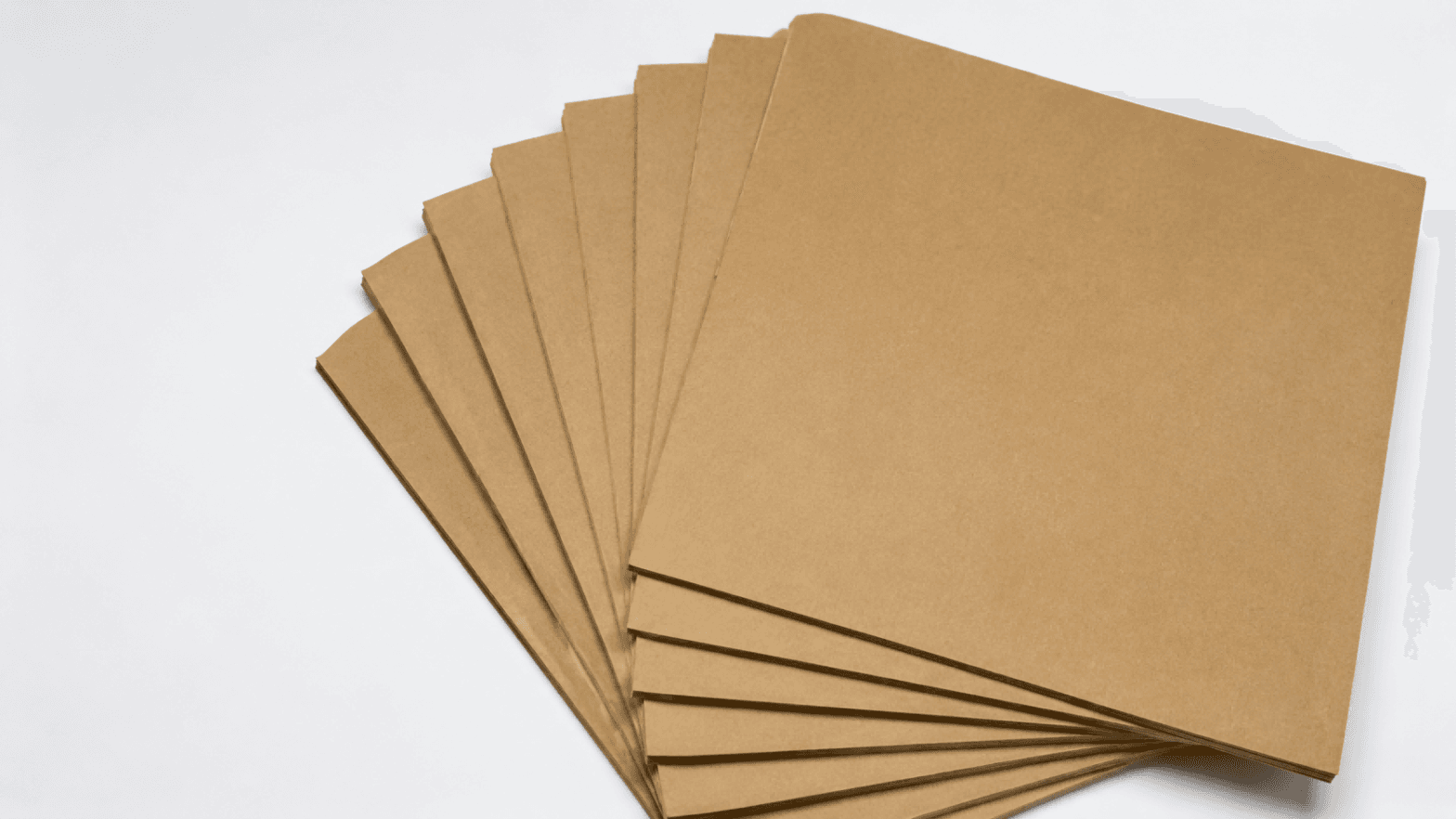
Chipboard is a type of paperboard commonly used for packaging applications where rigidity, support, and protection are required.
When choosing chipboard or other paperboard materials for bulk packaging, there is no single thickness that works for every application.
If the board is too thin, it may not provide enough rigidity or protection. If it is too thick, it may increase material costs, packaging weight, and shipping costs.
So the real question is not:
Is thicker chipboard always better?
It is:
What thickness provides enough performance for the packaging requirement without using unnecessary material?
1. What Chipboard Thicknesses Are Commonly Used for Bulk Packaging?
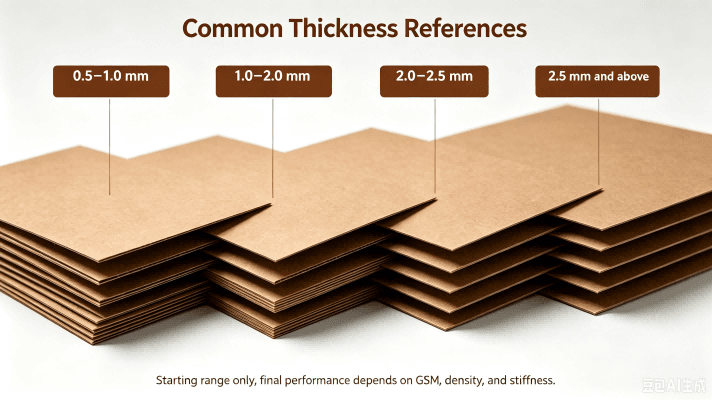
Different paperboard packaging structures require different board thicknesses. The following ranges can be used as a starting point when selecting chipboard for bulk packaging:
| Thickness | Typical Use |
|---|---|
| Approx. 0.5–1.0 mm | Light-duty packaging, liners, pads, and dividers |
| Approx. 1.0–2.0 mm | General bulk packaging, folding boxes, and standard packaging |
| Approx. 2.0–2.5 mm | Packaging requiring higher rigidity or stacking strength |
| 2.5 mm+ | Heavy-duty packaging, reinforced dividers, or applications requiring greater structural support |
These ranges are only a starting point and should not be treated as universal standards for all chipboard or paperboard products.
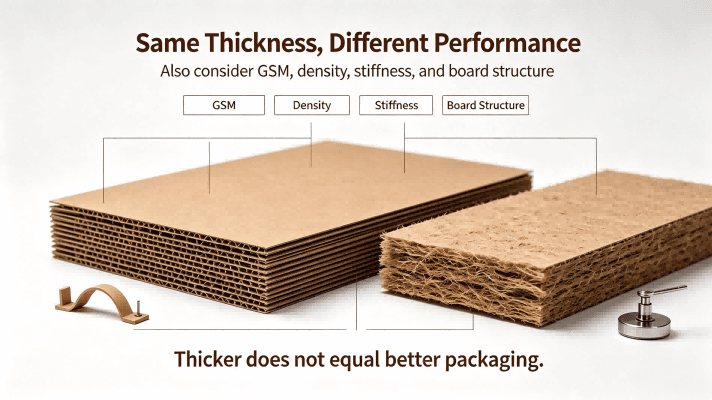
Two boards with the same thickness may have different GSM, density, structure, and stiffness, resulting in different performance.
2. How to Choose the Right Chipboard Thickness for Your Packaging
Light-Duty Packaging: Approx. 0.5–1.0 mm
If the paperboard is mainly used for:
- Dividers between products
- Internal pads
- Light-duty liners
- Applications that do not require major structural support
A very thick chipboard is usually unnecessary.
Thinner board can reduce material consumption and packaging weight while still providing basic support.
Standard Packaging: Approx. 1.0–2.0 mm
This can be a practical range to evaluate for many general bulk packaging applications.
It can be used for:
- General product packaging boxes
- Folding boxes
- Standard retail packaging
- Packaging requiring moderate rigidity
If the required thickness is uncertain, different paperboard thicknesses can be tested with samples and compared based on actual rigidity and converting performance.
Heavy-Duty Packaging: Approx. 2.0–2.5 mm or More
Thicker chipboard may be considered when the packaging needs to withstand greater pressure, stacking, or impact during transportation.
For example:
- Heavier products
- Stackable packaging
- Packaging requiring higher structural rigidity
- Heavy-duty dividers
- Packaging requiring additional protection during transportation
However, thicker does not always mean better.
If a thinner paperboard already meets the packaging requirements, there is no need to use a thicker specification simply for additional thickness.
3. Why Should You Consider More Than Thickness?
Thickness is only one specification of chipboard and other paperboard materials.
When purchasing, you should also consider:
- GSM – weight per square meter
- Thickness – actual board caliper
- Density – weight-to-volume relationship
- Stiffness – resistance to bending
- Moisture – moisture content of the board
- Board Structure – the structure of the board
For example, two chipboard products may both be 2.0 mm thick, but differences in GSM, density, or board structure can result in different stiffness and performance.
Therefore:
Thicker does not automatically mean better.
The important question is whether the paperboard can provide the performance required by the final packaging.
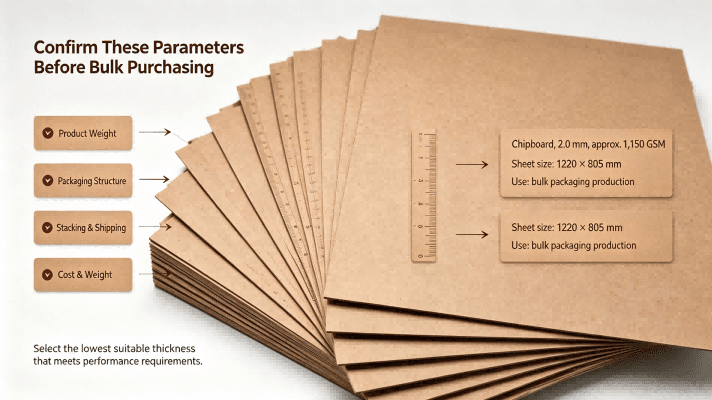
4. What Should You Consider When Choosing Thickness?
Before purchasing chipboard in bulk, consider the following factors.
① Product Weight
Heavier products generally require greater board rigidity and structural support.
② Packaging Structure
Determine whether the paperboard will be used as:
- An outer package
- A folding box
- An internal divider
- A pad
- A reinforcing structure
Different packaging structures have different thickness requirements.
③ Stacking and Transportation
If the products will be transported over long distances, stored in warehouses, or stacked in multiple layers, the board needs to maintain sufficient structural stability under pressure.
④ Cost and Weight
Thicker chipboard generally means more material, higher weight, and potentially higher transportation costs.
Therefore, for bulk purchasing, a more practical approach is:
Choose the minimum suitable thickness that can reliably meet the packaging requirements.
5. What Specifications Should You Provide When Buying Chipboard in Bulk?
When requesting a quotation, it is better not to simply tell the supplier:
“We need 2 mm chipboard.”
To help the supplier understand your requirements accurately, provide the following information:
Core Product Specifications
- Chipboard Type
- GSM
- Thickness
Purchasing Information
- Sheet Size
- Order Quantity
- Surface Requirements
- Packaging Application
- Destination
For example:
Chipboard, 2.0 mm, approximately 1,150 GSM, sheet size 1220 × 805 mm, for bulk packaging production.
The more complete the specifications, the easier it is for the supplier to recommend a suitable paperboard grade and provide an accurate quotation.
Conclusion
There is no single “best” chipboard thickness for bulk packaging.
The final choice should not be based on thickness alone. Consider product weight, packaging structure, stacking requirements, GSM, and board stiffness together.
The most practical purchasing principle is:
Determine the performance your packaging requires first, then choose the minimum suitable thickness that can meet those requirements.
This helps ensure adequate packaging performance while avoiding unnecessary material and transportation costs.
Author Profile

-
HONGTUSCENERY is a professional manufacturer of composite paperboard,
providing sustainable and customized packaging solutions for global brands.
With nearly 20 years of industry experience, we focus on material performance,
structural strength, and green supply chain development.
Latest entries
 Double-Sided Kraft Laminated Greyboard2026-10-13Hidden Costs in Kraft Board Procurement: Why the Lowest Price Is Not Always the Best Deal
 Industry Insights2026-10-10How to Reduce Profit Losses from Paperboard Procurement Amid RMB Exchange Rate Fluctuations
 Company News2026-10-03Kraft Paperboard: Applications, Performance Advantages & Sustainability
 Double-Sided Kraft Laminated Greyboard2026-09-305 Key Factors for Choosing a Reliable Kraft Board for Packaging Supplier