
Why Can Grey Board Suppliers Quote Very Different Prices for the Same Thickness?
When purchasing Grey Board, you may encounter a common situation: several suppliers offer products with the same thickness, such as 2.0 mm, the same sheet size, and the same quantity, but their prices can still be significantly different.
Naturally, buyers may ask:
“They are all 2.0 mm. Why are your prices different?”
In reality, Grey Board price differences are often caused first by differences in the raw paper manufacturer and grade, followed by differences in production processes, quality control, production capabilities, and overall cost structure.
This is because Grey Board is a multi-layer composite material. Even when the final thickness is the same, suppliers may use different raw papers. Differences in the raw paper manufacturer and grade can ultimately affect the material characteristics and performance of the finished Grey Board.
Therefore, when comparing Grey Board prices, you should not look at Thickness alone.
1. Different Raw Paper Manufacturers and Grades Can Lead to Different Prices
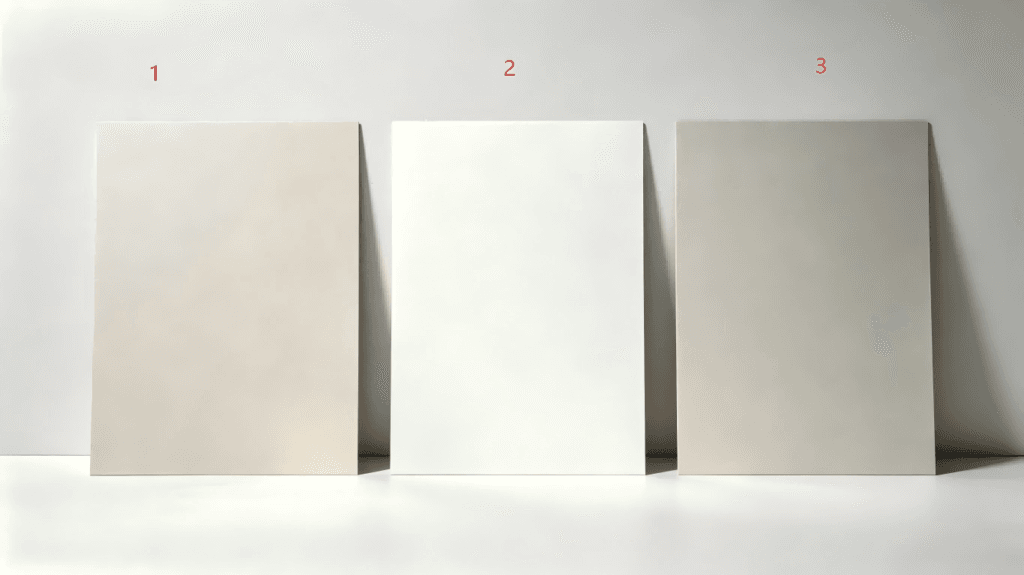
Grey Board is made from multiple layers of raw paper, and the raw paper may come from different paper mills. Different mills may have different raw materials, production processes, and quality control standards. Therefore, even if two products are both described as 2.0 mm Grey Board, the raw paper used may not be of the same grade.
Moreover, the same paper mill may offer different grades of Grey Board raw paper.
For example, Jintian Paper has different grades of Grey Board raw paper, including:
- Yindun (银盾): without a facing layer
- Jinbo (金箔): without a facing layer
- Jindun (金盾): with a facing layer
The above grades are listed from lower to higher quality.
They are all Grey Board raw paper, but this does not mean they are exactly the same material grade. Different grades may have differences in material characteristics and final performance, which can result in different costs and product prices.
Therefore:
Same thickness ≠ same raw paper
Same paper manufacturer ≠ same raw paper grade
2. Differences in Raw Paper Ultimately Affect the Grey Board You Use
What buyers actually need is not simply a “2.0 mm” number, but a Grey Board that can meet their production requirements.
Different raw paper manufacturers and grades can ultimately result in differences in material characteristics, stiffness, and ply bonding strength.
Material Characteristics
Different raw papers may use different raw materials and production standards. Therefore, even when the thickness is the same, the overall material characteristics, structure, and feel of the Grey Board may be different.
In other words:
Same thickness does not necessarily mean the same material.
Stiffness
Two Grey Board products can both be 2.0 mm but still have different stiffness.
For rigid boxes, gift boxes, puzzles, book covers, and similar applications, Grey Board often needs to provide sufficient structural support. Differences in stiffness can therefore affect the structure and processing performance of the final product.
Therefore:
Same thickness does not necessarily mean the same stiffness.
Ply Bonding Strength
Grey Board consists of multiple layers of paperboard, so the bonding between layers can affect its stability during processing and use.
If the ply bonding performance is different, the board may behave differently during die-cutting, lamination, folding, and other converting processes. In more serious cases, poor bonding may result in delamination.
Therefore, when comparing Grey Board, buyers should not only confirm the thickness but also consider the actual ply bonding performance.
3. Production Processes and Quality Control Can Also Affect the Price
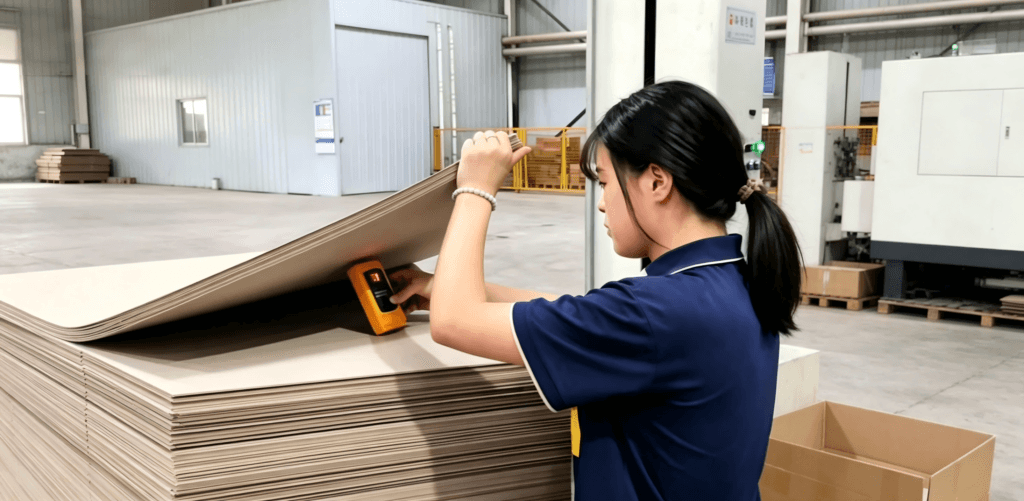
Raw paper is not the only cost factor.
Even when two suppliers use similar grades of raw paper, their production processes may differ in areas such as lamination, pressing, thickness control, moisture control, flatness control, and quality inspection.
Different equipment, production processes, and quality control requirements can affect production efficiency, material waste, and product consistency, which in turn affect manufacturing costs.
Therefore, similar raw materials do not necessarily result in exactly the same production cost.
4. Supplier Experience and Production Scale Also Matter for Batch Consistency
For Grey Board procurement, one sample meeting your requirements does not necessarily mean that long-term mass production will remain consistent.
A supplier’s production experience, factory scale, equipment capability, and accumulated quality-control experience can all affect batch-to-batch consistency.
If a supplier lacks sufficient production experience or capacity, mass production may result in variations in thickness, flatness, moisture, or other performance characteristics. These problems can lead to processing waste, production adjustments, or even quality complaints.
Therefore, batch consistency is also an important factor when evaluating a Grey Board supplier.
A lower-priced supplier may not actually offer a lower total cost if the product cannot be supplied consistently over the long term.
5. Suppliers Also Have Different Cost Structures
Even when two suppliers offer products with relatively similar specifications and quality, their quotations may still be different.
This is because each factory has its own cost structure, including raw paper purchasing costs, production efficiency, factory scale, energy and labor costs, material waste, packaging, logistics, and profit margins.
Therefore:
A higher price does not necessarily mean that a supplier is overcharging, and a lower price does not necessarily mean that the product is lower quality.
The key question is:
Are the two quotations actually for Grey Board with the same grade, specifications, and quality requirements?
What Should You Check When Comparing Grey Board Prices?
When you find a significant price difference between two Grey Board suppliers, you can first compare the following:
| Comparison Item | What Should You Check? |
|---|---|
| Raw Paper Manufacturer | Is the raw paper from the same or a similar-grade paper manufacturer? |
| Raw Paper Grade | Is it the same grade? |
| GSM | Is it the same? |
| Thickness | Is it the same? |
| Performance | Do the material characteristics, stiffness, and ply bonding meet the same requirements? |
| Production Process | Are the production process and quality control stable? |
| Supplier Capability | Does the supplier have sufficient production experience and production scale? |
| Consistency | Is mass production stable from batch to batch? |
A TDS can help buyers make an initial specification comparison. However, if there is a significant price difference between suppliers, comparing only the product name, thickness, and GSM is not enough.
For actual procurement, it is more meaningful to evaluate samples and, when necessary, conduct processing tests based on the final application.
Conclusion
When different suppliers quote different prices for Grey Board with the same thickness, do not simply assume:
“They are both 2.0 mm, so the prices should be similar.”
For a composite material such as Grey Board, a more reasonable way to look at the difference is:
Raw paper manufacturer and grade → Material and performance → Production process and quality control → Supplier capability and batch consistency → Cost
Therefore:
Same thickness ≠ same raw paper
Same thickness ≠ same grade
Same thickness ≠ same performance
Same product name ≠ same product
When comparing two suppliers, the more important question is not:
“Why is your price higher?”
but:
“Are we actually comparing the same grade of Grey Board?”
Only after confirming that the two products are of the same or similar grade, specifications, and quality requirements does a price comparison become truly meaningful.
Author Profile

-
HONGTUSCENERY is a professional manufacturer of composite paperboard,
providing sustainable and customized packaging solutions for global brands.
With nearly 20 years of industry experience, we focus on material performance,
structural strength, and green supply chain development.
Latest entries
 Double-Sided Kraft Laminated Greyboard2026-10-13Hidden Costs in Kraft Board Procurement: Why the Lowest Price Is Not Always the Best Deal
 Industry Insights2026-10-10How to Reduce Profit Losses from Paperboard Procurement Amid RMB Exchange Rate Fluctuations
 Company News2026-10-03Kraft Paperboard: Applications, Performance Advantages & Sustainability
 Double-Sided Kraft Laminated Greyboard2026-09-305 Key Factors for Choosing a Reliable Kraft Board for Packaging Supplier