Why Does Greyboard Have Different Grammage at the Same Thickness? How Does It Affect Board Performance?
When purchasing greyboard, thickness and grammage are two important specifications that buyers usually consider. However, buyers may sometimes find that two greyboard sheets with the same thickness have different grammage.
Why does this happen? And how does the difference in grammage affect the board’s actual performance?
Understanding these differences can help buyers choose the right greyboard for their products.
1. Understanding Greyboard Thickness and Grammage
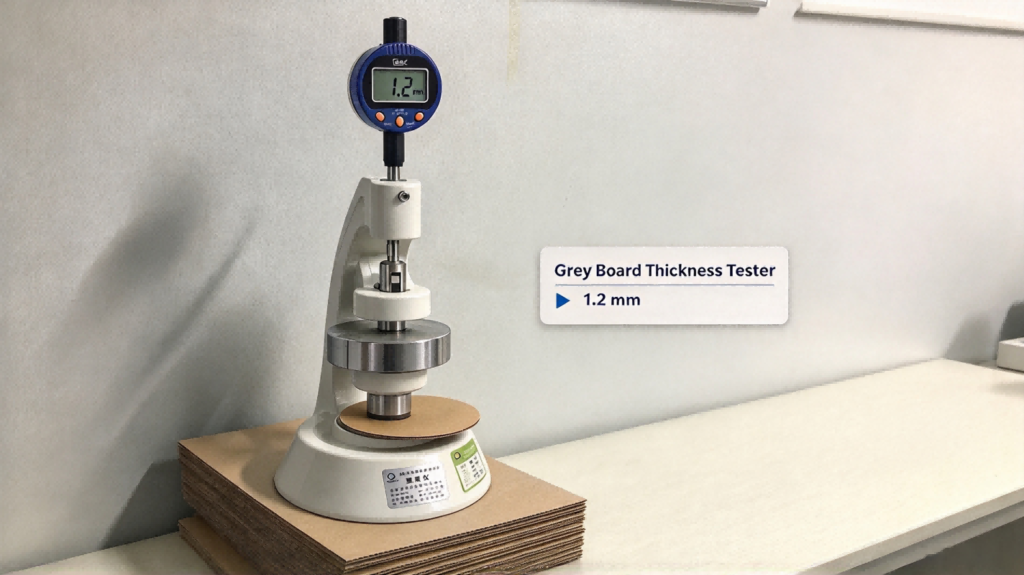
Thickness and grammage are two important specifications used to describe greyboard, but they measure different things.
- Thickness (mm): Measures how thick the board is.
- Grammage (g/m²): Measures the weight of the board per square meter.
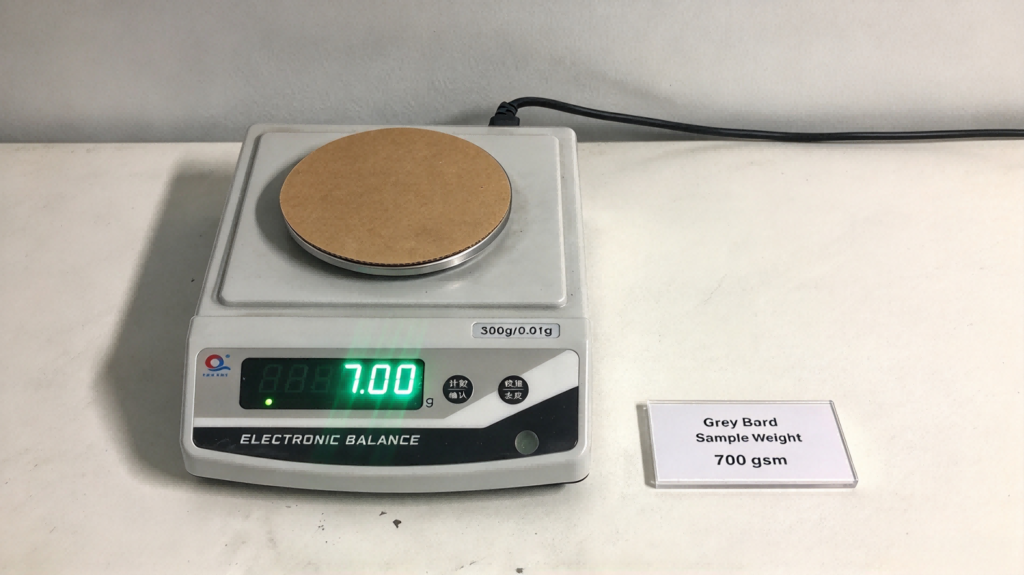
Simply put, thickness tells you how thick the board is, while grammage tells you how much it weighs.
These two properties are related, but they are not directly proportional. Therefore, two greyboard sheets with the same thickness may have different grammage.
2. Why Can Greyboard Have Different Grammage at the Same Thickness?
The difference in grammage between greyboard sheets of the same thickness is mainly related to papermaking processes and raw materials.
1. Papermaking Processes Affect Board Density
Different papermaking processes can affect the density of the board. The higher the density, the more compact the board structure. At the same thickness, a denser board has more mass per unit area, resulting in higher grammage.
Board density also affects its physical properties. In general, greyboard with higher density offers better stiffness and support.
2. Differences in Fiber Conditions and Raw Materials
Papermaking processes are also closely related to the selection and composition of raw materials. Greyboard is generally made from recycled paper, but waste paper from different sources may contain fibers with different characteristics.
For example, after being recycled multiple times, paper fibers may become shorter and thinner, and their bonding ability may decrease. These changes can affect the internal fiber structure and bonding of the board, which in turn influence its density, grammage, and physical properties.
Therefore, even when two greyboard sheets have the same thickness, differences in papermaking processes and raw materials can result in different grammage. two greyboard sheets have exactly the same actual thickness or weight per square meter.
3. How Does Grammage Affect Greyboard Performance?
When greyboard has the same thickness but different grammage, several properties may vary, including weight, stiffness, and processing performance.
1.Weight
This is the most direct difference caused by grammage.
At the same thickness and sheet size, higher grammage means greater weight.
2.Stiffness
Stiffness refers to the board’s ability to resist bending.
At the same thickness, higher-grammage greyboard generally has a more compact structure and usually offers better stiffness and support.
For products such as gift boxes, puzzles, and folders that require a certain level of rigidity and support, stiffness is an important factor when selecting board materials.
However, actual stiffness is also affected by raw materials, fiber bonding, and the internal structure of the board.
3. Processing Performance
Differences in grammage and internal board structure may also affect subsequent processing results.
For example, during die-cutting, laminating, and creasing, greyboard with different structures may show variations in cutting results, edge quality, and processing stability.
Therefore, when selecting greyboard, buyers should consider not only thickness and grammage but also the intended processing methods.
4. How to Choose the Right Grammage for Greyboard?
When purchasing greyboard, buyers should not select materials based on thickness alone. The final application should also be considered.
1. Consider the Final Application
Different products have different requirements for weight, stiffness, and strength. For example, gift boxes, puzzles, folders, and packaging inserts do not necessarily require the same board properties.
2. Consider Subsequent Processing Requirements
If the board needs to undergo die-cutting, laminating, creasing, or other processing, its internal structure and suitability for these processes should be considered in advance.
3. Check the Actual Physical Properties
In addition to thickness and grammage, buyers should also pay attention to stiffness, compression resistance, internal bond strength, and moisture content.
4. Balance Performance and Cost
Higher-grammage greyboard generally has greater density and better stiffness, but this does not mean that higher grammage is always the best choice for every application. Buyers should select the appropriate grammage based on the product’s actual requirements for stiffness, support, and processing performance. This helps ensure that the board meets the intended requirements while keeping material costs under control.
For greyboard sheets with the same thickness but different grammage, comparing samples and conducting actual processing tests can help evaluate their performance and determine which material is more suitable for the product.
5. Conclusion
Thickness and grammage are both important when selecting greyboard, but neither specification alone can determine whether a board is suitable for a particular application.
For different products, such as gift boxes, puzzles, and folders, buyers should consider the required support, processing methods, and finished product weight when choosing the right board specifications. Sample testing and actual processing trials can also help make a more informed decision.
If you are unsure which type of greyboard is best suited to your application, feel free to contact us with your product details and specifications. We will be happy to help you find a suitable material.
Author Profile

-
HONGTUSCENERY is a professional manufacturer of composite paperboard,
providing sustainable and customized packaging solutions for global brands.
With nearly 20 years of industry experience, we focus on material performance,
structural strength, and green supply chain development.
Latest entries
 Paperboard Fabrication Service2026-11-27How Packaging Companies Improve Competitiveness Through Optimized Material Sourcing & Processing Supply Chains
 Paperboard Fabrication Service2026-11-26Grey Board Converting Services: Die Cutting, Grooving and Corner Rounding to Reduce Packaging Production Steps
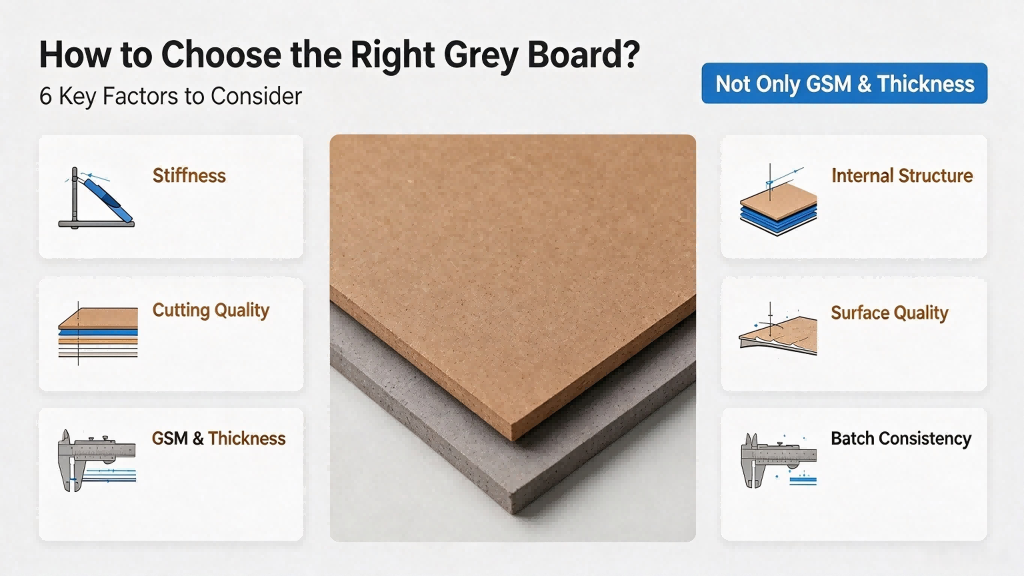 Packaging Knowledge2026-11-18How to Choose the Right Grey Board? 6 Key Factors to Consider
 Packaging Knowledge2026-11-11Virgin Pulp Paperboard vs. Recycled Pulp Paperboard: How Do Different Raw Materials Affect Paperboard Performance?