Gift Box Mold Issues: Causes and Solutions Explained
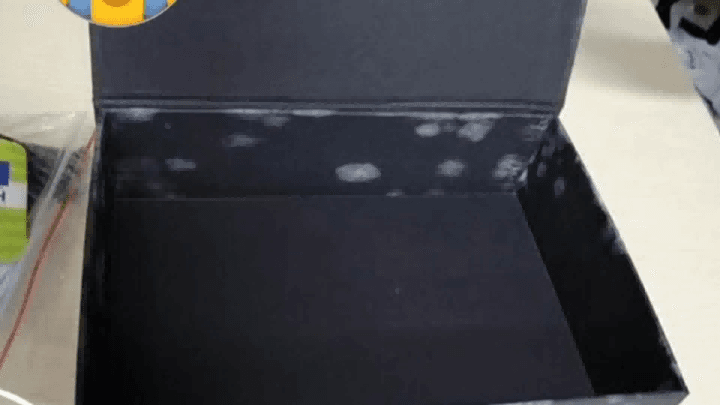
Gift box mold problems are one of the most common quality risks in the packaging industry. Whether during production, storage, or transportation, improper humidity control can easily lead to mold spots appearing on the surface or inside rigid gift boxes.
Mold not only affects appearance and brand perception but can also lead to product returns, claims, or even batch rejection. Therefore, it is a critical quality issue that must be properly controlled in packaging manufacturing.
For gift box manufacturers, solving mold issues should not rely only on post-treatment protection. Instead, it requires systematic control from material selection and production processes, with greyboard stability being one of the key factors.
1. Main Causes of Mold in Gift Boxes
Mold formation in gift boxes is mainly caused by moisture accumulation that creates a suitable environment for fungal growth. The most common reasons include:
1. Unstable moisture content in greyboard
If the moisture content of greyboard is not well controlled during production or storage, excess internal moisture may remain trapped in the material. In a sealed environment, this moisture cannot escape and gradually leads to mold formation.
2. Poor humidity control during production
During processes such as lamination and wrapping, if the workshop humidity is too high, the paperboard can absorb moisture from the air. Without sufficient drying time afterward, internal moisture remains and increases mold risk.
3. Insufficient drying before packaging
If gift boxes are packed or stacked before they are fully dried, trapped moisture inside the structure becomes a major cause of later mold development.
4. Humid storage or transportation conditions
During long-term storage or transportation, especially in environments with high humidity or temperature fluctuations, condensation may occur. This significantly increases the risk of moisture damage and mold growth.
2. How Greyboard Affects Mold Problems
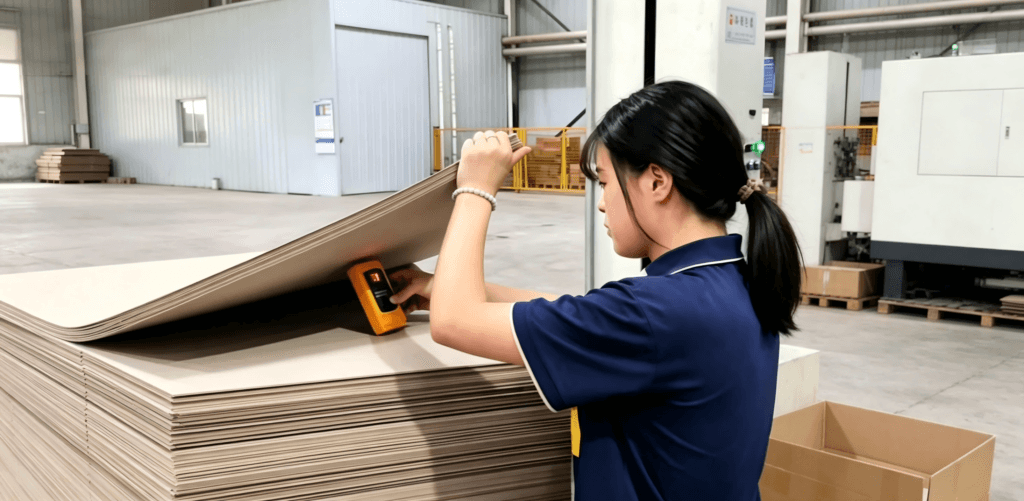
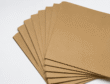
Greyboard is not only a structural support material in rigid gift boxes but also plays a critical role in moisture resistance and mold prevention.
1. Density affects moisture absorption speed
Higher-density greyboard has a tighter structure, making it more difficult for air and moisture to penetrate. This helps slow down moisture absorption and reduces the risk of mold.
2. Moisture content stability
High-quality greyboard is produced with strictly controlled moisture levels and consistent batch stability, reducing the risk of localized dampness that can lead to mold spots.
3. Structural uniformity
Greyboard with loose or uneven internal structure is more likely to absorb moisture unevenly, creating damp areas that promote mold growth.
3. How to Solve Gift Box Mold Problems at the Source
To effectively prevent mold issues, control must be implemented across materials, production, and logistics.
1. Choose stable greyboard materials
Material selection is the foundation of mold prevention. High-quality greyboard typically features:
- Stable moisture content control
- Uniform density
- High batch consistency
These factors significantly reduce the risk of mold formation in finished products.
2. Control production and drying processes
Environmental control during production is essential:
- Maintain stable workshop humidity
- Ensure sufficient drying time after lamination
- Avoid continuous production in high-humidity conditions
Many mold problems are not caused by materials themselves but by insufficient drying during production.
3. Improve packaging and storage protection
During storage and delivery, proper moisture protection measures should be applied:
- Add desiccants inside packaging
- Use moisture-proof inner liners or protective materials
- Avoid direct contact between products and container walls
- Control humidity in storage and loading environments
These measures are especially important for long-distance storage or transportation.
4. Common Misunderstandings
Mistake 1: Relying only on surface protection
Some manufacturers focus only on external moisture-proof packaging while ignoring material moisture control, leading to recurring mold issues.
Mistake 2: Mold only happens during transportation
In reality, mold may already begin forming during production or storage and only becomes visible later.
Mistake 3: Material differences are not important
Greyboard varies significantly between suppliers in density, moisture control, and stability, all of which directly affect final product performance.
5. Conclusion
Gift box mold issues are not caused by a single factor but are the result of material properties, production processes, and environmental conditions working together.
Among them, the quality and stability of greyboard form the foundation.
For packaging manufacturers, only by selecting stable greyboard at the source and combining it with proper drying control and moisture protection measures can mold risks be effectively reduced, ensuring product stability and customer satisfaction.
6 FAQ
Gift boxes can develop mold when exposed to high humidity, poor storage conditions, or insufficient drying during production. Moisture trapped inside greyboard or packaging materials creates an environment where mold can grow.
Mold can be prevented by using stable greyboard with controlled moisture content, ensuring proper drying during production, and adding moisture-proof protection such as desiccants during storage and transportation.
Yes. High-density and well-controlled moisture greyboard reduces water absorption and helps prevent internal dampness, which significantly lowers the risk of mold formation in rigid gift boxes.
Yes. Mold often appears after shipping or storage because humidity changes, condensation, or long-term exposure to damp environments can activate moisture inside the packaging materials
Gift boxes should be stored in a dry, well-ventilated environment with controlled humidity. Using pallets, avoiding direct contact with walls or floors, and applying moisture protection can help reduce mold risk.
Author Profile

-
HONGTUSCENERY is a professional manufacturer of composite paperboard,
providing sustainable and customized packaging solutions for global brands.
With nearly 20 years of industry experience, we focus on material performance,
structural strength, and green supply chain development.
Latest entries
 Double-Sided Kraft Laminated Greyboard2026-10-13Hidden Costs in Kraft Board Procurement: Why the Lowest Price Is Not Always the Best Deal
 Industry Insights2026-10-10How to Reduce Profit Losses from Paperboard Procurement Amid RMB Exchange Rate Fluctuations
 Company News2026-10-03Kraft Paperboard: Applications, Performance Advantages & Sustainability
 Double-Sided Kraft Laminated Greyboard2026-09-305 Key Factors for Choosing a Reliable Kraft Board for Packaging Supplier